The key facts
- Neither Netanyahu nor Eiskot won a clear victory; coalition talks are only beginning
- Neither Netanyahu nor Eiskot achieved a clear victory; coalition talks are only beginning
- Experts: no 'fundamental transformation' in foreign policy; the differences lie in domestic policy
- Experts: there will be no fundamental transformation in foreign policy; the differences lie in domestic affairs
- The greatest expectations for change are in Syria (a possible security agreement) and Lebanon
Uncertainty after the election
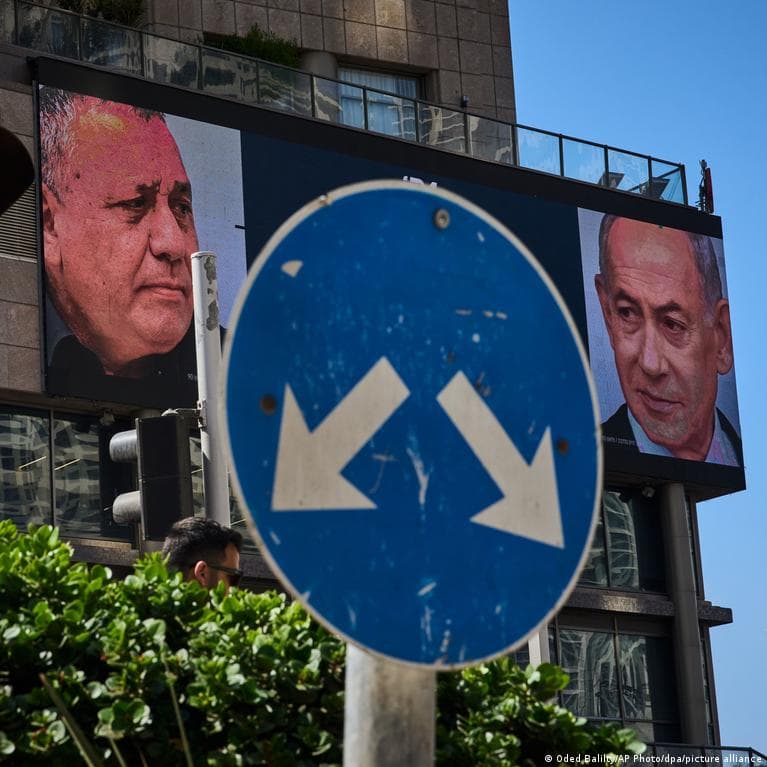
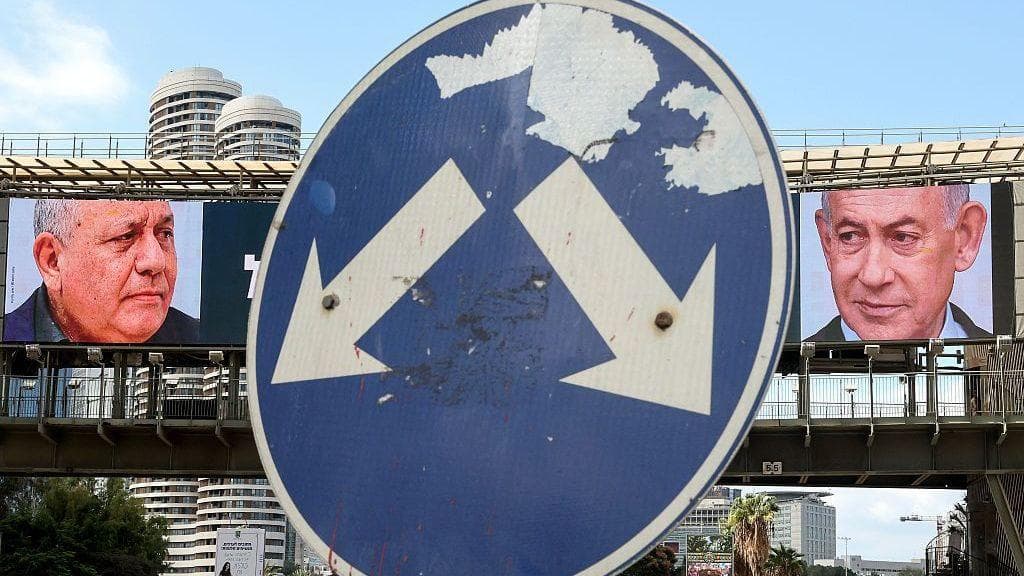
After Israel's parliamentary elections, in which neither camp won a clear victory, the reaction of politicians in neighboring Arab countries was restrained or entirely absent. The reason is the uncertainty over whether the new government will be formed by incumbent Prime Minister Benjamin Netanyahu or his rival Gadi Eiskot, whose Yashar party won about 16% according to exit polls, Deutsche Welle reports. At the same time, according to the outlet, Eiskot's result is 'increasingly being contested,' while Israel's Arab parties, according to available estimates, increased their representation in parliament to roughly 19 seats.
'Two sides of the same coin'
After the exit polls, Egyptian politician Mustafa Bakri wrote on Xthat Netanyahu and Eiskot are 'two sides of the same coin': 'Arabs' joy over Netanyahu's near-failure to form a government does not mean that what is coming… differs greatly from his predecessor.' A similar assessment was offered by Beth Oppenheim, a research fellow at the European Council on Foreign Relations: the largest differences under a possible Eiskot government would be in domestic policy — halting the judicial reform, a state commission of inquiry into the events of October 7, and the conscription law. 'When it comes to foreign policy, there will be no fundamental transformation,' she noted: the security doctrine after October 7, 2023 — preemptive strikes, operations far beyond the borders and 'buffer zones' — is accepted by almost all of Israel's Jewish parties.
Palestinians: no expectation of two states
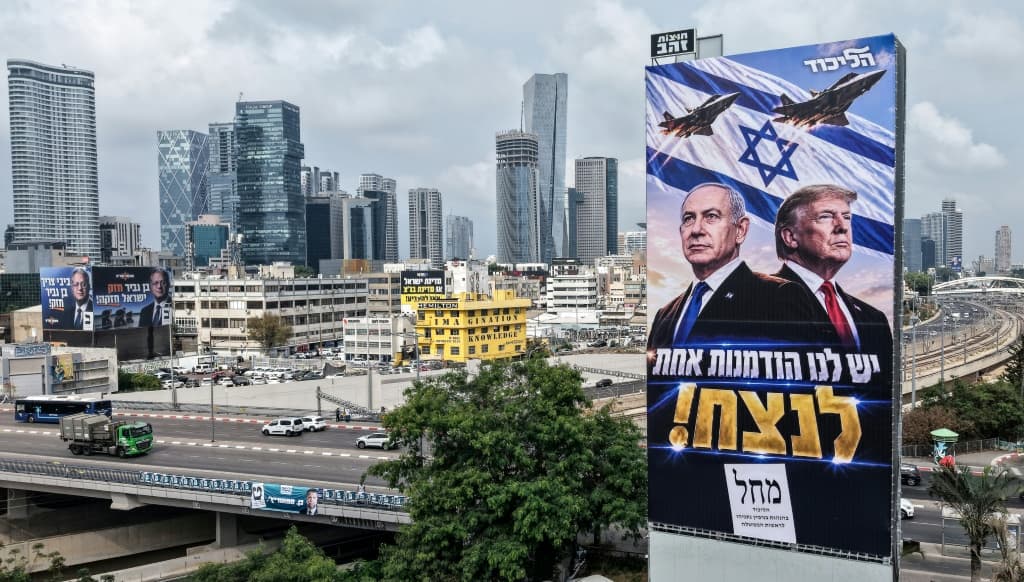
Likud's election poster read 'The Right or Palestine,' but observers consider this message exaggerated: in Oppenheim's assessment, support for Palestinian statehood has 'collapsed' across almost the entire Jewish political spectrum, and, with the exception of one party, all major Jewish parties support or tolerate settlement activity and publicly oppose a Palestinian state within the 1967 borders. Eiskot himself said in August that 'there is no Palestinian state, and none will be created under the government we form.' Meirav Zonshine of the International Crisis Group told the Associated Press that at best the new government 'will be able to slow down the extremely crazy acceleration' of Israeli aggression in the occupied territories. A less hardline government could soften the religious rhetoric, be less categorical about disarming Hamas, advance the next stage of the Gaza ceasefire agreement reached in late 2025, which has been almost entirely unimplemented, and more actively restrain settler violence in the West Bank — as she explained on social media , Elizabeth Tsurkov of the Middle East Policy Council noted that settler extremism does not enjoy the support of most Israelis and that suppressing it is feasible. In Oppenheim's forecast, without a diplomatic track with the Palestinians, new flare-ups of violence in the West Bank and Gaza are inevitable, and normalization with Saudi Arabia will remain out of reach.
Saudi Arabia: harsh rhetoric, quiet contacts
After Hamas's October 7, 2023 attack and the Israeli military campaign in which, according to cited figures, at least 70,000 Palestinians were killed, Riyadh's conditions for normalization with Israel have hardened: the country has stated that without progress on Palestinian statehood there will be no normalization. Last week, at a meeting of the foreign ministers of Saudi Arabia, Pakistan, Turkey and Egypt, the Saudi side signed a communiqué in which Israel was named 'a fundamental source of instability in the region and beyond.' At the same time, according to analysts, cooperation continues behind the scenes, and a government softer than Netanyahu's would make it easier for Saudi Arabia, the UAE, Jordan and Egypt to openly acknowledge such back-channel diplomacy.
Syria: a shift on a security agreement is possible
According to a study by the Syrian research center Etana, Israeli troops advanced into Syria to a distance of up to 1,160 kilometers from the disputed border, occupied Syrian land as far as 400 kilometers from it, and carried out 1,996 ground operations in southwestern Syria between January and September of this year. Before the elections, any troop withdrawal would have been perceived as a defeat, Ksenia Svetlova, an associate fellow at Chatham House and a former member of the Israeli parliament, told Syria in Transition. But if an anti-Netanyahu bloc comes to power, she said, a security agreement with Syria will become more likely, though it will take time, since the government will be constantly attacked by the far right. Talks on such an agreement, mediated by the United States, had been going on for months, but stalled at the end of 2026 after Israel, reportedly, refused to withdraw its troops to the 1974 lines of demarcation.
Lebanon: hopes for a more convenient partner
Lebanese observers and commentators believe the government would prefer the arrival of Eiskot's bloc: in negotiations on the withdrawal of Israeli troops from the south of the country and the disarmament of Hezbollah, Eiskot is seen as a more convenient partner than Netanyahu and his allies. This is despite the fact that Eiskot is considered the author of the Dahiya doctrine — an asymmetric warfare strategy in Hezbollah's areas of operation, applying pressure on both the fighters and civilian support; a similar strategy, according to available assessments, is being implemented in southern Lebanon, where villages continue to be demolished even after active fighting has subsided. Lebanese commentators also see common ground between Eiskot, a former army commander, and President Joseph Aoun, who previously led the Lebanese armed forces. When Netanyahu was removed from power in 2021–2022 by Naftali Bennett and Yair Lapid [now members of Eiskot's camp], we were able to reach an agreement and conclude the maritime deal, — L'Orient Today quotes a Lebanese official as saying,referring to the 2022 deal on the division of maritime territories and gas fields.