The key facts
- Exit polls give Eisenkot's opposition bloc 49–53 seats against 49–52 for Netanyahu's bloc; neither reaches 61 of 120 seats
- Exit polls give Eisenkot's opposition bloc 49–53 seats versus 49–52 for Netanyahu's bloc; neither reaches 61 of 120 seats
- Likud is the largest party (24–25 seats), while the Arab lists win a record 17–19 seats
- Turnout of 77.7% is the highest at the close of polls since 1999; about 600,000 soldiers' ballots will only be counted by Thursday
- Turnout of 77.7% is the highest at the close of polls since 1999; about 600,000 soldiers' ballots will be counted only by Thursday
Neither side reached a majority
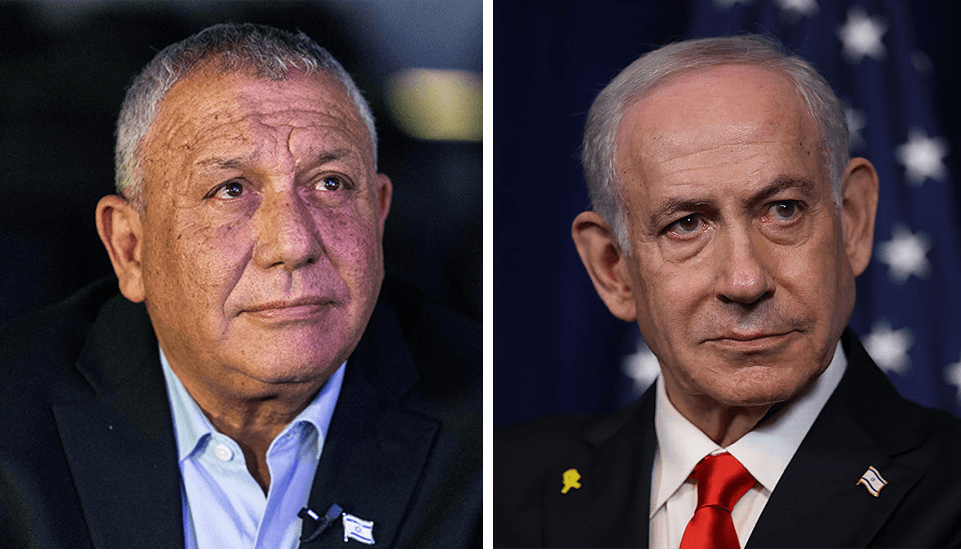
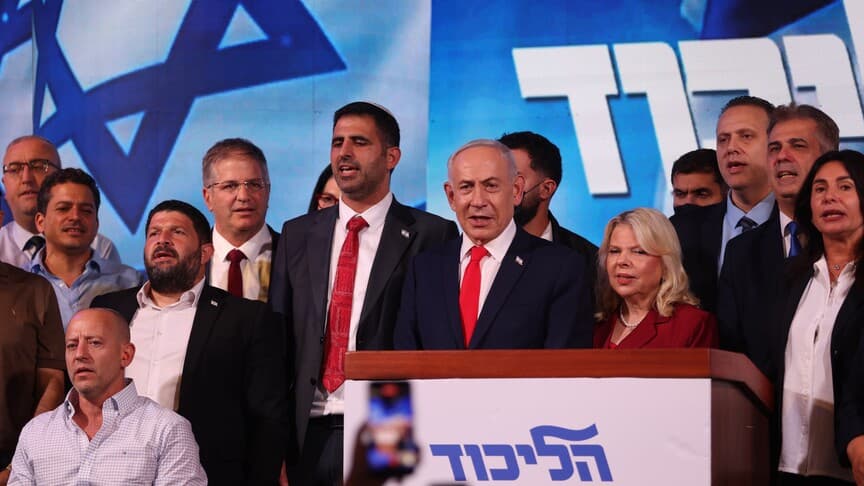
Exit polls in Israel's parliamentary elections held on Tuesday showed no clear winner: both the bloc of former chief of staff Gadi Eisenkot and the bloc of Prime Minister Benjamin Netanyahu remain below the threshold of 61 seats out of 120 in the Knesset. According to euronews, Channel 13 initially gave the opposition 53 seats against about 50 for Netanyahu's bloc, then lowered its forecast for Eisenkot's bloc to 52; Channel 12 also put the opposition at 52 seats. BBC cites later updates: after revised forecasts, Kan and Channel 13 showed a tie — 51 seats each — while Channel 12 gave Netanyahu 52 seats against 49 for Eisenkot; one of the channels initially gave the prime minister a three-seat lead. Both sides declared victory: Eisenkot said voters had 'made history' and that the results give him the first opportunity to form a government, while Netanyahu, on stage at Likud headquarters, declared that his right-wing bloc had a 'great majority' and called for the creation of a 'strong right-wing national government.'
Likud is the largest party, while the Arab lists are the record-breakers
Despite the uncertainty over the blocs, Likud remains the largest party in parliament in all forecasts, with 24–25 seats, and Eisenkot's party Yashar is second, with 21–23 seats. The main surprise is the result of the Arab parties: the United Arab List and the Joint List are forecast to win a record 17–19 seats amid historically high turnout among Arab voters, who make up about a fifth of the country's population. United Arab List leader Mansour Abbas said the right had 'suffered a major loss' and expressed hope that his party, together with the change bloc, would secure 61 seats in the Knesset. At the same time, Eisenkot himself had said he would not govern together with Arab lawmakers — a scenario Netanyahu used to frighten his voters. As AFP notes, Arab lawmakers could support Eisenkot in votes without joining the coalition — otherwise Israel may face new elections.
Record turnout and disputes over polling stations
Turnout at the close of polls at 22:00 stood at 77.7% — the highest figure at that hour since 1999, according to the Central Elections Committee. Netanyahu urged his supporters to vote all day, calling the election 'a matter of life and death,' and claimed that Arab voters supposedly wanted to 'steal the election'; Likud and other right-wing parties demanded that voting be extended, but the committee refused, noting that the high turnout 'reflects strong public engagement in the democratic process.' The prime minister also claimed that three leaders of the United Arab List had been detained in the south of the country with envelopes of cash; committee head Din Livne confirmed the detention of people attempting to bribe voters, calling it an isolated local incident. Official results will begin to be published overnight into Wednesday, but around 600,000 absentee ballots — mostly from soldiers, roughly a tenth of all votes — will only be counted by Thursday, after which the president will invite the leader with the best chances to form a coalition, a process that could take weeks.
The first elections since October 7
These are Israel's first elections since the Hamas attacks of October 7, 2023, and the subsequent wars in Gaza, Lebanon and Iran, and they were seen as a referendum on Netanyahu's leadership, as he has led the government since December 2022. The key themes of the campaign were accountability for the security failures of October 7, the conduct of the wars, the distribution of the burden of military service, the judicial reform, and Israel's international standing. Reactions split along party lines: Yair Golan, leader of the left-wing Democrats, said the public had 'ousted the Netanyahu government'; his ally Yair Lapid called the result a 'crushing defeat' for the prime minister; while Foreign Minister Gideon Sa'ar warned that the left's celebrations were 'premature', stressing that Likud remains the country's largest party. Far-right National Security Minister Itamar Ben-Gvir, whose party, according to exit polls, scored less than expected, cautioned Netanyahu against a partnership with Eisenkot in a national unity government, calling such an option a 'terrible mistake'. Political scientist Gideon Rahat of the Hebrew University of Jerusalem noted that Ben-Gvir did mobilize voters — but Arab ones — and added: 'Even if Netanyahu lost, that doesn't mean Eisenkot won.'