The key facts
- False threats led to diverted flights, evacuations and thousands of schoolchildren being sent home; responsibility has not yet been established
- France's interior minister allows for foreign interference, while President Macron believes the evidence is insufficient
- Von der Leyen's proposal for an emergency security protocol requires the support of member states and may remain merely advisory
A wave of threats with no identified perpetrator
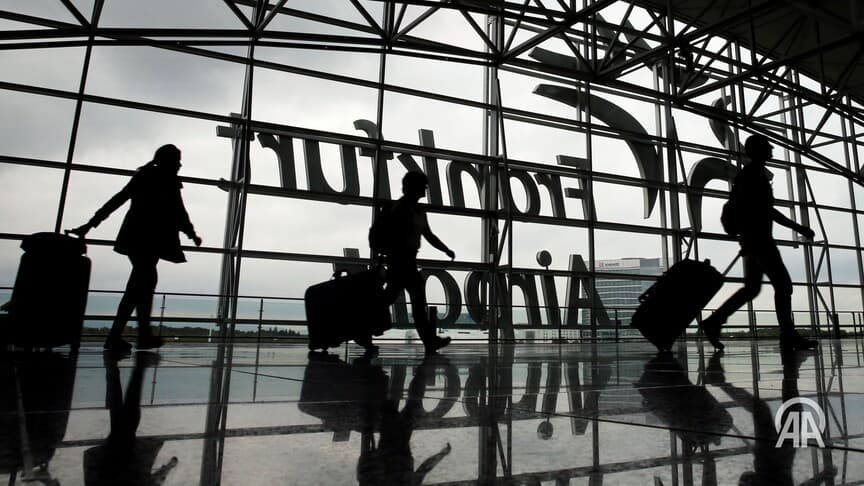
A series of false bomb threats has disrupted the work of schools, airlines, airports and media organisations across Europe: flights were diverted, buildings evacuated, and thousands of pupils sent home. Authorities are investigating who is behind the threats and whether the incidents are connected; there has been no public attribution of the campaign to a terrorist organisation or a state. This is according to a political scientist at the European Policy Centre in Brussels Juraj Majcin, in a column for Anadolu.
Suspicion directed at Russia: the versions diverge
Although responsibility has not been established, Russia has already emerged as a suspect in political debate. French Interior Minister Laurent Nunez allowed for the possibility of foreign interference and named Russia among possible suspects, but President Emmanuel Macron stressed that the available evidence is insufficient to assign responsibility. Majcin notes that the context of previous hybrid operations — disinformation, cyberattacks, GPS interference, sabotage and arson — gives investigators grounds to examine the Russian lead, but does not prove involvement. He also draws a parallel with the threats that disrupted schools in Czechia and Slovakia in September 2024: Czech intelligence concluded at the time that the activities of the presumed perpetrator were most likely financed by an entity from Russia.
A cheap weapon of psychological pressure
The author explains the logic of such campaigns: hybrid warfare seeks to weaken an adversary's willingness to resist at a small fraction of the cost of conventional military operations. Schools and airlines are especially sensitive — threats against children and air traffic trigger immediate alarm and force authorities to respond even when there is no real danger. A separate phenomenon is the 'uberisation' of hybrid warfare: instead of using one's own operatives (as in the Skripal poisoning), perpetrators are recruited via Telegram and other online channels and paid in cryptocurrency; some of those recruited may not know they are working for the Russian state. This makes operations cheaper, broadens the pool of potential perpetrators and makes it harder to trace the masterminds.
The political aim and the EU's fragmented response
If the threats turn out to be a Russian operation, their aim, in the author's view, is to turn fear into political pressure: support for Ukraine supposedly brings insecurity at home, while a deal with Moscow promises stability. This pressure falls on societies already divided over aid to Kyiv: the AfD in Germany is demanding an end to military aid, Marine Le Pen in France has promised to halt financial assistance to Kyiv, and a September poll in Italy showed that about 55% oppose further arms deliveries. Meanwhile, the response remains national: General Alexus Grynkewich, commander of NATO forces in Europe, warned the European Parliament that fragmented national reactions may collectively send the adversary the wrong signal — either escalating beyond what was intended or appearing too weak. European Commission President Ursula von der Leyen's proposal for an emergency security protocol modelled on NATO Article 4 could close this gap, but it needs the support of member states that jealously guard their sovereignty in security matters; even if adopted, it may amount to no more than consultations, and measures requiring unanimity will remain vulnerable to a veto by any individual government.