The key facts
- Exit polls give both blocs about 51 seats, with 61 needed for a majority
- Turnout was nearly 78% — the highest since 1999; Arab parties are projected to win 17–18 seats
- Eisenkot rules out a coalition with Arab lawmakers but allows for a minority government with their support
Both camps claimed a mandate
After the Knesset elections held on Tuesday, Israeli Prime Minister Benjamin Netanyahu and his rival, former chief of staff Gadi Eisenkot, declared on Wednesday their intention to form a government, even though, according to exit polls, neither bloc won a majority. This is reported by AFP. Israel's three leading television networks gave each camp about 51 seats out of 120 — well below the required 61, with the opposition initially appearing to hold a slight lead.
Record turnout and the rise of Arab parties
Turnout was nearly 78% — the highest since 1999. Israel's Arab parties achieved the greatest success, projected to win 17–18 seats: their voters turned out en masse, partly in response to the harsh rhetoric of Netanyahu's far-right allies. Mansour Abbas, leader of the Arab list, said the right-wing bloc had 'suffered a major loss' and expressed readiness to work with Eisenkot. However, Eisenkot himself ruled out during the campaign governing in a coalition with Arab lawmakers, while Netanyahu once again questioned the legitimacy of a government relying on Arab votes. One possible scenario is external support from Arab lawmakers for a minority government without joining the coalition; otherwise, Israel may face new elections.
Leaders' statements
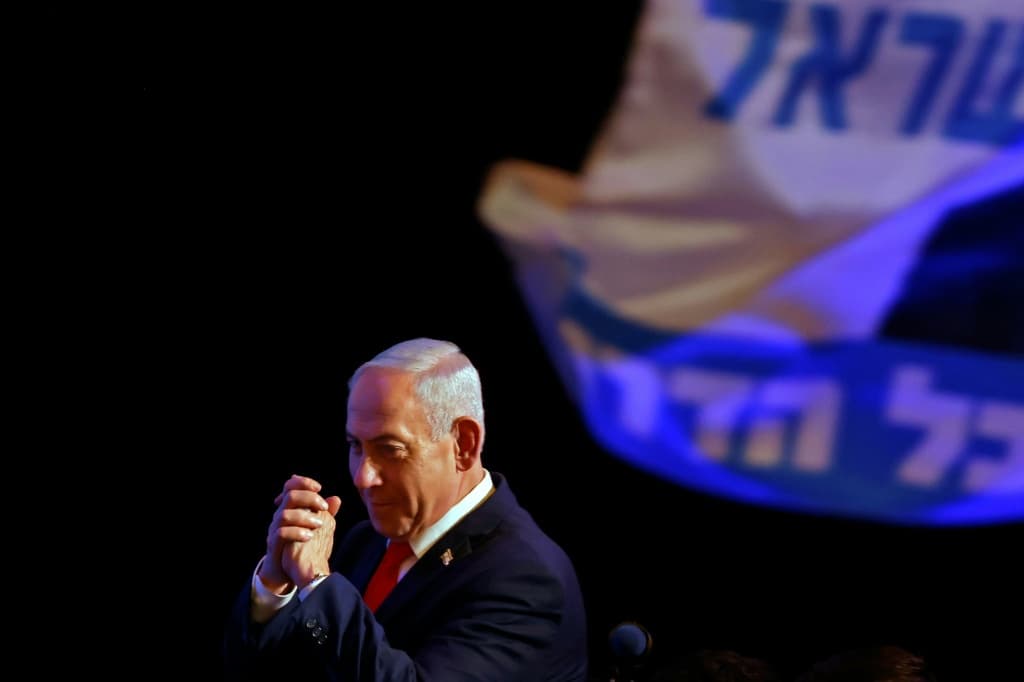
Netanyahu, speaking to supporters in Jerusalem after three in the morning, called for a 'strong right-wing government' and said that 'the Jewish and Zionist majority must unite.' He spoke unusually briefly and did not directly declare victory, instead listing the leaders eliminated on his orders and once again hinting at readiness for a third campaign against Iran together with US President Donald Trump. Eisenkot in Tel Aviv warned Netanyahu: 'Don't you dare use Israel's security for your political needs,' calling him an 'acting prime minister without a mandate or the people's trust.' He said that 'the public voted for change,' called holding a second round of elections a mistake, and promised to form a government quickly, adding that a worthy leader would acknowledge a vote of no confidence and leave politics.
Context and limits of the forecasts
Far-right Itamar Ben-Gvir, whose result, according to exit polls, fell short of expectations, warned Netanyahu against a national unity government option with Eisenkot, calling it 'a terrible mistake.' Gideon Rahat, a political scientist at the Hebrew University of Jerusalem, noted that Ben-Gvir mobilized votes — Arab voters — but stressed: 'Even if Netanyahu lost, that doesn't mean Eisenkot won.' The elections took place against the backdrop of Israel's growing international isolation; Netanyahu is under an International Criminal Court arrest warrant in the Gaza case and faces domestic corruption charges. Eisenkot, who shares many of Netanyahu's views on security and supported the Gaza offensive, promised a more inclusive atmosphere within the country and restraint of settlers in the West Bank. According to AFP, tens of thousands of Israelis flew in from abroad for the elections. The final distribution of seats under the official results remains unknown: exit polls do not make it possible to determine who exactly will receive the mandate to form a government.