The key facts
- Jorge Gastelumendi (Atlantic Council) linked the US retreat from climate cooperation to growing migration pressure that could also affect the United States itself
- Jorge Gastelumendi (Atlantic Council) linked the US withdrawal from climate cooperation to growing migration pressure that could also affect the United States itself
- The US left the board of the Fund for Responding to Loss and Damage in March 2025; its withdrawal from the Paris Agreement took effect on January 27 of this year
- The US left the board of the Fund for Responding to Loss and Damage in March 2025, and its withdrawal from the Paris Agreement took effect on January 27 of this year
- The expert believes that funding from developed countries 'will never be enough' and calls for preparing domestic infrastructure for extreme weather
A warning against the backdrop of the COP31 summit
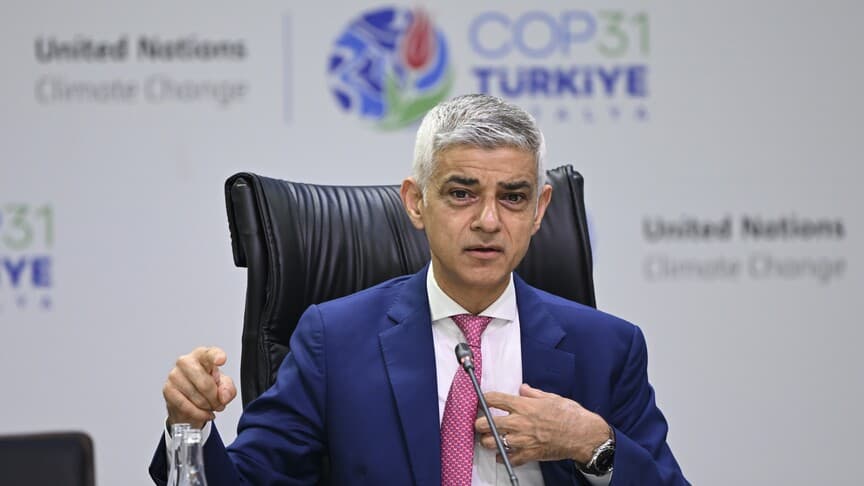
The United States' withdrawal from international climate cooperation could leave vulnerable countries with fewer opportunities to recover from natural disasters and thereby intensify migration pressure — including on the United States itself. Jorge Gastelumendi, senior director of the Atlantic Council's Climate Resilience Center, gave this warning in an interview with the Turkish news agency Anadolu at the COP31 climate summit in Antalya Jorge Gastelumendi, senior director of the Atlantic Council's Climate Resilience Center, previously worked as Peru's climate negotiator, led The Nature Conservancy's international climate finance team, and headed a carbon fund at the World Bank., having previously served as Peru's climate negotiator, led The Nature Conservancy's international climate finance team, and headed a carbon fund at the World Bank.
'Everything is connected': the logic of a full circle
According to the expert, the consequences of a major donor's departure go beyond the loss of financial support: it also affects what international processes look like and how other countries follow that example. 'It also affects what international processes look like and how other countries follow that example,' Anadolu quotes him as saying. If international support shrinks, it becomes harder for vulnerable countries to recover from disasters, and people have a growing incentive to leave their homes. Countries that refuse to provide assistance may eventually face the consequences themselves: the United States, Gastelumendi noted, 'may need to accept more immigrants.' 'It's a full circle. Everything, one way or another, is connected,' he added.
What has already happened with US participation
The warning came against the backdrop of Washington's ongoing retreat from international climate commitments. In March 2025, the United States left the board of the Fund for Responding to Loss and Damage, created at COP28 to help vulnerable developing countries. According to the UN, the US withdrawal from the Paris Agreement took effect on January 27 of this year.
The scale of the problem and the limits of financing
Statistics on displacement illustrate the scale of the problem: according to the Internal Displacement Monitoring Centre (IDMC), weather disasters caused 27.2 million internal displacements worldwide in 2025, with each movement, including repeated ones, counted separately. According to an assessment by the Intergovernmental Panel on Climate Change (IPCC), cited by Anadolu, most climate migration occurs within the affected countries, while those crossing borders usually move to neighboring states.
The El Niño test and a bet on domestic policy
Back in August, in a statement cited by the agency, Gastelumendi noted that a strong El Niño event could serve as a test of whether international climate finance is able to respond to floods, droughts, food shortages, and health emergencies. In Antalya, he explained that climate finance negotiations usually focus on 'specific amounts that developed countries are supposed to provide to developing ones,' but that this is not enough: 'It matters for historical questions, but it will not be enough, and it will never be enough, because the challenge is so great.' Instead, he pointed to steps governments can take domestically: preparing health services for heat waves, strengthening food supply chains, and modernizing energy infrastructure for extreme weather — solutions that require 'strategic thinking about how the economy wants to be competitive and resilient.'
Cooperation amid competition and the responsibility of capitals
Gastelumendi also noted that shifting geopolitical ties are changing the very manner of negotiations at climate summits: countries seek opportunities for cooperation with some partners — for example, in technology investment or food trade — while simultaneously competing with those same countries in other areas. COP31 is being held in Antalya from November 9 to 20, with the presidency held by Turkey and the negotiations led by Australia. At the same time, the expert stressed, responsibility is not limited to the summit: governments need domestic policies that encourage businesses to invest in agriculture, healthcare, energy, and infrastructure. 'There is a process that we will see in Antalya over the next two weeks, but there is also responsibility in national capitals — to adopt the right policies, engage various stakeholders, including the private sector, in order to do more on the ground for people and communities,' he concluded.