The key facts
- Sadiq Khan said that a 'pro-climate' agenda helped him win the London mayoral elections three times
- He discussed cooperation between London and Istanbul in urban development with Turkish President Recep Tayyip Erdogan
- Oxford Street became fully pedestrian on October 26; the £150 million project has already brought a record influx of visitors, according to the mayor
Climate policy as an electoral asset
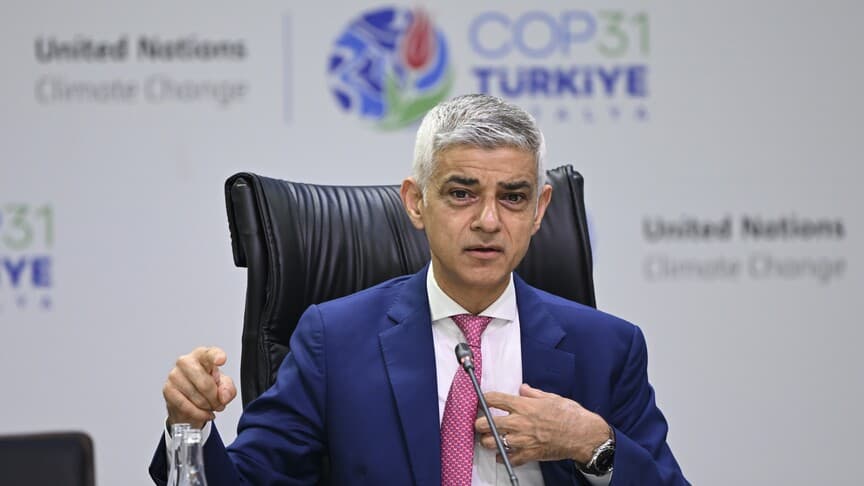
London Mayor Sadiq Khan, who has held the post since 2016, said in an interview with Anadolu on the sidelines of the COP31 climate conference in Antalya that the environmental agenda can be an electoral advantage rather than a burden. According to him, London's experience has shown that if climate policies are properly explained to voters and deliver tangible benefits, voters respond positively. 'We won the first, second and third time as a pro-climate mayor,' Khan said. Asked about a possible fourth term, he replied: 'Inshallah, we'll see.'
A decade in power: air, transport and the 2030 target
Khan described London after ten years of his work as a city that has become 'greener, safer, healthier, more prosperous and more accessible.' He recalled that during his first election campaign, experts warned him that bringing London's air quality up to legal standards could take 200 years due to pollution. According to him, thanks to ambitious targets and the expansion of clean transport — bicycles, electric buses and taxis, and the development of low- or zero-emission rail — the air has become significantly cleaner, which has reduced hospitalizations and premature deaths and improved children's lung health. The mayor said he aims to make London carbon-neutral by 2030, but stressed that this requires support from the central government and business.
Pedestrian Oxford Street and population growth
Khan defended the decision to make Oxford Street, which he called 'the nation's high street,' fully pedestrian on October 26, acknowledging that there was significant resistance to it. The £150 million project (about $200 million), he said, has already shown encouraging results: a record number of visitors and growth in trade. In the new year, new trees are to be planted on the street and benches installed. The mayor also said that London's population growth is a sign of the city's attractiveness, and that his administration is working with the UK government on building a record number of new homes and investing in infrastructure and public transport.
Cooperation with Istanbul and the consequences of climate change
Khan said that the day before he had spoken with Turkish President Recep Tayyip Erdogan, a former mayor of Istanbul, about his ideas for cities, noting that Istanbul and London are sister cities and that he plans to discuss possible areas of cooperation with colleagues in Istanbul in the face of the growing climate crisis. He also cited specific consequences of climate change in London: heatwaves with temperatures up to 40 degrees, school closures, and the impossibility of staying in homes and on public transport. 'This is happening now,' Khan stressed, adding that extreme weather is already causing economic damage and increasing healthcare costs.