The key facts
- Marketer Anastasia Isakova linked the air fryer meme to the image of cookie-cutter consumer happiness
- The appliance became part of 'air fryer aesthetics' and the 'Queen of Spades' meme — a collective social media heroine
- Isakova explains the irony through social comparison theory, cognitive dissonance, and snobbery; the appliance costs 4,000–30,000 rubles
From kitchen appliance to lifestyle symbol
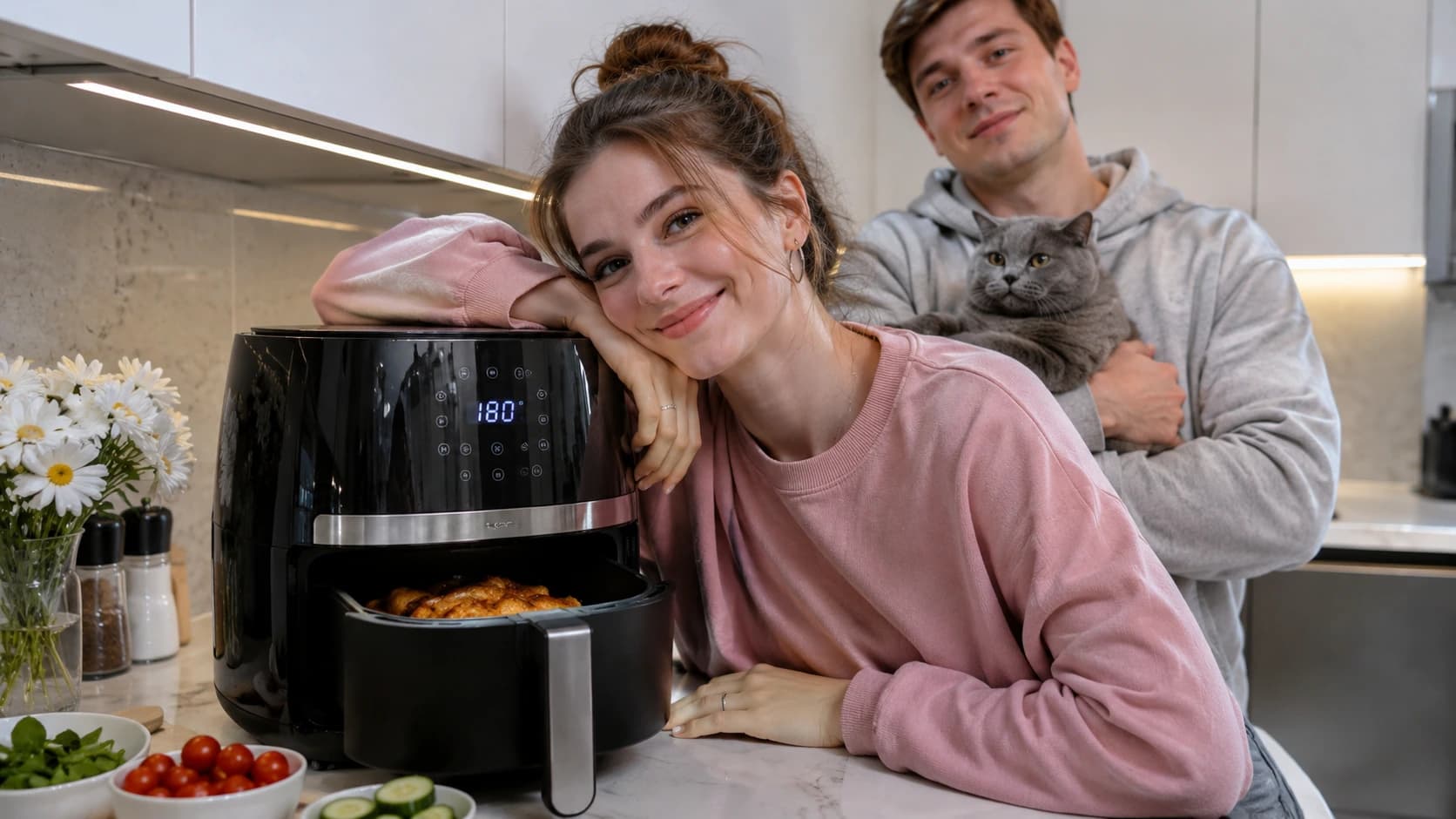
The air fryer became an internet meme not because of its culinary functions, but because it turned into a symbol of standard consumer happiness, explained marketing specialist and creative director Anastasia Isakova in a Life.ru article. According to her, the appliance is now associated with a mortgage on a new-build apartment, a Chinese car bought on credit, and purchases on online marketplaces.
The role of creators and 'air fryer aesthetics'
Isakova notes that the air fryer 'has become a hostage of its own popularity': the appliance is genuinely useful, but its rapid spread and the excessive enthusiasm of UGC creators, who praise the device's basic capabilities as if a solution to all of life's problems had been found, have led to owning one being seen as a marker of a certain category of people. Viewers, in the marketer's opinion, pick up on this falseness and laugh first at the cookie-cutter advertising, and then at the product itself.
The connection to the 'Queen of Spades' meme
This is how 'air fryer aesthetics' emerged — no longer just a kitchen appliance, but an entire way of life. The appliance joined the 'Queen of Spades' meme — a collective social media heroine whose well-being consists of a recognizable set of possessions; she is often described with the phrase 'the life I'm afraid of,' turning her into a symbol of consumerism and the absence of personal taste.
Why the irony is aimed specifically at the air fryer
According to Isakova, the air fryer became an object of mockery because of its affordability: a car is expensive, whereas the kitchen appliance can be bought for 4,000–30,000 rubles, including in installments. Moreover, it is easy to film on video and spread across social media.
The psychological mechanisms behind the mockery
The expert looks for the reasons for mocking a perfectly comfortable life in social psychology. She cites Leon Festinger's social comparison theory: when social media constantly show other people's travels and beautiful interiors, an apartment in a typical new-build no longer seems like a great achievement. The second mechanism is cognitive dissonance: a person may resolve the contradiction between their desires and their idea of an attainable lifestyle by devaluing what they desire. 'Like the fox in Aesop's fable who couldn't reach the grapes and decided they were sour, and therefore not worth striving for,' Isakova explained. The third reason is the desire to stand out from the 'normies,' which reveals an element of social snobbery: one may not own an apartment, yet still feel superior to its owner.
A protest against a prescribed script
For some users, the jokes become a protest against the notion that a small apartment in a 'human filing cabinet' and a Chinese car on credit are considered signs of a good life. At the same time, behind the mockery, in Isakova's view, there may lie an ambivalent attitude toward stability. 'We want stability and at the same time want to be interesting and not live according to a predetermined script. Perhaps people laugh at the air fryer not because they don't want well-being, but because they are afraid to discover that everything they strove for is just an apartment, a car, and a quick dinner,' the expert concluded. Earlier, the same outlet reported on the emergence on social media of 'air fryer music' — the joking term Gen Z gave to the songs constantly playing in cooking videos made by the older generation, especially melodies created or reworked by artificial intelligence; the trend spread beyond recipes into music quizzes and dancing next to kitchen appliances.