The key facts
- Turkey officially raises no objection to the restoration of the Kirkuk–Baniyas pipeline between Iraq and Syria
- Iraq and Syria signed an agreement on repairing the 800-km pipeline in July 2026 amid the blocking of the Strait of Hormuz due to the US–Iran war
- Analysts rate the prospect of a quick restoration as low: reconstruction would require billions of dollars and years of work
Ankara's position
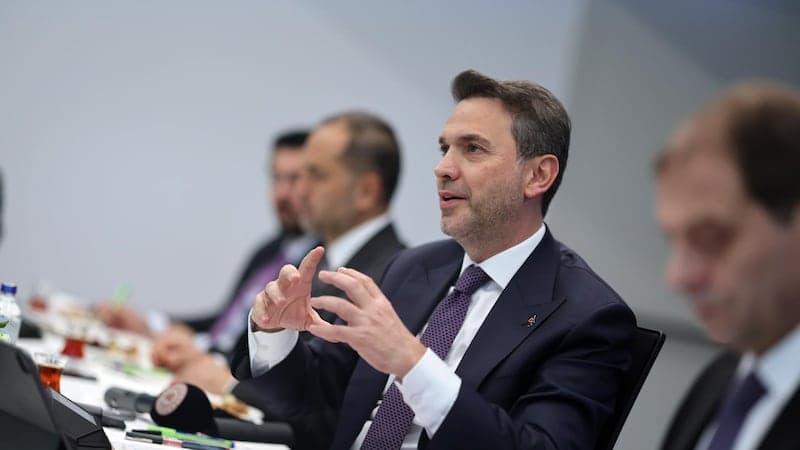
Turkey has no objection to the restoration of the oil pipeline between Iraq and Syria, which would give Baghdad an export route alternative to the Strait of Hormuz. “We are not afraid” of the Kirkuk–Baniyas pipeline, said Turkey's Minister of Energy and Natural Resources Alparslan Bayraktar, answering a question from The National at a press briefing in Istanbul, where the country's energy strategy up to 2040 was presented. According to him, the Turkish route remains cheaper and more stable, and there is enough capacity for everyone: Ankara proposes increasing the existing throughput capacity of 1.5 million barrels per day to 2.5 million, while the “Syrian route” could reach 1–1.5 million b/d.
Context of the agreement and the state of the route
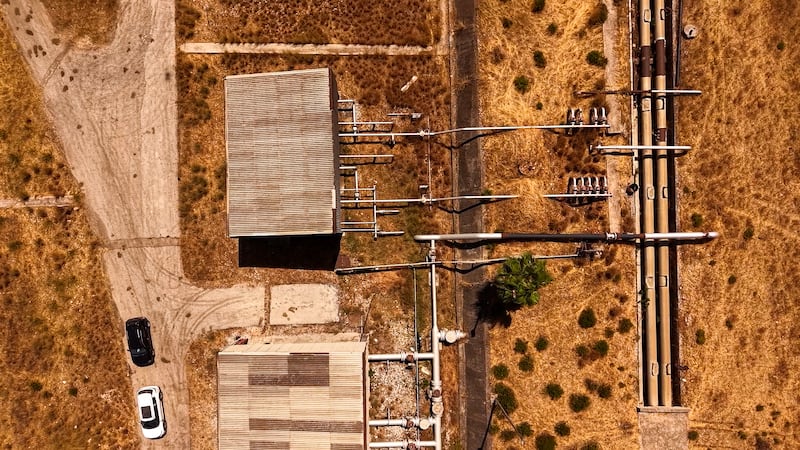
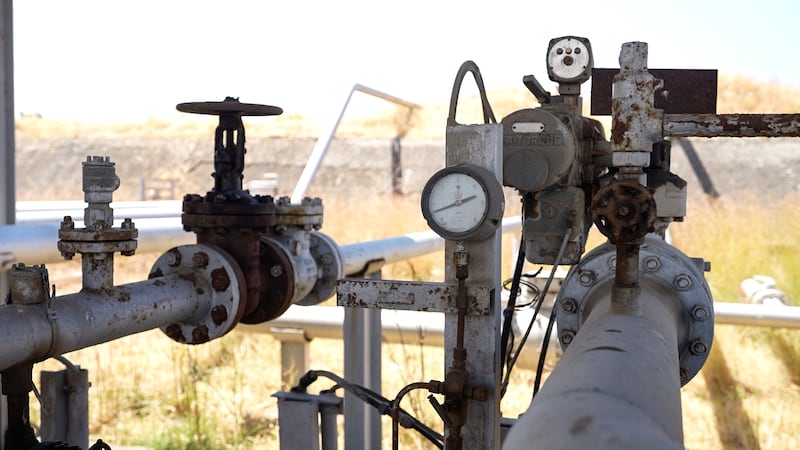
Iraq and Syria signed an agreement on the repair of the 800-kilometer Kirkuk–Baniyas pipeline in July. The line opened in 1952 with a throughput capacity of 300,000 barrels per day, but has been idle since the American invasion of Iraq in 2003. The deal became part of the broader search by Middle Eastern countries for alternative export routes: due to the war between the US and Iran, tankers cannot pass through the Strait of Hormuz. Iraq, having lost its usual export through southern ports, is already trucking tens of thousands of additional barrels per day northward — to Turkey's pipeline network — and asked Syria for help with overland oil transportation. A working pipeline through Syria would allow pumping oil from Kirkuk to the Mediterranean coast at Baniyas more efficiently than road transport.
Obstacles and the state of the Turkish route
Analysts do not expect a quick repair: according to Kpler's assessment, the probability of implementation in the near term is “low,” and restoration would likely require billions of dollars and take years. Among the obstacles are sanctions against the former Assad regime and instability in both countries; the pipeline runs through remote desert areas where ISIS cells operate, known for attacks on oil infrastructure. Meanwhile, the main Turkish route through the port of Ceyhan (throughput capacity of 1.5 million b/d on the Turkish side) is itself experiencing turbulence: exports were completely halted in March 2023 for two and a half years following an arbitration court ruling that Turkey had violated the agreement, and the Iraq–Turkey agreement expired this summer, with supplies now governed by an extension of the agreement between Iraq's oil authorities and Botas. According to shipment analysis from Ceyhan cited by Iraq Oil Report, the seven-day average export as of October 5, 2026 was about 328,000 b/d versus less than 200,000 b/d in September — the increase was driven precisely by trucked oil deliveries from southern Iraq.
The broader agenda
Bayraktar also said that for years he had proposed to Iraq extending the Kirkuk–Ceyhan pipeline to Basra in order to diversify supply routes. Beyond pipelines, he presented Turkey's energy goals up to 2040: a 40% reduction in carbon emissions, a bet on nuclear power, electrification and renewables, as well as attracting $1 trillion in investments by 2040 on the path to carbon neutrality by 2053. Rosatom's Akkuyu nuclear power plant near Mersin is close to launch — physical startup is expected “in the coming weeks.” The minister explained the reduction of Russian gas imports in favor of American LNG not by politics but by price: “Russia is extremely expensive.” A key theme of the COP 31 summit, which Turkey will host in Antalya next week, will be the need for urgent action to keep the 1.5 °C warming goal within reach.