The key facts
- The agreement to connect all six GCC countries by rail is to be signed on November 8 in Manama
- The roughly 2,100-km network from Kuwait to Oman is targeted for completion by 2030
- The war with Iran and the blockade of the Strait of Hormuz forced Bahrain to shift to road transport and alternative ports
The signing is scheduled for November 8
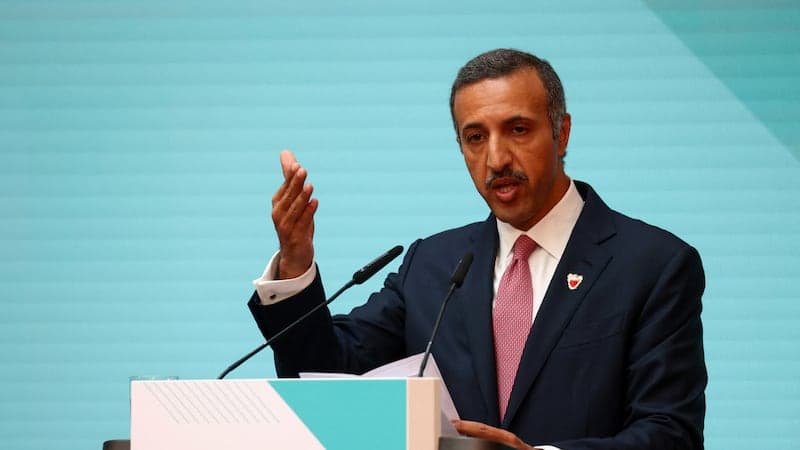
Bahrain expects the key agreement on a railway network linking all six member states of the Gulf Cooperation Council to be signed at the GCC transport ministers' meeting in Manama on November 8. In an exclusive interview with The National the kingdom's Minister of Transportation and Telecommunications, Sheikh Abdulla bin Ahmed Al Khalifa, said the agreement — the most important achieved at the GCC level on this project — was the result of intensive coordination between the member states and their agencies.
What is known about the project
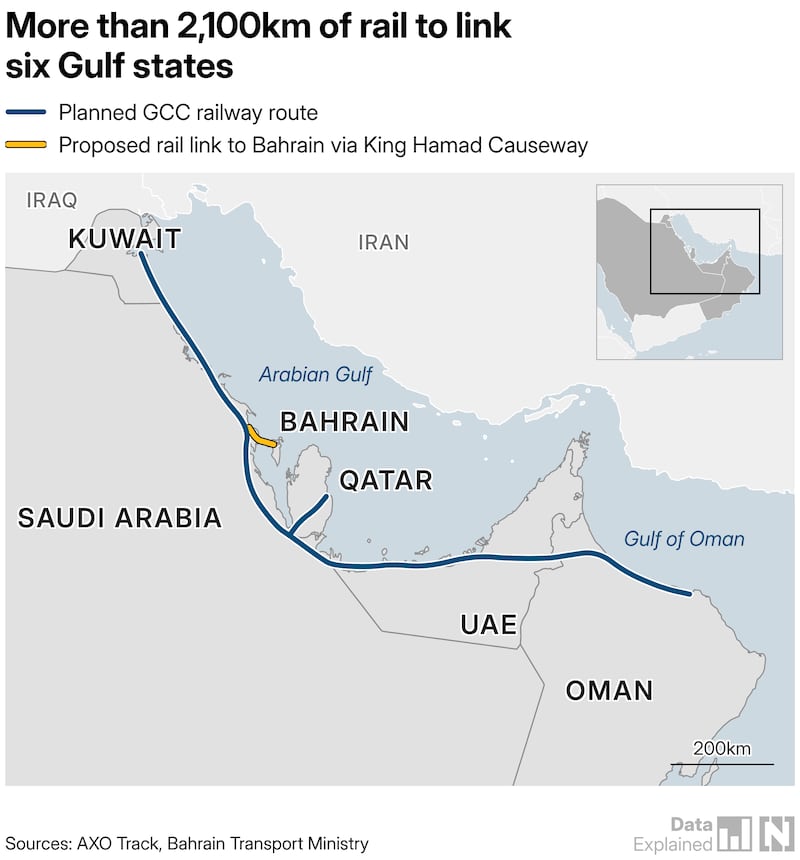
The Gulf railway project, first proposed more than a decade ago, is meant to create a unified network of about 2,100 km — from Kuwait in the north to Oman in the south — for passenger and freight transport aimed at strengthening regional trade. Completion of the network is planned for 2030. The headquarters of the newly established GCC Railway Authority is located in Riyadh; it is responsible for unifying technical standards and providing technical support.
Uneven progress among participants
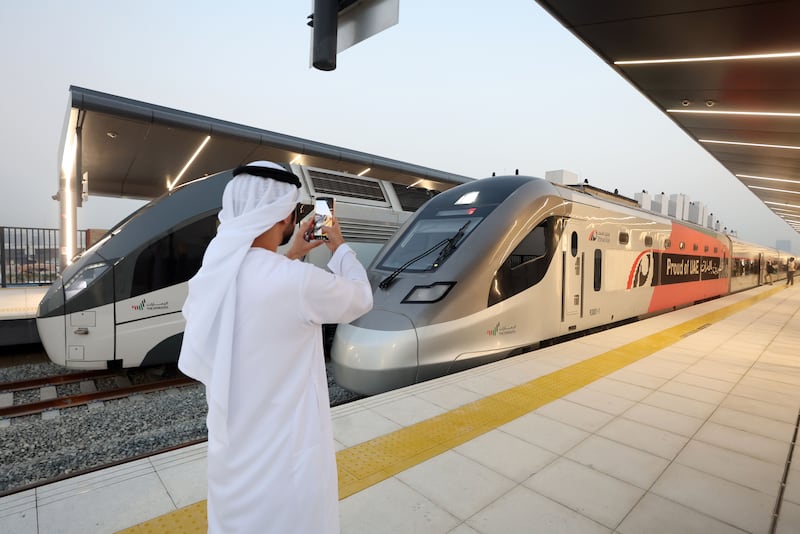
The level of readiness varies considerably among the countries. The UAE has already launched a nationwide railway network, while Oman is developing cross-border connections with the Emirates through the 238-km Hafeet Rail project, linking the port of Sohar with Abu Dhabi via Al Buraimi and Al Ain; trial runs are expected in 2027. For Bahrain, integration into the network depends on the planned connection with Saudi Arabia via the new King Hamad Causeway — a combined road and rail crossing. The minister also said that Bahrain and Saudi Arabia are working on a railway link between the two countries.
The war has raised the project's stakes
According to the minister, regional crises have only underscored the need to accelerate the project's implementation. After the war began in late February, when the US and Israel struck Iran, Tehran retaliated by attacking countries hosting American military facilities, energy and other strategic infrastructure in the region, and effectively blockaded the Strait of Hormuz — a key artery of global energy shipping — by attacking vessels on unsanctioned routes. All six Gulf monarchies were subjected to repeated Iranian missile and drone strikes.
How Bahrain circumvented the blockade
Bahrain, which has only one airport, one seaport and one land crossing, after shipping through the Strait of Hormuz became difficult, faced a decline in vessel calls at the Khalifa bin Salman port and had to make greater use of road transport and neighboring countries' alternative ports — Jeddah in Saudi Arabia, Sohar and Duqm in Oman, and Fujairah in the UAE — with subsequent delivery of goods by road. Coordination with Riyadh made it possible to organize road freight transport, including the admission of empty trucks and import and export procedures through alternative ports. Bahrain held two emergency meetings of GCC transport ministers with the participation of port, customs and road transport authorities. Transport is the lifeline of any economy, Sheikh Abdulla stressed.