The key facts
- France's debt is about 120% of GDP versus roughly 65% for Germany; France's rating is AA/A+/Aa3 with a negative outlook, Germany's is AAA
- The premium over German 10-year bonds is almost 1.6 percentage points, having more than doubled since June 2026
- Interest expenses: over €79 billion in 2026, more than €91 billion in 2027, up to €125–132 billion by 2030
Debt, protests, and money that isn't there
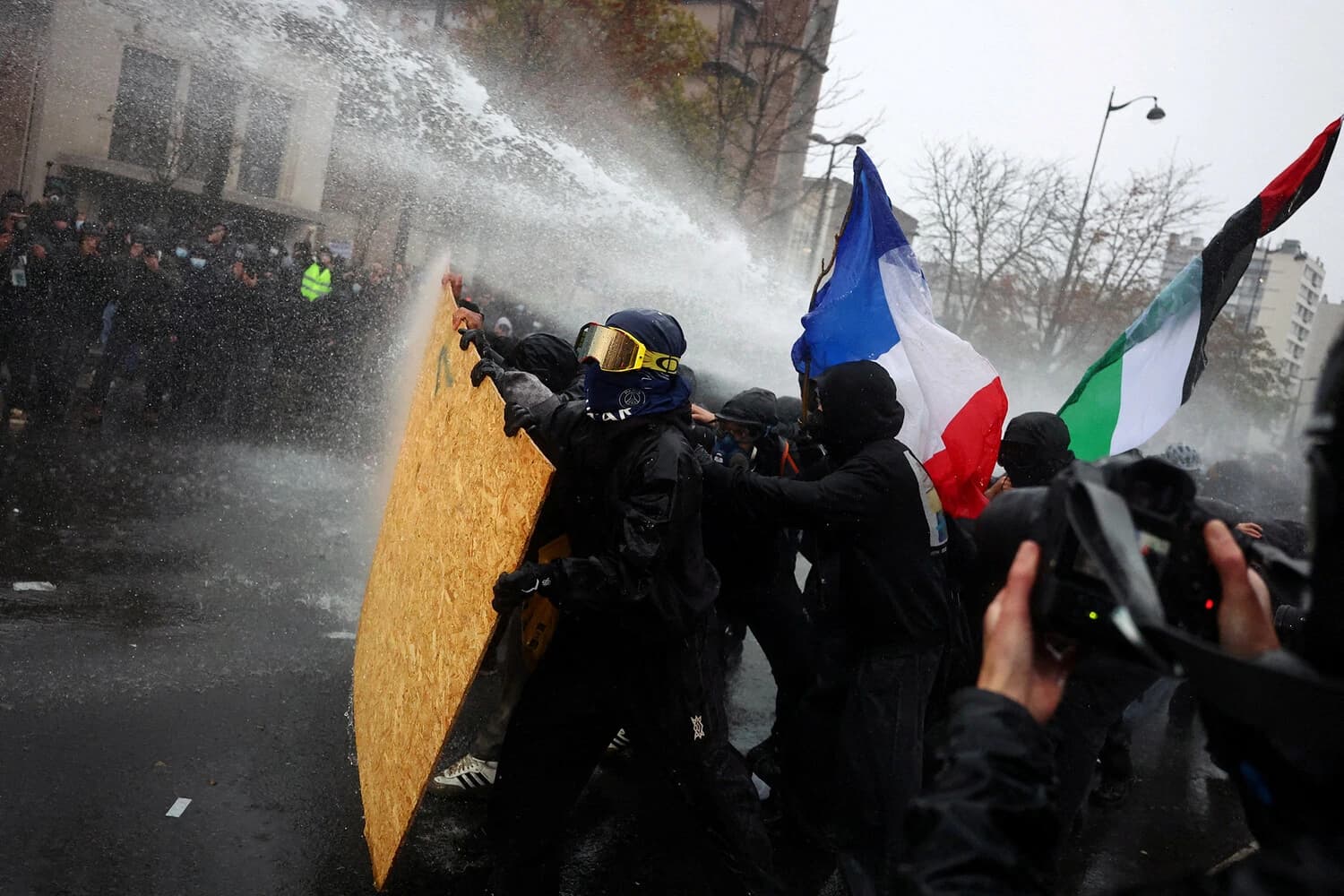
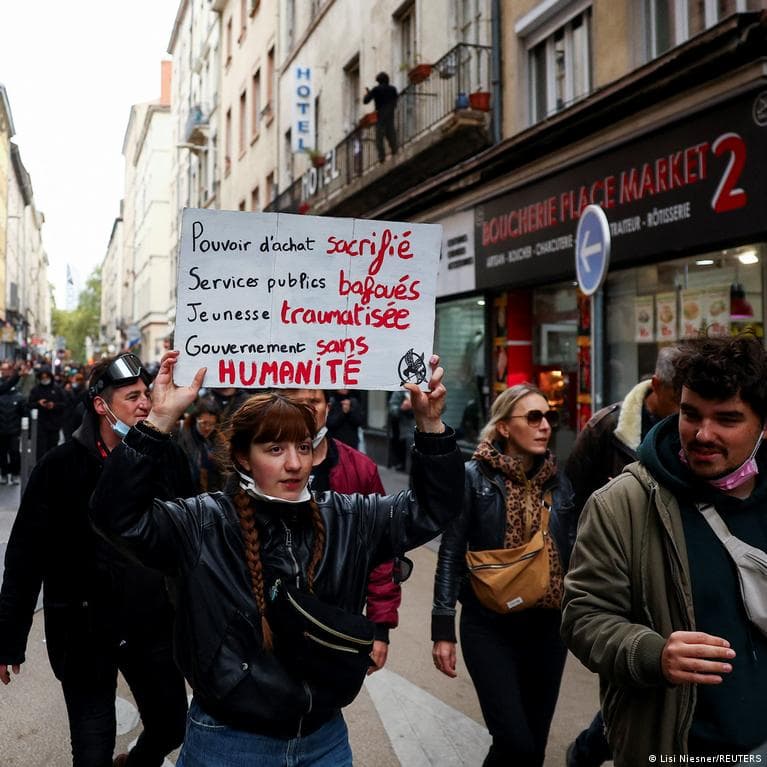
France, as described by Deutsche Welle, is in a triple deadlock: high debt, political confrontation between extremist forces, and a government without a parliamentary majority. Against the backdrop of nationwide protests, the authorities plan to allocate €4 billion in low-interest loans for school repairs by 2030 and another €1 billion for universities by 2029 — the publication notes outright that the state is promising money it does not have. Public debt stands at about 120% of GDP; for comparison, Germany's is roughly 65%, even though Berlin has launched a €600 billion investment package for infrastructure and defense.
A growing risk premium
France's rating is AA, A+ or Aa3 depending on the agency, with several agencies having a negative outlook, whereas Germany retains the highest AAA rating with a stable outlook. As a result, Paris pays almost 1.6 percentage points more than Berlin on 10-year bonds: the premium over German bonds is at its highest since the financial crisis and has more than doubled since June 2026. The publication emphasizes that the main driver is not the overall level of interest rates but the growing premium for high debt, political instability, large budget deficits, and recent unrest. France last paid a comparable premium at the end of 2011, at the height of the eurozone debt crisis.
What economists say
Friedrich Heinemann, an economist at the Leibniz Centre for European Economic Research (ZEW), compared the spread to a 'thermometer' for markets: if it rises too quickly, financing conditions in France deteriorate, borrowers pay more, banks run into difficulties, and the situation could slide into a financial crisis. Landri Charrier, a researcher at the University of Bonn, by contrast, does not expect a quick end to the debt model: according to the national statistics agency INSEE, 56% of the population receives more from the state than it pays in taxes and social contributions, so the majority has a direct interest in preserving the status quo. He also notes that the euro made access to cheap financing easier and removed the signal that devaluations of the franc used to provide, creating the illusion that adjustment could be postponed indefinitely.
Servicing costs and political promises
France has been spending more than it collects for over half a century: the last balanced national budget was adopted in 1974. In 2026, the country is expected to pay more than €79 billion in interest on the entire public debt (including social security funds and local authorities), over €91 billion in 2027, and between €125 and €132 billion by 2030; according to the French treasury agency Agence France Trésor, the central government alone will pay €62.6 billion. At the same time, Paris will have to refinance bonds issued at historically low rates and increase debt due to the deficit. Meanwhile, both the far-right National Front and the far-left La France insoumise are building their campaigns on expensive promises: Marine Le Pen wants to bring back the retirement age of 62, promising €140 billion in savings, while Jean-Luc Mélenchon proposed 'throwing into the fire' the government bonds held by the central bank. Heinemann called this 'fairy tales' told by the right and the left, claiming that an exit is possible without budget consolidation and painful cuts.
A warning for Germany too
Rising interest costs also affect Berlin: according to Heinemann's calculations, federal government payments, currently about €30 billion a year, will triple in the coming years and exceed €90 billion, with the €100 billion mark 'not far off.' For France, in the publication's wording, economic realities have almost no influence on the political debate — and it is precisely this combination that makes the current situation particularly persistent.