The key facts
- By 2030, the volume of clinical and support services purchased from the private sector will be raised to 30%.
- By 2030, the volume of clinical and support services procured from the private sector will be raised to 30%.
- From 1 January 2027, a new outsourcing procedure takes effect; contracts — up to 5 years, and up to 10 years for investments with a payback.
- At least 5 large medical organizations will attract foreign management companies; an oversight system, 'Tibbiyot autsorsingi', will be created by 1 April 2027.
- Foreign management companies will be engaged for at least 5 large medical organizations; the 'Tibbiyot autsorsingi' monitoring system will be created by April 1, 2027.
What the president decided
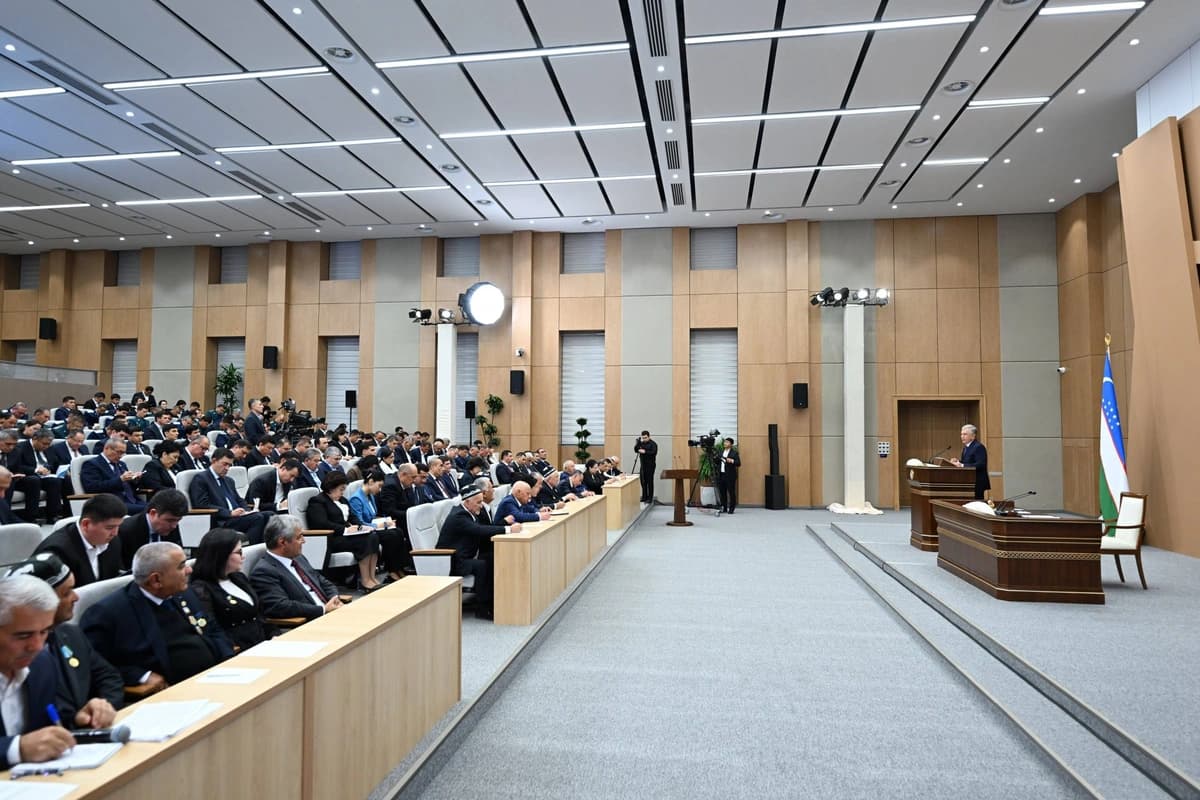
President Shavkat Mirziyoyev signed a decree on 4 November expanding the participation of the private sector in the healthcare system, reports Gazeta.uz. The document provides for three key areas: purchasing part of medical services from the private sector through outsourcing, attracting professional managers to large medical institutions, and developing public-private partnerships in the construction of new facilities. By 2030, the volume of clinical and support services purchased by state medical organizations from the private sector is to reach 30%, and at least 5 large medical organizations are planned to attract foreign professional management companies and groups of managers to introduce advanced management practices.
How the mechanism will work from 2027
From 1 January 2027, a new procedure comes into force for purchasing medical and support services from the private sector. Outsourcing contracts will be concluded for terms of up to five years — depending on the nature of the service and the volume of investment made by the contractor; in individual cases, based on the investment payback period and with a conclusion from the Health Ministry, the term may be extended to ten years. Projects whose terms expire before the new procedure takes effect are allowed to continue until the end of 2027. Under the contracts, medical institutions will be able to transfer buildings, their separate parts or premises to private contractors for free use — provided there is a justified conformity to their economic purpose and this is factored into the service price.
Dividing the roles of the state and private contractors
The decree delineates where the state remains and where the private sector comes in. Institutions necessary for providing state-guaranteed medical care remain state property, and their capacity will be developed in proportion to the actual needs of the population. New medical facilities requiring large capital investments are to be created on the basis of public-private partnership — the Health Ministry will organize project preparation, selection of private partners and conclusion of deals. Where large investments are not required and the private sector already has sufficient capacity and a competitive environment, services will be purchased through outsourcing under public procurement legislation. The involvement of the private sector will be determined taking into account the territories' need for medical services and the existing capacity of state and non-state organizations, on the basis of long-term and short-term master plans.
Professional managers and electronic oversight
The decision to appoint a professional manager to a specific medical institution will be made based on a comprehensive assessment of clinical and financial indicators, management efficiency and development goals. Selection will take place through an open competition taking into account experience in healthcare management, financial stability and managerial potential; the manager's performance will be assessed annually against KPIs fixed in the contract, and the assessment results will serve as grounds for extending, revising or terminating the agreement. To monitor the outsourcing projects themselves, an electronic information system called 'Tibbiyot autsorsingi' will be launched by 1 April 2027 with a unified registry of services, contractors, projects and contracts; through integration with public procurement systems, data on procedures, costs and contract terms will flow in automatically, while the volume and quality of services, KPIs, acceptance and payments will be tracked. By 1 May 2027, the Health Ministry, the Digital Development Ministry and the Agency for Industrial Cooperation and Public Procurement must ensure this integration.
Organizational changes and timelines
A project office without the status of a legal entity is being established under the Ministry of Health to revise urban planning norms and rules, sanitary norms and hygienic standards for the design and construction of medical institutions and to bring them into line with advanced international standards. To coordinate outsourcing and PPP projects, as well as for systematic monitoring, the Agency for the Development of the Medical and Pharmaceutical Sector is instructed to transfer 7 staff positions to the Ministry of Health. Within a month, the Ministry of Health, together with the Ministry of Economy and Finance, must submit to the Cabinet of Ministers a regulation on the procedure for organizing services on an outsourcing basis and a list of services that will be transferred to private providers in state medical institutions. The Prosecutor General's Office, together with the Ministry of Health and the State Assets Management Agency, will carry out a full inventory of existing lease agreements for buildings, structures and land plots of medical institutions by April 1, 2027. The decree also repeals, effective January 1, 2027, paragraph 7 of annex No. 8 to the resolution of September 5, 2024 on introducing state health insurance mechanisms.
Context: what was discussed earlier
Some of the decisions in the decree were announced earlier: On October 28, the president reviewed a presentation on attracting investment in healthcare, which reported a portfolio of 35 investment projects with a total value of $2.7 billion and prepared proposals for 9 more promising projects worth $1 billion. At that time, it was proposed to develop an investment strategy up to 2040, introduce professional management in 5 large medical institutions by 2030, and increase the share of outsourcing in service procurement to 30% by 2030 — these figures are now enshrined in the decree. Thus, the document turns previously presented plans into adopted decisions with specific deadlines: the new outsourcing procedure and master plans — from January 1, 2027, the electronic system — by April 2027, the target of 30% — by 2030. The costs of implementing the decree will be covered by funds allocated to healthcare within the state budget parameters and other sources not prohibited by law.