The key facts
- The president instructed Deputy Prime Minister Jamshid Kuchkarov to allocate 25 billion soums from the reserve fund
- The Ministry of Transport proposes building a bridge across the Yomonjar canal with two truck lanes in each direction
- Traffic through the 'Olot' post in January–October 2026 grew 2.3-fold compared with 2022
The president's directive and the governor's proposal
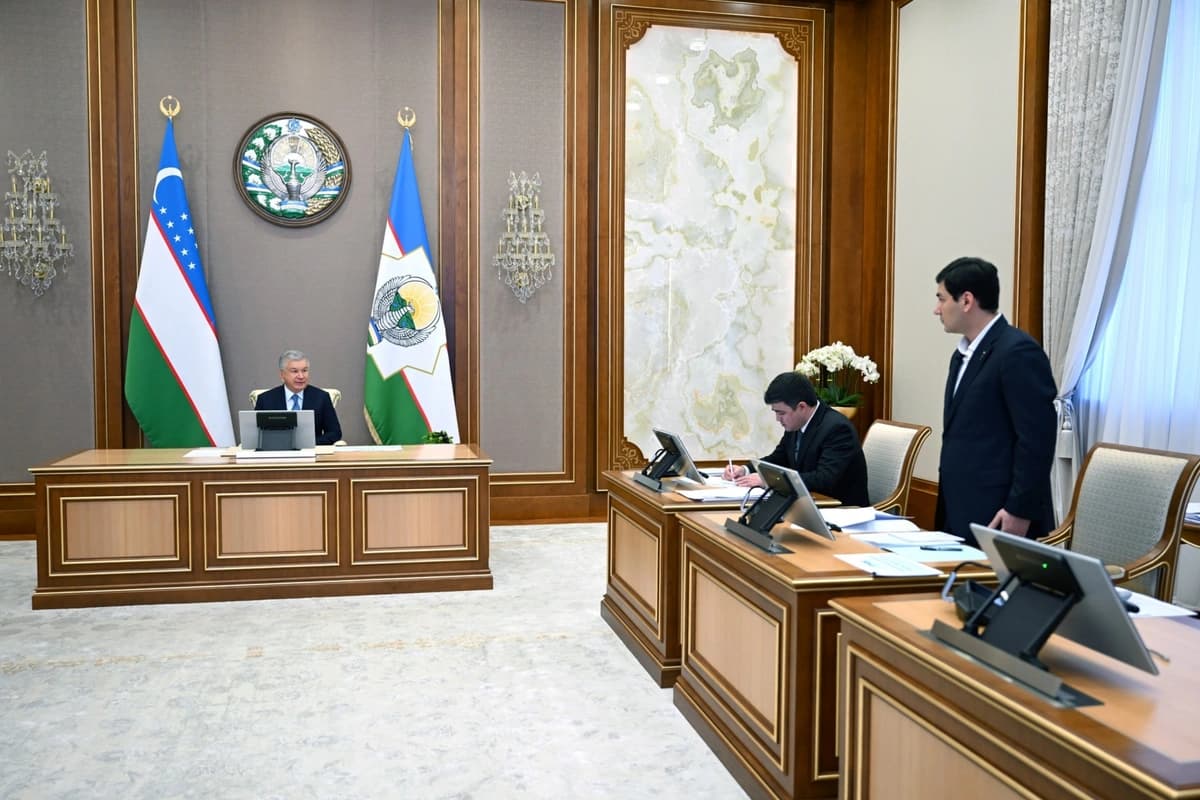
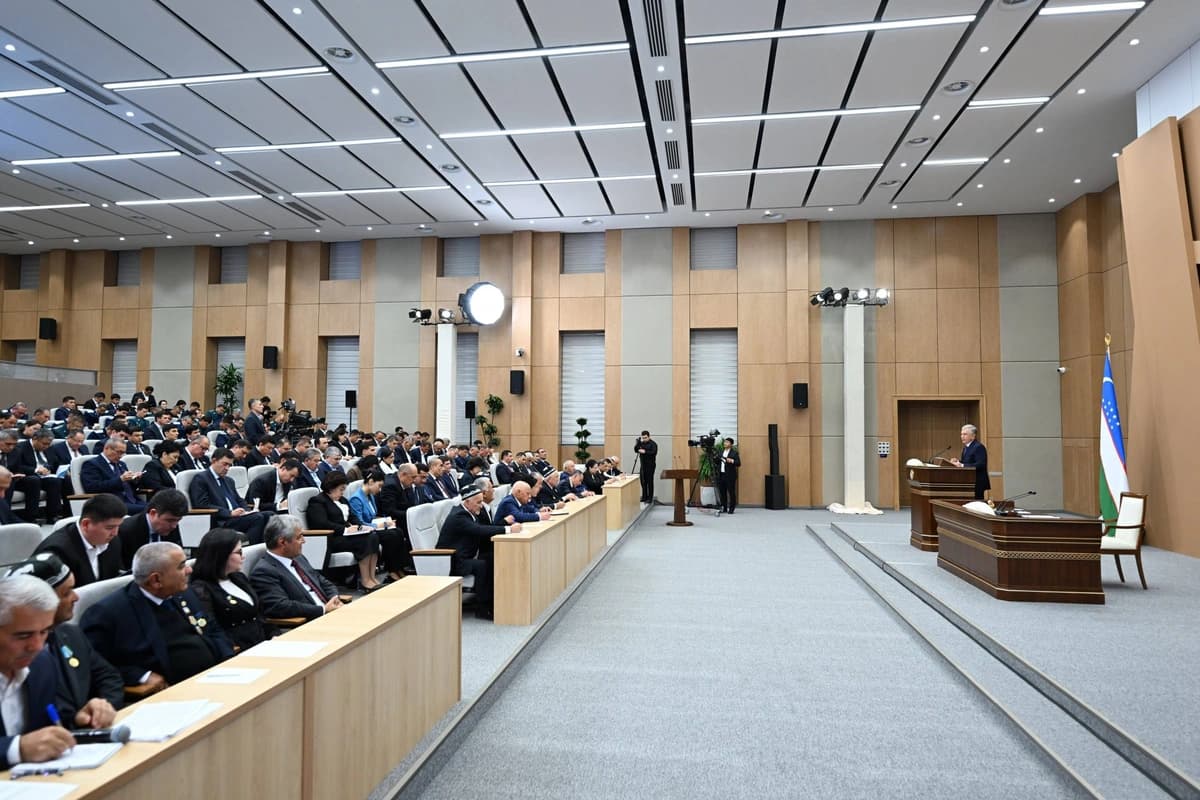
On 4 November, at a meeting on the development of Bukhara region, President Shavkat Mirziyoyev ordered the allocation of 25 billion soums for the construction of a new bridge and road infrastructure in the Alat district. This was reported by Gazeta citing a report by the Uzbekistan 24 TV channel. The proposal was made by Alat district governor Nargiza Ne'matova: according to her, the existing bridge, built around 1980, cannot cope with freight volumes and passenger flows that have tripled, and the new infrastructure should simultaneously serve the border trade zone and a logistics centre. The project cost was estimated at 25 billion soums — according to the governor, the calculations were carried out using artificial intelligence. The president instructed Deputy Prime Minister, Minister of Economy and Finance Jamshid Kuchkarov to transfer the funds from the reserve fund 'today or tomorrow' and personally oversee the construction.
Which bridge is to be replaced
The same day, the Ministry of Transport reportedthat heads of several agencies — Minister of Transport Ilkhom Makhkamov, Chairman of the Customs Committee Akmalhodja Mavlonov, head of the Committee for Automobile Roads Jamshid Tursunov and chairman of the board of Uzsuvta'minot Ahmad Suvonkulov — inspected the border customs post 'Olot'. According to the ministry, the bridge across the Yomonjar canal, connecting the neutral territories of the two countries, was built in 1978 and is technically outdated. The Ministry of Transport proposes building a new bridge in its place with at least two lanes for trucks in each direction, which should increase the crossing's capacity and reduce congestion.
Growing traffic and open questions
The need for modernisation is confirmed by statistics: in January–October 2026, more than 243,000 vehicles passed through the 'Olot' post — 2.3 times more than in the same period of 2022; the post currently handles up to 1,200 vehicles daily in both directions. Besides the bridge, the parties are discussing the abolition of the trailer re-coupling mechanism introduced by the Turkmen side during the COVID-19 pandemic: currently, trailers are detached from tractors of one country and handed over to carriers of the other, and its abolition, according to the Ministry of Transport, would speed up international freight transport. At the same time, the infrastructure modernisation proposals still need to be studied and feasibility studies prepared. Considerable uncertainty remains: the Ministry of Transport's report did not specify whether the 25 billion soums allocated by the president relate specifically to the bridge across the Yomonjar canal — different construction dates for the old bridge appear in publications (1978 according to the Ministry of Transport and 'around 1980' according to the district governor).
Context: the 'Alat — Farap' trade zone and the region's roads
The new bridge is linked to broader plans for cross-border cooperation. In March 2026, the idea of a joint 'Alat — Farap' trade zone between Bukhara region and Lebap velayat was discussed at a meeting between Uzbekistan's ambassador Ravshanbek Alimov and the hyakim of Lebap velayat Durdy Gendzhiev, and in August the parties talked about reducing queues at the 'Farap — Alat' crossing, a separate corridor for perishable goods and the construction of a second bridge on neutral territory. At the meeting itself, the president also noted that Bukhara region's road infrastructure requires development: despite the 900 billion soums allocated in 2026, about 2,000 km of local roads and 266 bridges need repair. He instructed that private investment be more widely attracted and the possibility of alternative toll roads between the region's main tourist destinations be studied.