The key facts
- A family of five sold their previous apartment and on October 14, 2025 bought a new one for 85 thousand dollars; the prosecutor's office restriction appeared in the registry only on October 16 — after the ownership was registered
- On October 23, 2026, the court declared all purchase and sale contracts invalid and ordered the return of only 71.3 million soums, without taking into account the receipt and the video recording of the money transfer
- This is the third known story in Tashkent after the cases of Furkat Nurmukhamedov and the family of Anton Goryaev; two women claiming to be daughters of the deceased owner lay claim to the apartment
A deal that seemed clean
In Tashkent, more and more cases are coming to light in which buyers of legally registered apartments risk losing their homes because of foreign heirs of the previous owners who appear after the deal. Gazeta reported on another such family: last year, capital resident Adelina Baldina sold her three-room apartment on the Darkhan-3 massif, where she lived with her husband, two sons and elderly mother — a family of five — in order to buy larger housing.
How the purchase went
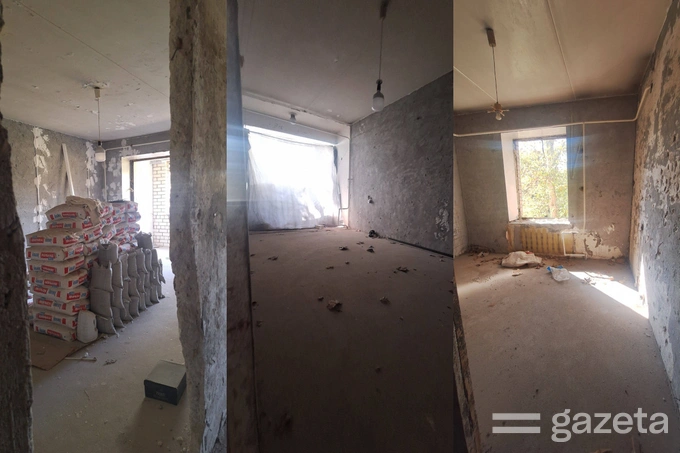
In October 2025, the family found an apartment on OLX on the Ts-1 massif in the Mirzo Ulugbek district, with an area of 61.92 sq. m. The seller, Elmira M., did not hide that she had herself bought the home at a 'buyout price' and was reselling it with a markup; the price of 85 thousand dollars matched the market and equaled the amount received from the sale of the family's previous apartment. A notary they knew checked the documents; on October 14 the deal was formalized before a notary, after making sure there were no restrictions, and on October 15 ownership was registered to the buyer.
A restriction that appeared a day later
About a week after the purchase, it emerged that a prosecutor's office restriction had been placed on the apartment. According to the timeline presented by Baldina, the application for the restriction was submitted to the prosecutor's office on October 13, 2025 — a day before the deal — but it was registered only on October 16, when ownership had already been formalized. Had it been entered into the registry in time, the notary would have seen the restriction and the deal would not have taken place.
Two heiresses and a chain of deals
During the proceedings, the backstory came to light: the previous owner left two apartments on the Ts-1 and Ts-2 massifs, and both were bought by families facing identical problems. After the owner's death, a woman living in Russia who claimed to be his daughter formalized the inheritance through a representative under power of attorney, and then issued another power of attorney for the sale — under which Elmira became the owner under a contract dated October 10, 2025, a few days before the deal with Baldina. The person involved in formalizing the inheritance was placed on a local and then an international wanted list. At the same time, another woman, living in Poland and also claiming to be the deceased's daughter, lays claim to the apartment: she is contesting the formalization of the inheritance and all subsequent deals.
The court's decision and the price of the mistake
From November of last year to October of this year, two proceedings took place in the Mirzo Ulugbek inter-district civil court: the first claim was left unconsidered due to a power of attorney lacking the required certifications, and in the second case, after an apostille, four hearings were held. On October 23, the court ruled to declare all purchase and sale contracts for the apartment invalid and ordered the seller to return the amount stated in the contract — 71.3 million soums (about 5,870 dollars at the date of the deal), almost 14 times less than the 85 thousand actually paid. The court took into account neither the receipt nor the video recording of the money transfer, although Elmira's lawyer confirmed the fact of payment. The family intends to appeal the decision.
The overall pattern of the problem
This is already the third such story in the capital: in June, Daryo wrote about Furkat Nurmukhamedov, who lost in all instances except the Supreme Court, and in September Gazeta reported on the family of Anton Goryaev, who succeeded in having the purchase contract declared invalid. The publication notes a common detail in all the cases: the contracts stated the cadastral value — a long-standing practice to minimize fees — and the buyers' lawyers did not file a counterclaim to recognize them as bona fide purchasers, which, in the editorial board's assessment, is the only chance to keep the home. According to market experts, even stating the real price in the contract does not guarantee quick and full recovery of the money from the seller: the buyer has no full-fledged protection, but does face the risk of being left without both a home and money. The transition from cadastral to market valuation of real estate in Uzbekistan was launched only this year.