The key facts
- Polls show Democrats leading in more than 218 House districts and an even fight in key Senate states
- Polls show Democrats leading in more than 218 House districts and an even contest in key Senate states
- In 2026, primaries in Michigan and Wisconsin delivered major surprises: forecasts diverged from results by dozens of points
- According to Ipsos Public Affairs president Clifford Young, conservative voters are less likely to take part in surveys, which may skew the data in favor of the Democrats
- According to Ipsos Public Affairs president Clifford Young, conservative voters are less likely to take part in polls, which may tilt the data in the Democrats' favour
Polls promise Democrats a good evening on November 3
The Democratic Party is approaching the US midterm elections, which will take place on November 3, with high expectations. As BBC North America correspondent Anthony Zurcherwrites, factors working in the Democrats' favor include the historically low approval rating of the Republican president, Americans' dissatisfaction with rising prices for food and services, and months of favorable polls. According to surveys, Democratic candidates lead in more than the 218 districts needed to control the House of Representatives, and in key Senate races they are ahead of or tied with Republicans. A recent New York Times poll showed a tie in South Carolina, which Trump won in 2024 by an 18-point margin, while CNN polls put Democrats ahead in Texas, Kansas and Maine.
Why pollsters have been wrong before
Recent history gives reason for skepticism: Trump twice, in 2016 and 2024, outperformed forecasts on his way to victory, and in 2020 most polls promised Joe Biden a more comfortable win than it turned out to be. This year, the discrepancies in primaries were especially large: in Michigan, polls predicted Abdul El-Sayed a double-digit victory in the Democratic Senate primary, but the actual result was 1%. In Wisconsin, a candidate with a lead of nearly 20 points lost the gubernatorial primary by a fraction of a percent.
A systematic problem: who answers pollsters
One explanation for the errors comes from Clifford Young, president of the research firm Ipsos Public Affairs: Americans are giving up landline phones, declining calls and are increasingly unwilling to take part in surveys. According to him, conservatives, especially those on the right, are 'anti-establishment by nature' and refuse to take part in anything because they hate the system. If Republican voters are systematically undercounted and pollsters fail to account for this in their models, the data skews in favor of the Democrats. An additional factor is Trump supporters, many of whom are not regular voters, showing up at polling stations in larger numbers than expected. At the same time, Young notes that primaries are historically volatile and do not mean that the current general election polls are inaccurate: in recent midterm elections, when Trump was not on the ballot, polls were more accurate — in 2022 they correctly predicted that Democrats would avoid a rout, losing the House by a narrow margin but keeping the Senate.
Why the Democrats' lead may turn out smaller than expected
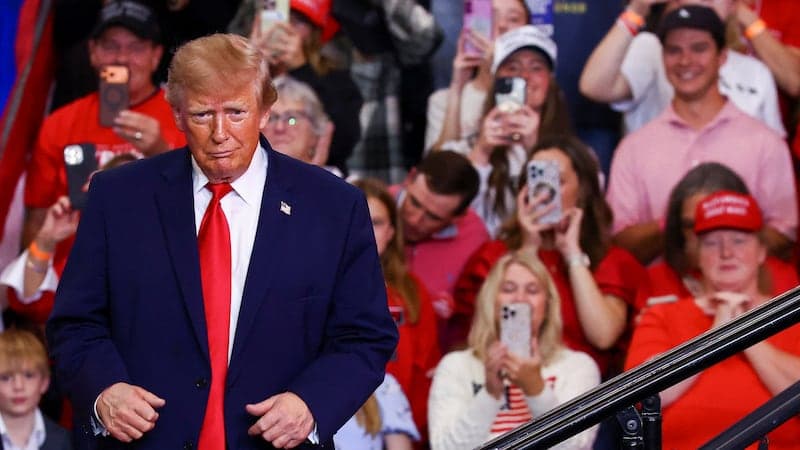
Even if the polls are right, there are several reasons why the evening of November 3 may turn out less successful for the Democrats than history suggests — the president's party usually loses midterm elections, as the Republicans did in 2010, when they won back more than 60 seats in the House of Representatives. First, a significant portion of the contested territory consists of states that Trump won easily just two years ago, meaning it is 'home turf' for Republicans. Second, changes to electoral district boundaries have reduced the number of seats that can switch between parties. Third, polarization has left fewer swing voters, and Republicans hold a financial advantage of hundreds of millions of dollars for attack advertising in the final weeks of the campaign. It is also telling that in the final days of the campaign Trump is holding rallies in states he won comfortably in 2024 — Democrats see this as a sign that Republicans' internal polls show problems with their candidates. At the same time, as the BBC notes, in last year's state and special elections it was Democratic voters who unexpectedly turned out en masse, and the party outperformed the polls — polling inaccuracies cut both ways.
 Image source, Getty Images

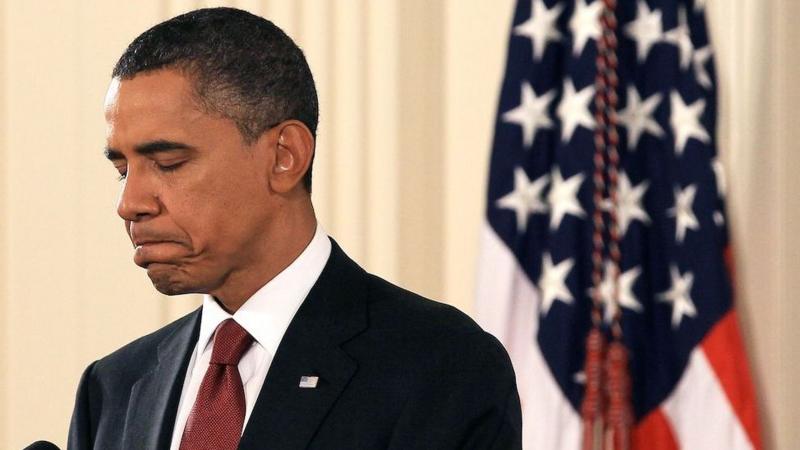 Image source, Getty Images
Obama gives a press conference the day after the heavy 2010 midterms defeat