The key facts
- Gadi Eisenkot said voters expressed no confidence in “the government of October 7 and the evasion of conscription”
- Netanyahu's bloc — 53 seats, Eisenkot's bloc — 48, Arab parties — 19, with 89.8% of votes counted
- Neither bloc has reached the threshold of 61 seats; the counting of “double envelopes” is still ahead
The opposition declared a mandate for change, but so far no one has a majority
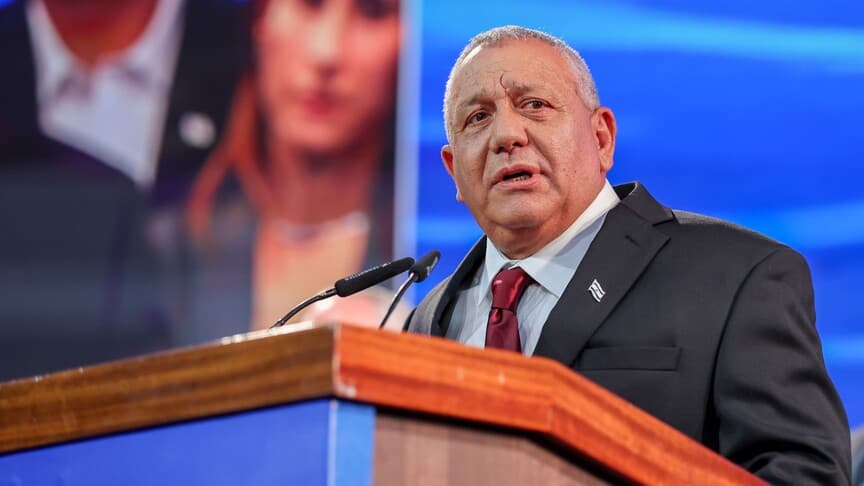
Gadi Eisenkot, leader of the Israeli Yashar party, said on Wednesday evening that voters had rejected the government of Prime Minister Benjamin Netanyahu and pledged to form a new administration committed to military conscription. According to Anadolu, in a post on the X platform he wrote that he was wrapping up a long day of meetings and discussions aimed at carrying out the will of the voters.
Eisenkot's statements
“There are still long working days ahead, but we are focused on the serious task entrusted to us: bringing change to Israel and forming a Zionist government committed to conscription,” Eisenkot wrote. According to him, voters expressed no confidence in “the government of October 7 and the evasion of conscription,” as well as in the broader “bloc of evaders,” by which he meant Netanyahu's ruling coalition. This bloc, he said, is at its lowest point in two decades. Eisenkot also told supporters: “Thanks to you, we have made history,” noting that his party was created within a year as a new political force representing Israelis from different walks of society and offering “a credible, responsible alternative to the government.” “We will act and we will succeed,” he added.
The balance in the Knesset remains uncertain
With 89.8% of the votes counted, Netanyahu's bloc is projected to win 53 seats in the 120-seat Knesset, against 48 for Eisenkot's bloc; two predominantly Arab parties are projected to win a combined 19 seats. Neither of the two blocs has reached the 61 seats needed for a parliamentary majority. The figures remain preliminary: hundreds of thousands of “double envelopes” — ballots, including votes from soldiers and diplomats — are yet to be counted. Thus, Eisenkot's claim of a mandate for a change of power is not yet backed by a formal majority: the composition of the next coalition will depend on the final results and possible negotiations with the Arab parties, whose 19 seats could give either side the edge — however, the sources themselves do not report any such negotiations, and this is merely an editorial observation about the parliamentary arithmetic.