The key facts
- The 'mosquito toilet' device collects liquid mosquito excretions, which are analyzed for genetic traces of viruses and bacteria
- The samples yielded the first evidence of a virus of the Hedwig type in the Americas and several viruses possibly new to science
- Scientists reconstructed the complete genome of the West Nile virus from mosquito excretions
A trap that collects what mosquitoes leave behind
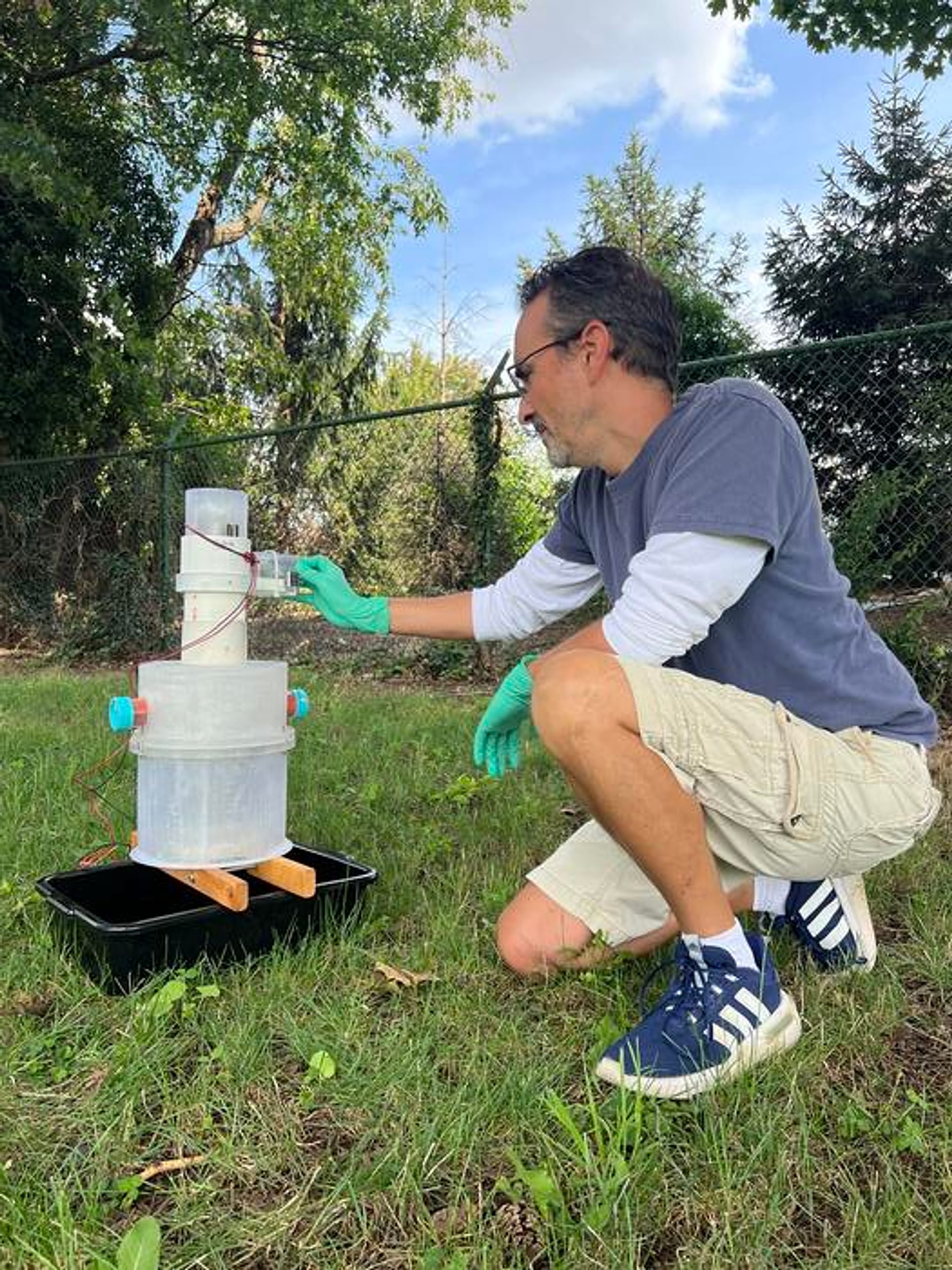
Mosquitoes are often called the deadliest animals on the planet because of the diseases they carry, so monitoring them can help detect viruses circulating in nature before they become a threat to humans. To this end, entomologist Dana Price of Rutgers University in the US has developed a devicethat she calls a 'mosquito toilet': it collects small portions of the liquid excreted by mosquitoes, which is then analyzed for genetic traces of pathogens, Euronews reports.
How the device works and what was found in it
The 'mosquito toilet' is a funnel printed on a 3D printer with a water-repellent coating: the liquid gathers into droplets and drains into a collection tube. Fifty Culex mosquitoes collected in a garden in New Jersey were placed in the container; they fed on sugar water with red food dye, and their excretions were collected for 18 hours and then analyzed in the laboratory. Unlike the traditional method of trapping and grinding up mosquitoes, analyzing excretions reduces the proportion of insect DNA in the samples, making it easier to search for viral genetic material. Using this approach, the team obtained the first evidence of a virus of the Hedwig type in the Americas, discovered several viruses possibly new to science, and reconstructed the complete genome of the West Nile virus — showing that the excretions contain material of high enough quality to identify specific virus variants and mutations.
What this means and what comes next
Price noted that the results give no cause for alarm: detecting unknown viruses or finding them in new places does not automatically mean a threat — they may simply have been circulating unnoticed for a long time. According to her, such a tool could give scientists an advantage in responding to new viruses: early detection of traces of COVID-19 would have given researchers a 'significant head start' for studying the virus and developing vaccines. The next steps are to expand the geography of the research, make the samples remain stable for longer (so that traps could be left in hard-to-reach places for several days or a week), and create field devices that combine mosquito trapping and excretion collection in a single cycle. At the same time, as the publication notes, additional research will be needed to understand how effective the approach is for continuous surveillance.