The key facts
- Echinococcosis is one of the 21 'forgotten' WHO diseases found in Germany: 52 cases in 2024
- Echinococcosis is one of 21 WHO 'neglected' diseases found in Germany: 52 cases in 2024
- In 2026 Gabon applied for loiasis to be added to the NTD list, but the WHO committee recommended a pause
- Cuts in US funding have weakened networks of community health workers — a key early-warning tool
- Cuts in US funding have weakened networks of local health workers — a key early-warning tool
A parasite a few millimetres long as an indicator
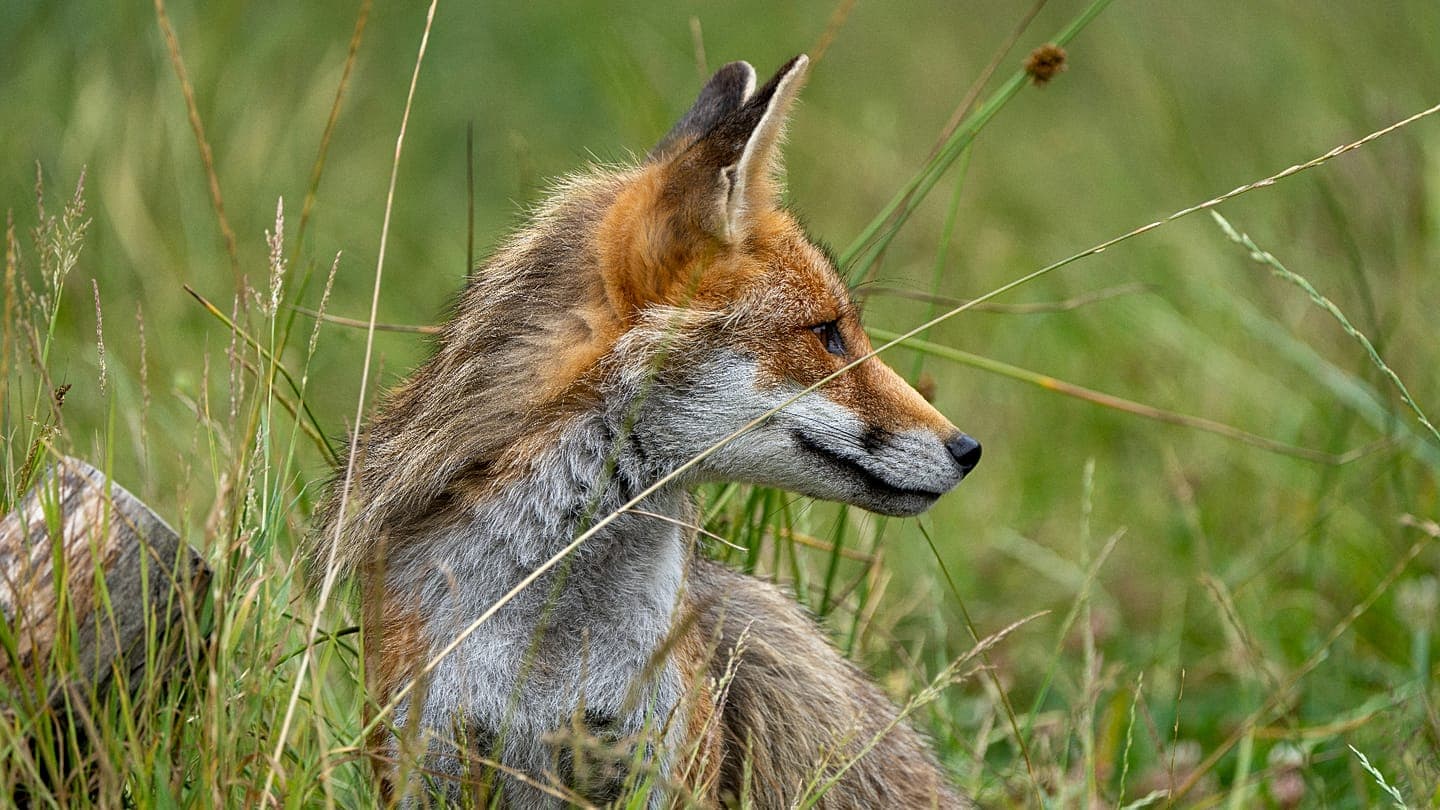
Almost everyone who has picked berries or mushrooms in the forest has probably heard the warning about fox echinococcosis in Germany: the berries may carry eggs of the fox tapeworm — a parasite only two to six millimetres long that attacks the liver and can cause a potentially fatal disease, alveolar echinococcosis. This disease is among the 21 'neglected tropical diseases' (NTDs) that the World Health Organization treats as a global early-warning system. This is reported in a Euronews article, based on an interview with Dr. med. Dr. phil. Carsten Köhler of the University of Tübingen, head of the Institute of Tropical Medicine, Travel Medicine and General Parasitology.
The situation in Germany
According to the Bavarian State Office for Health and Food Safety (LGL), the main definitive host of the parasite in Central Europe is the red fox; depending on the region, between 33 and 50 percent of foxes are infected. Human infection is extremely rare but can be life-threatening: in 2024 the Robert Koch Institute registered 52 cases, whereas in previous years there were usually 40–45 per year; most cases occur in Baden-Württemberg and Bavaria. According to Köhler, leishmaniases transmitted by sandflies have also come right up to Germany's borders: 'Many Germans like to travel to Mediterranean countries for holidays and could bring it back with them.' According to WHO estimates, between 700,000 and 1 million people worldwide fall ill with leishmaniasis every year.
NTDs as a map of weak points
'Where there are NTDs, there lie the weak points of our global health system — simply because there is effectively no system there at all,' Köhler explains. These diseases themselves are not necessarily dangerous for the whole world; what matters more is that they reveal the conditions under which infections spread: lack of medical care, weak surveillance and gaps in case registration. It is precisely in such regions that diseases with pandemic potential can emerge and go unnoticed. A telling example is the Ebola outbreak in the Democratic Republic of the Congo: 'We were expecting an outbreak in completely different hotspots,' Köhler recounts. 'And then it turned out that the data for the Democratic Republic of the Congo was outdated.'
Community health workers and funding cuts
Köhler names community health workers as a key element of early warning: they work within communities, inform the population and monitor the local situation: 'A community health worker who monitors a helminth infection with no pandemic potential will notice if an entire family suddenly dies and can report it immediately.' However, he says, due to the sharp cuts in American aid, 'the structures involving community health workers, which took so long to build, have seriously collapsed.' According to UNAIDS, in 2025 thousands of such workers in Malawi lost their contracts, and a 2026 study on Zambia describes layoffs, shortages of diagnostic tests and difficulties with electronic medical records. In its NTD strategy through 2030, WHO relies on integrated approaches — embedding measures into existing health systems.
A new application and a WHO pause
In 2026, Gabon submitted an application to WHO to include loiasis — the so-called eye worm, transmitted by deerflies and sometimes visible under the conjunctiva of the eye — in the list of NTDs. However, in October 2026 the WHO advisory committee recommended temporarily suspending the inclusion of new diseases in the list: the criteria and procedure for adding diseases must first be revised. Köhler believes the application should nevertheless be considered.
Preparing for 'Disease X'
“We must prepare for the next pandemic — the WHO calls it Disease X — whatever it turns out to be,” Köhler warns, adding that, in his words, the COVID-19 pandemic was not the last; only the timing is unknown. Preparation, in his view, means not only vaccines and medicines, but also laboratories, specialists, data infrastructure and international networks. He hopes for continued support for the European Vaccine Hub for Pandemic Preparedness (EvH) and EDCTP programmes: “It is important now to build a platform that will allow us to act as quickly as possible... Health knows no borders, and neither do pathogens.”