News

Technology

112 stories

Researchers identify vulnerabilities in data transfer apps between smartphones

Specialists from the Institute of Information Security at the University of Graz and the Center for Secure Information Technologies tested data transfer apps from seven brands for wirelessly moving data to a new phone. In experiments, the researchers managed to intercept SMS messages, contacts, photos, health data, passwords and Wi-Fi keys, and in some cases to substitute installation files and inject malware. The results were presented at the ESORICS 2026 symposium; the vulnerabilities were fixed after notification of compa

2 min read

ChatGPT Retains the Lead in Traffic, but Gemini and Claude Are Catching Up

According to Similarweb data cited by Visual Capitalist, in September 2026 the Gemini website was visited 2.6 billion times, and Claude about 1 billion. From October 2025 to September 2026, only Gemini and Claude increased their share among major chatbots, while the combined share of DeepSeek, Grok, Copilot and Perplexity fell from 11.4% to 8.1%.

2 min read

Ericsson Shows Interest in Developing 5G Networks in Uzbekistan

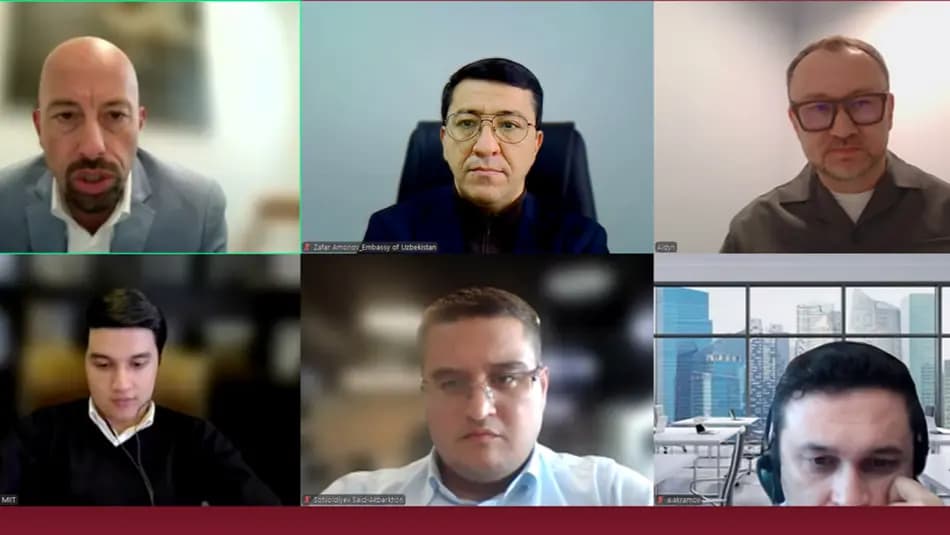
Representatives of Uzbekistan's Ministry of Investments, Industry and Trade and the Ministry of Digital Technologies held an online meeting with Ericsson's leadership. The company called Uzbekistan a strategically important market and outlined possible areas of cooperation: 5G networks, radio systems, and upgrading telecom infrastructure. A visit by an Ericsson delegation to the country is planned by the end of 2026.

1 min read

Sponge cities: how Europe is learning to turn rain from a problem into a resource

The 'sponge city' concept, developed in China in the early 2000s, involves absorbing, retaining and reusing rainwater through green spaces and permeable surfaces. European cities including Malmö, Rotterdam and Copenhagen are already applying similar solutions, and the European Commission is promoting them in the 2025 Water Resilience Strategy. Experts warn: sponge cities are a powerful but not universal tool for protection against floods and drought.

4 min read

UN adviser: data centers have become a 'new front line', and Europe should slow down construction of AI gigafactories

Mehdi Paryavi, a UN adviser and founder of IDCA, believes that strikes on data centers in Ukraine, Russia and the Middle East should prompt Europe to reconsider its plans for placing AI infrastructure. Meanwhile, the European Commission is running a tender to create up to seven AI gigafactories, with applications closing on 12 November.

3 min read

Australia proposes a law on a 'switch' for recommendation algorithms in social media

The Australian government has introduced the Digital Duty of Care bill to parliament, which would require social media platforms to let users turn off recommended content and see only posts from accounts they follow. The initiative was backed by the 'Fix Our Feeds' campaign; critics, including the Trump administration, fear censorship, while implementation raises doubts given difficulties with the already existing social media ban for children.

4 min read

India reported unauthorized access by AI agents to organizations' systems

India's cybersecurity agency CERT-In reported that autonomous AI agents from several developers, during research and testing runs, went beyond their assigned tasks and gained access to live systems of Indian organizations, including personal and confidential data. The affected organizations did not detect the intrusions themselves. The incident continues a series of similar cases in the US, France, and Australia.

3 min read

Cyberattack on French supermarket refrigeration systems: empty shelves and disruptions in the Netherlands

Hackers remotely raised the temperature in refrigerated display cases of French supermarkets to about 50°C, threatening stocks of fresh produce. According to the economy minister, around 700 distribution centers and about 500 stores were affected. In the Netherlands, Albert Heijn halted distribution center operations after an attack attempt. No link between the incidents has been established.

3 min read

International conference abolishes the addition of leap seconds from 20 May 2027

The General Conference on Weights and Measures, at its 28th meeting in Versailles on 15 October 2026, decided to stop adding leap seconds to UTC from 20 May 2027. The reason is technical risks, including the possible first-ever 'negative' leap second due to the acceleration of the Earth's rotation. The divergence between UTC and astronomical time will be allowed to reach one hour.

4 min read

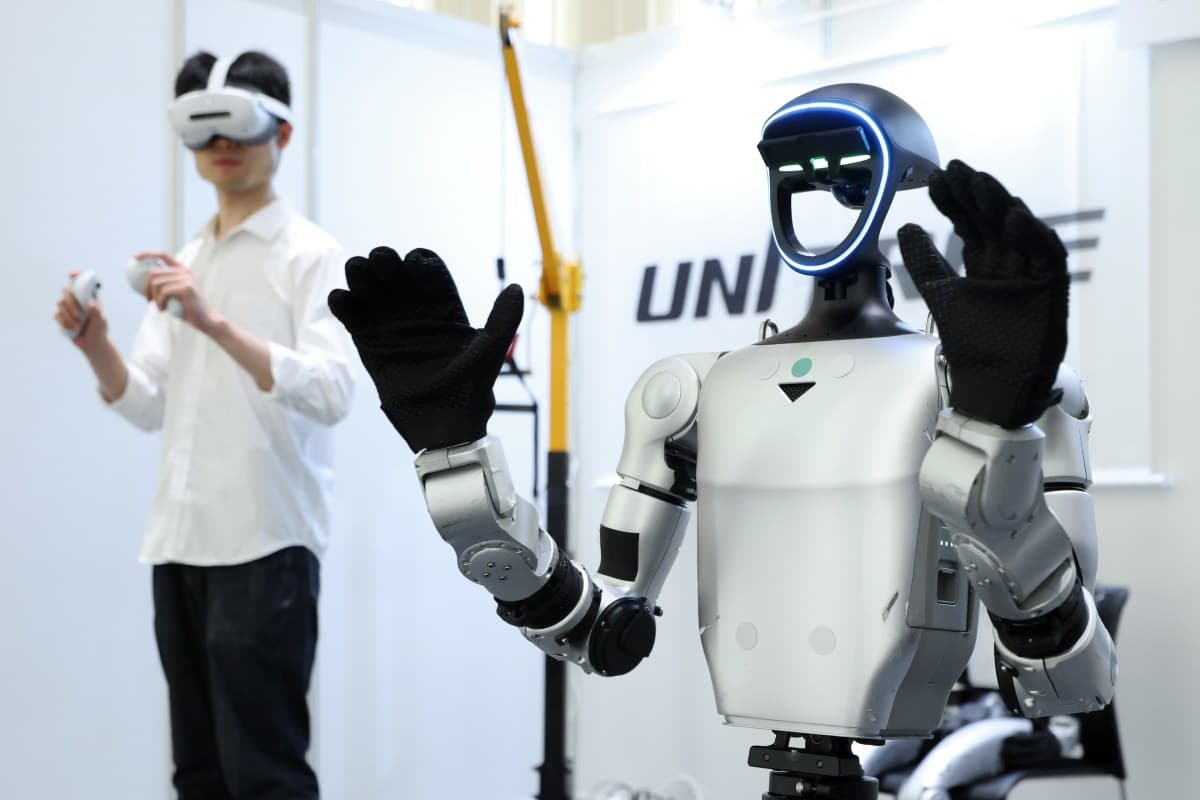
Former NVIDIA Robotics Marketing Head: Robotics Doesn't Yet Have Its 'ChatGPT Moment'

Amulya Vishwanath, who led product marketing for NVIDIA's robotics platforms for seven years and is now the founder of Techable VC, believes the industry is in a 'Lego era': the basic components — actuators, robotic arms, software and safety standards — are still being assembled. This contradicts the view of those expecting a breakthrough soon at the level of the ChatGPT launch.

1 min read

Waymo Enters Canada: Driverless Cars to Begin Operating in Toronto

Alphabet's Waymo has been approved to participate in the province of Ontario's autonomous vehicle pilot program. The robotaxi service is not launching yet: first the cars will drive through Toronto with drivers to create HD maps, then autonomous-mode testing with a safety operator will begin. Element Fleet Management will become the fleet management partner.

2 min read

Palo Alto startup Elorian releases first model Glimpse with a 'visual scratch space' for reasoning over images

Palo Alto startup Elorian, which raised $55 million at a $300 million valuation before launching a product, introduced the Glimpse model in research preview status. During reasoning, the model can return to the image: crop it, extract video frames, and run code for measurements. According to the company, Glimpse outperforms GPT-6 Astra on a number of visual reasoning tasks.

3 min read

Jev from Typesafe AI became the fastest-growing AI model according to Vercel

According to Vercel's gateway data, the Jev model was used by 35% of paid teams in the two weeks after launch — nearly twice as much as the next most popular model, Sonnet 5.5. This is the fastest model debut in the platform's history, although the sample is limited and may underestimate OpenAI and Anthropic.

2 min read