
The key facts
- Brigadier General Petter Iversen: the readiness of Europe's healthcare systems is 'roughly 200 meters into a 400-meter race'
- HERA is developing broad-spectrum drugs against chemical, biological, radiological and nuclear threats
- Former head of the WHO office in Ukraine Jarno Habicht: 'many thousands more amputations that would not have happened without the war'
Healthcare as a front line of national security
While European governments increase defense spending and strengthen NATO's eastern flank, the risk of underestimation remains in the medical sector: hospitals, healthcare workers and public health services. A major conflict — from missile and drone strikes to chemical, biological and radiation threats — could place an unprecedented burden on healthcare systems. Brigadier General Petter Iversen, chief medical officer of the Norwegian armed forces and chairman of the NATO Committee of Chiefs of Military Medical Services, emphasizes that a prepared healthcare system is a matter not only of public health but also of national security: 'A healthy society is a resilient society. If you are resilient, you can withstand pressure from adversaries.' According to him, preparedness means the ability of hospitals to cope with mass casualties, the availability of medical supplies, the ability of staff to operate in emergency conditions, and adaptation when several crises occur simultaneously.
A new biological threat: AI in biotechnology
One of the main factors of uncertainty is the rapid development of artificial intelligence and its potential use in biological research. AI can accelerate drug development, but it may also make it easier to create dangerous biological agents. 'You don't know what you will face, because it could be a virus designed with the help of AI, or a state actor developing a new virus,' said Laurent Muschel, director and deputy head of the European Health Emergency Preparedness and Response Authority (HERA), adding that biosecurity will be 'very high on the agenda.' He noted the need for a regulatory framework and a monitoring system to control the use of AI. Iversen said that the combination of synthetic biology, bioinformatics and biological engineering technologies with AI is taken 'very seriously,' and that the use of weapons of mass destruction — chemical, nuclear or biological — remains the biggest threat: such an attack would produce many patients requiring completely different treatment. HERA is working on medical countermeasures against a wide range of threats, including bioterrorism and mass casualty situations; one approach is broad-spectrum drugs that provide protection even before a specific threat is identified: 'First broad-spectrum antivirals, antibodies, monoclonal antibodies. They protect against the threat, and then targeted treatment follows,' Muschel explained.
Uneven preparedness: countries near Russia's borders lead the way
Awareness of threats does not automatically mean preparedness. Iversen assessed the current state figuratively: 'We are roughly at the 200-meter mark in a 400-meter race.' He named as leaders the countries bordering Russia and located on NATO's eastern flank — they, according to him, have a different understanding of the situation than states further west. He pointed to the efforts of Germany, Norway, the Baltic states and Northern Europe to increase the number of hospital beds and expand medical care. But infrastructure alone is not enough: the way systems operate must change, including training medical professionals to work in unfamiliar conditions. In peacetime, highly specialized services are needed, but in a war or major crisis the system may require a more universal approach in order to respond flexibly to a sudden influx of patients. The second vulnerability is supply chains: according to Iversen, a 'combination of stockpiles and warehouses, as well as an expanded industrial base' is needed to withstand the first wave of a crisis and retain the ability to adapt to the next stage.
Ukraine as a practical lesson for Europe
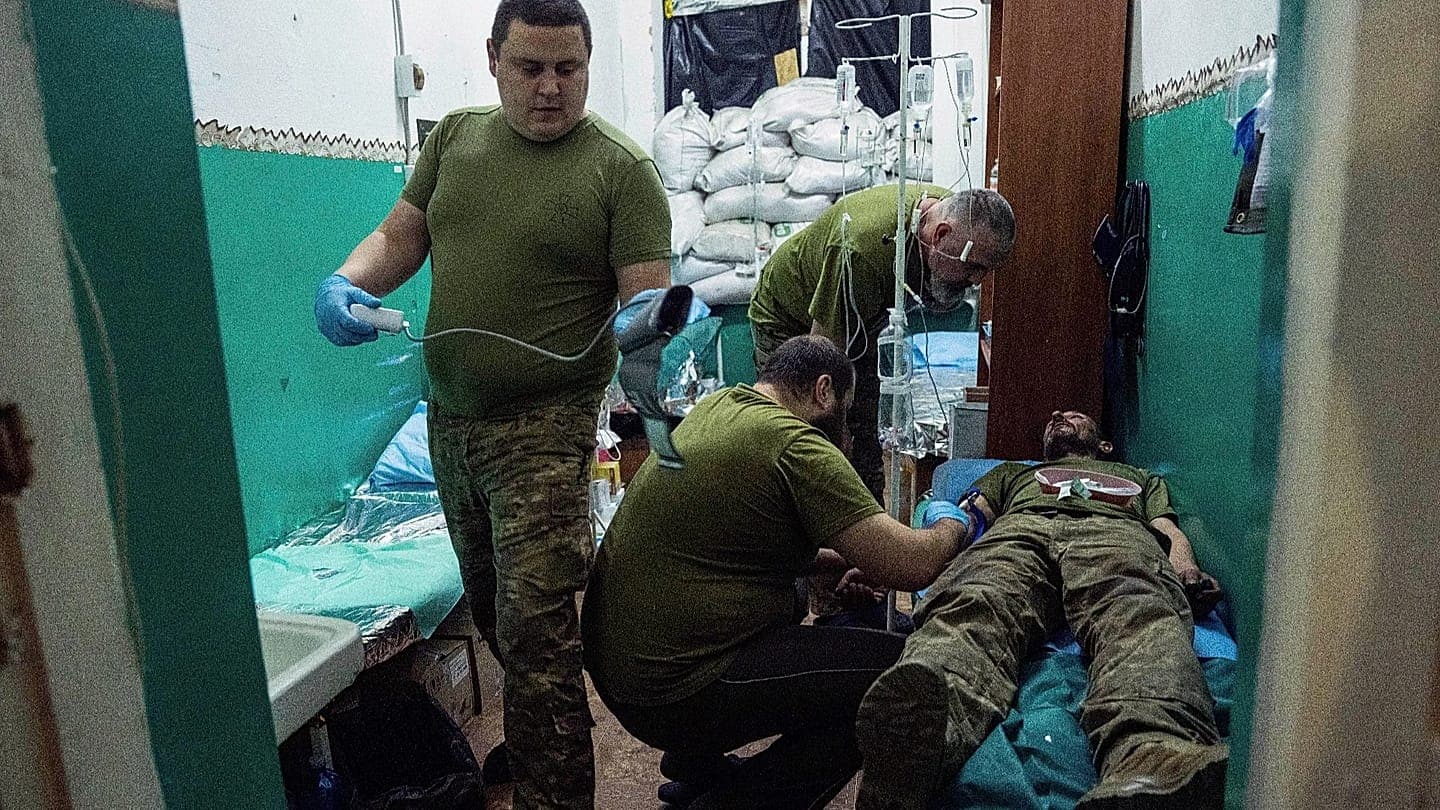
The war in Ukraine has turned many scenarios from theoretical exercises into practical lessons: hospitals and ambulances come under attack, healthcare workers operate in increasingly dangerous conditions, and the needs for care extend far beyond battlefield treatment. Jarno Habicht, former head of the WHO country office in Ukraine, noted a sharply increased need for trauma care and rehabilitation: 'We have many thousands more amputations that would not have happened without the war.' Another major problem is the mental health of both the population and healthcare workers who have long worked under strain. Habicht called on leaders to look beyond hospital buildings and equipment — to the people who keep the system running: doctors, nurses, technicians and support staff who need tools, training and funding in order to stay in the profession. 'It is very, very important to understand that healthcare is truly part of the entire security and defense system,' he concluded.