The key facts
- Uzbekistan proposed the '5+5' format: five Central Asian countries and five international climate funds; the first meeting is planned for Tashkent in 2027.
- A 'Silk Road' regional declaration on climate migration was signed by the countries of Central Asia and the South Caucasus.
- A roadmap for decarbonizing the cement industry was presented; industry accounted for 26.8% of Uzbekistan's GDP in 2025.
The '5+5' climate finance initiative
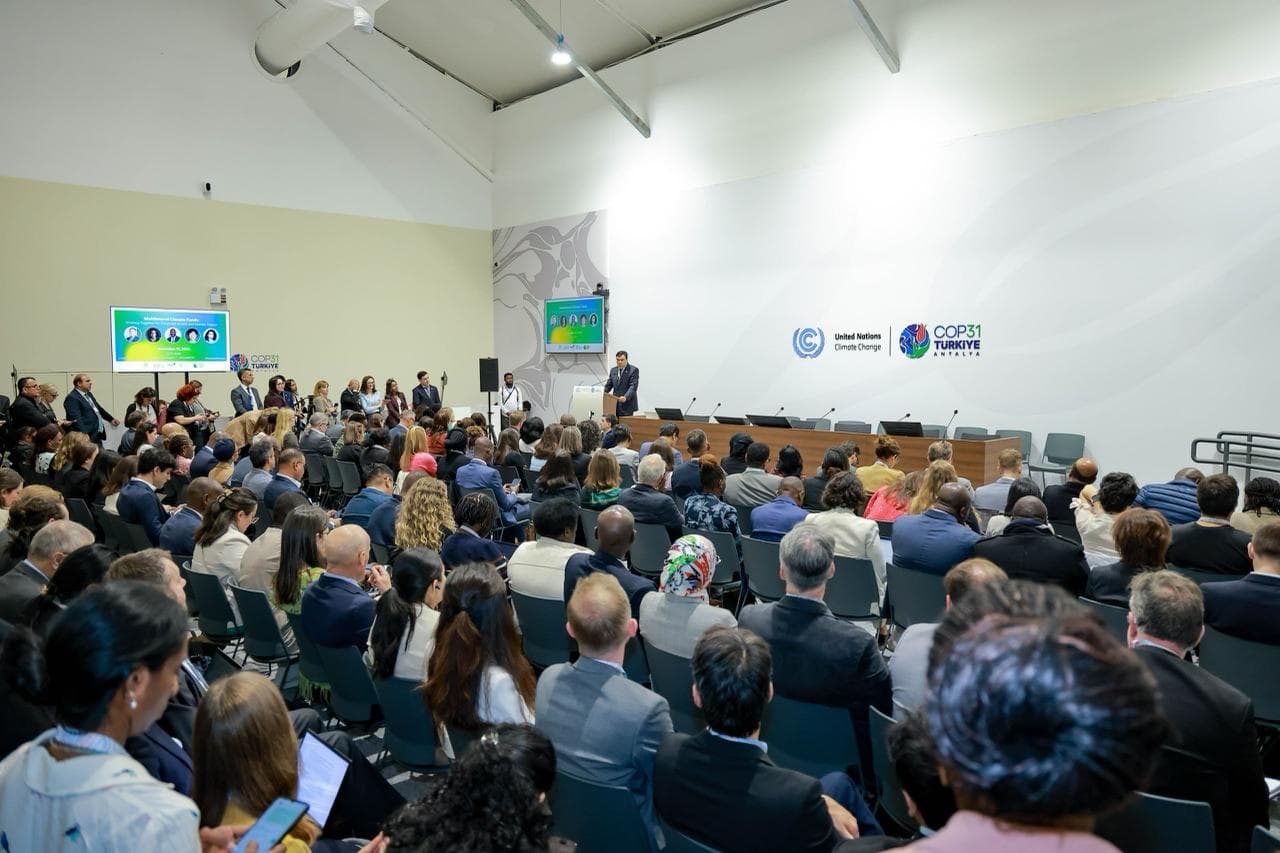
The key event of the second day of the COP31 conference for the Uzbek delegation was a proposal to establish a '5+5' dialogue in Central Asia for coordinating climate finance. According to Kun.uz, the initiative envisions uniting the five countries of the region and five international climate funds. Through this platform, the parties plan to align investment priorities, jointly develop projects and use international funds more effectively. Uzbekistan announced its readiness to host the first meeting in Tashkent in 2027.
Declaration on climate migration
On the same day, the countries of Central Asia and the South Caucasus signed the regional 'Silk Road' declaration on climate migration. The document is aimed at strengthening cooperation in response to population displacement caused by climate change, the loss of livelihoods and the growing socio-economic burden on local territories. It also addresses organizing migration processes safely and with respect for human dignity.
Industrial decarbonization and demographics
The national pavilion of Uzbekistan hosted discussions on industrial decarbonization and the transition to a low-carbon economy. A roadmap for decarbonizing the cement industry was presented, with priorities defined as improving energy efficiency in production, rational use of resources, introduction of modern technologies and attracting investment. According to the data presented, industry accounted for 26.8% of Uzbekistan's GDP in 2025 — a figure that illustrates the scale of the task for the sector chosen for the first roadmap of this kind.
Demographics, water and land restoration
Separate attention at the conference was given to the link between demographic growth and climate change. A study prepared with the Food and Agriculture Organization of the United Nations and the United Nations Population Fund (UNFPA) notes that Uzbekistan's population may exceed 52 million people by 2050, while over the past six decades the country's average annual temperature has risen by about 1.6 degrees. The discussions examined the impact of demographic growth and climate risks on water and food security, infrastructure and public health.
Practical solutions for water resources
Practical approaches to conserving water resources and restoring land were showcased at an event with the participation of the Food and Agriculture Organization of the United Nations (FAO), where the experience of the FOLUR-Uzbekistan project was presented. The discussions covered rainwater harvesting, the creation of artificial glaciers using the 'Ice Stupa' technology and the restoration of degraded land. These approaches are aimed at preserving natural ecosystems and sustaining agriculture in regions where water scarcity is growing.