The key facts
- The CDU nominated Ilse Aigner as candidate for president of Germany at the proposal of Chancellor Friedrich Merz
- The election will take place in January at a session of the 1,260-member Federal Assembly; the governing coalition holds a majority, making the election almost guaranteed
- Incumbent President Frank-Walter Steinmeier has served two terms and cannot run again
Aigner's nomination
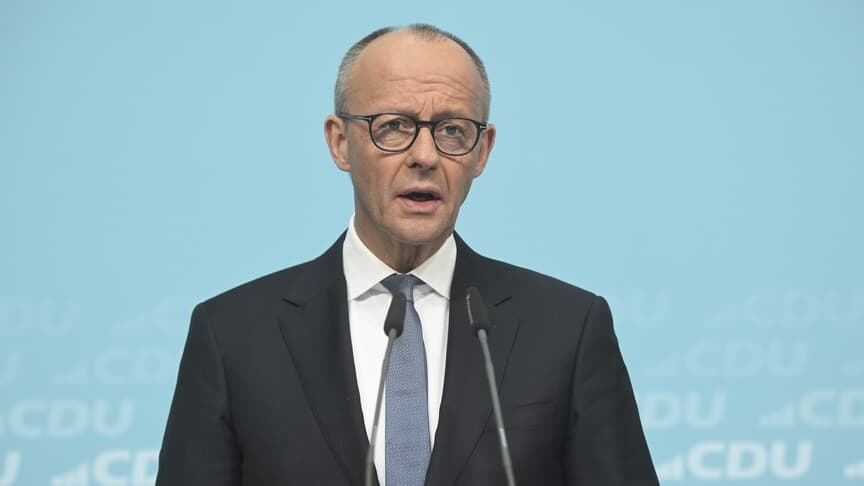
German Chancellor Friedrich Merz announced on Monday, that the CDU's federal executive committee, at his proposal, has approved Ilse Aigner as the party's candidate for the post of president. According to him, the 61-year-old Aigner could become the first woman to hold this office in the country's history. At a press conference in Berlin, Merz emphasized her many years of political experience, her sense of responsibility and her commitment to parliamentary democracy, and also called her a consistent opponent of extremism, hatred and social exclusion, 'regardless of their source'.
Why the election is practically a foregone conclusion
Aigner is a longtime member of the Bavarian CSU, the CDU's sister party: she has been in the party since 1985, was a member of the Bundestag from 1998 to 2013, federal minister of agriculture from 2008 to 2013, deputy premier of Bavaria from 2013 to 2018, and since 2018 has headed the Bavarian Landtag. The CDU/CSU alliance and its coalition partner, the Social Democratic Party, hold a majority in the body that will elect the new president in January, so her election is considered practically a foregone conclusion. The Greens have also signaled sympathy for her candidacy: according to the outlet, the coalition parties have a margin of roughly 50 votes in the Federal Assembly. The right-wing AfD is expected to put forward its own candidate, but under this balance of power it has no chance. Incumbent President Frank-Walter Steinmeier has served two terms and is not allowed to run again.
Election context
Merz presented the nomination as a response to the 'profound challenges' facing German democracy and described Aigner as a conservative capable of uniting society in a polarized political atmosphere. 'The Federal Assembly will convene to elect a president at a time marked by geopolitical crises, growing tension in our society and rising support for extremist political flanks,' he said. 'In the coming five years, the focus must be on preserving the unity of the country, closeness to the people, and providing them with orientation and stability.' The Federal Assembly itself is Germany's largest electoral body with a single purpose: it consists of all members of the Bundestag and an equal number of representatives delegated by the state parliaments, 1,260 members in total, and it elects the president without debate.