The key facts
- Within six hours on November 7, flares M1.2, M1.4 and M1.9 were recorded in active region 4566
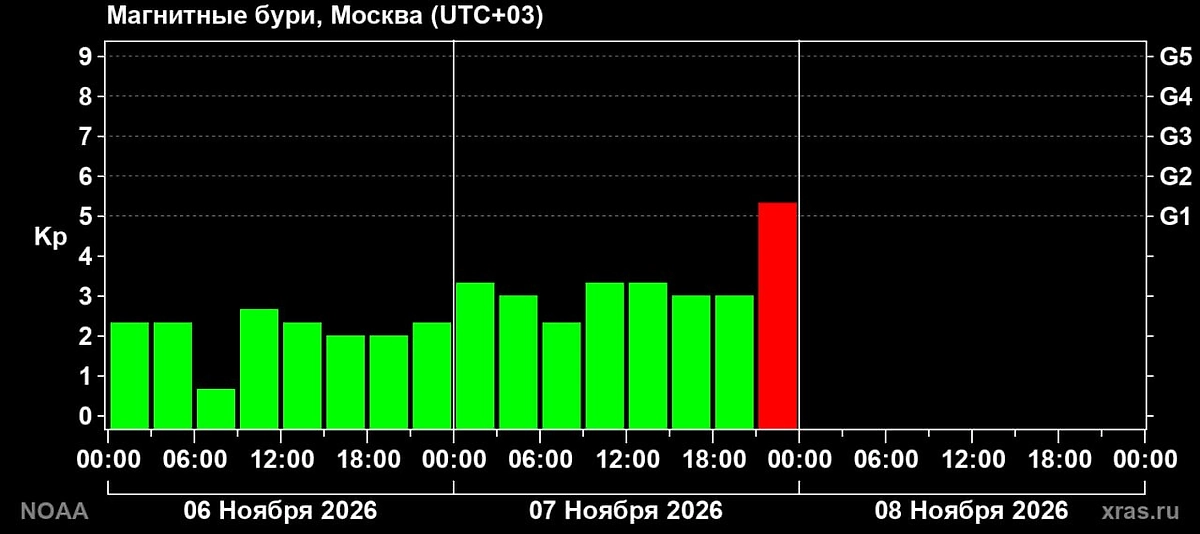
- IPG reported a G1 storm, while the IKI RAN laboratory reported a strong G5+ storm
- More than 30 flares occurred on the Sun over two days; class X events are not ruled out
Three flares in six hours
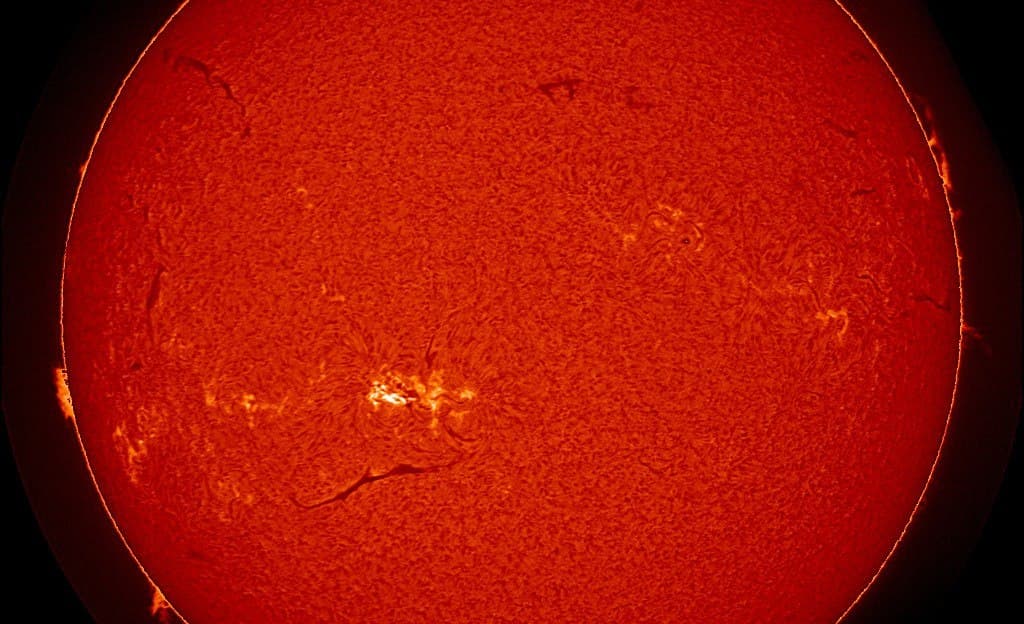
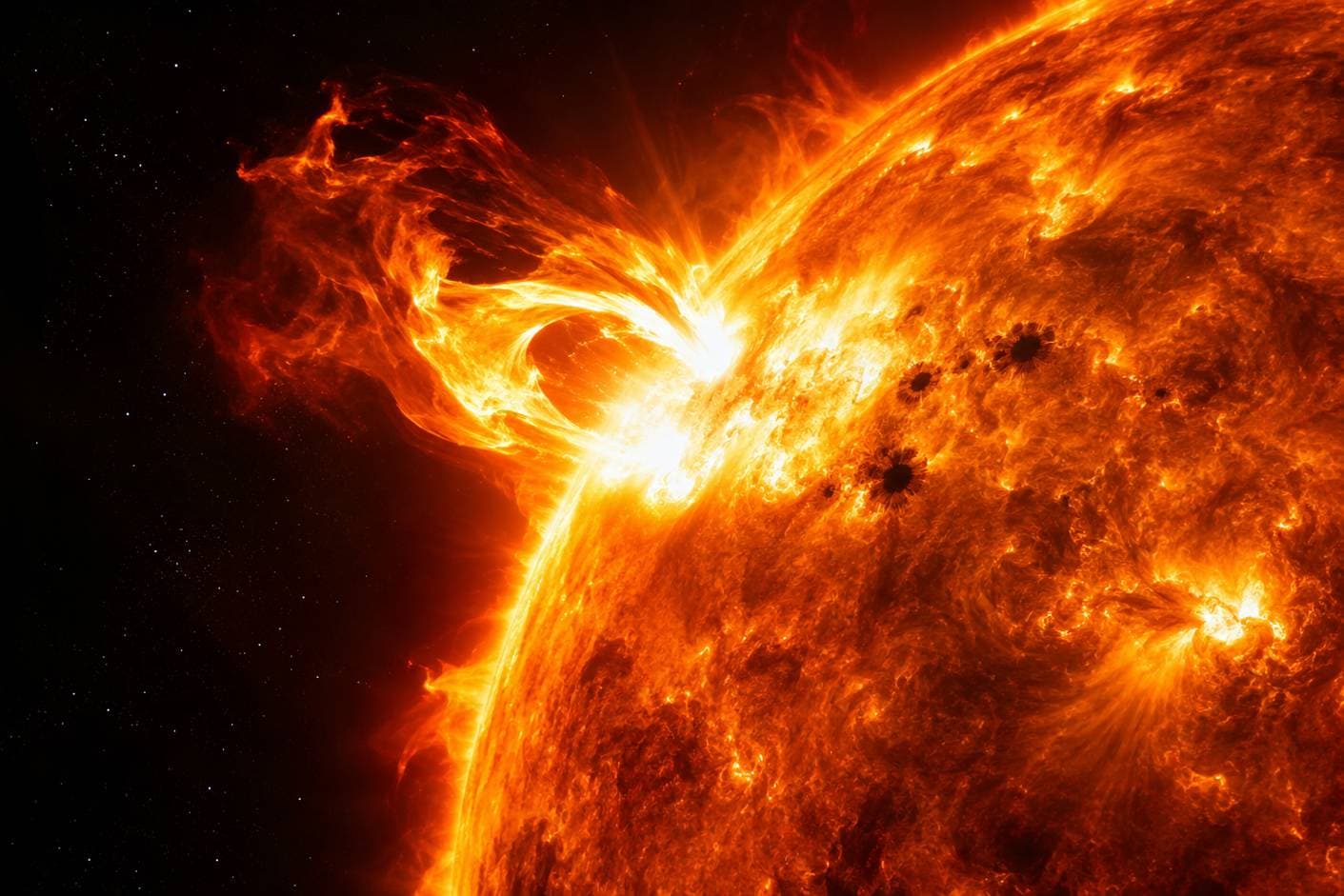
On the evening of November 7, three class M flares occurred on the Sun in the same active region 4566. According to the warning issued by the Heliogeophysical Service of the Institute of Applied Geophysics (IPG), the strongest of them — an M1.9 event — was registered at 21:42 Moscow time and lasted 35 minutes. Earlier in the same sunspot group, flares of M1.4 at 20:17 and M1.2 at 15:43 were recorded. This is reported by Life.ru.
Magnetic storm: conflicting assessments
The Institute of Applied Geophysics reported a weak magnetic storm of G1 level, registered on Earth on the evening of November 7. In its forecast for November 8, specialists allow for a weak disturbance of the geomagnetic field; solar flare activity is expected to be low to moderate, although events of the highest class X are not ruled out.
Discrepancy between sources
Assessments of the storm's level differ between publications. According to the Laboratory of Solar Astronomy of the Space Research Institute (IKI) of the Russian Academy of Sciences, a strong magnetic storm of level G5+ began on Earth, and the solar wind speed over two days rose from 300 to almost 700 kilometers per second, which made the storm predictable. IPG, meanwhile, spoke of a G1-level storm. Which of the assessments more accurately reflects the actual state of the field cannot be determined from the available publications — both links lead to retellings of the agency's and the laboratory's messages, not to primary data.
Context: a series of more than 30 flares
Earlier, according to Life.ru, over slightly less than two days the Sun produced more than 30 flares. Scientists recorded a sharp increase in the star's activity, but, as the outlet notes, they consider such a scenario for Earth rather favorable: energy from the Sun's depths is being spent almost continuously in a series of moderate flares and is not accumulating for larger events, so numerous moderate flares are preferable to rare but far more powerful eruptions.