The key facts
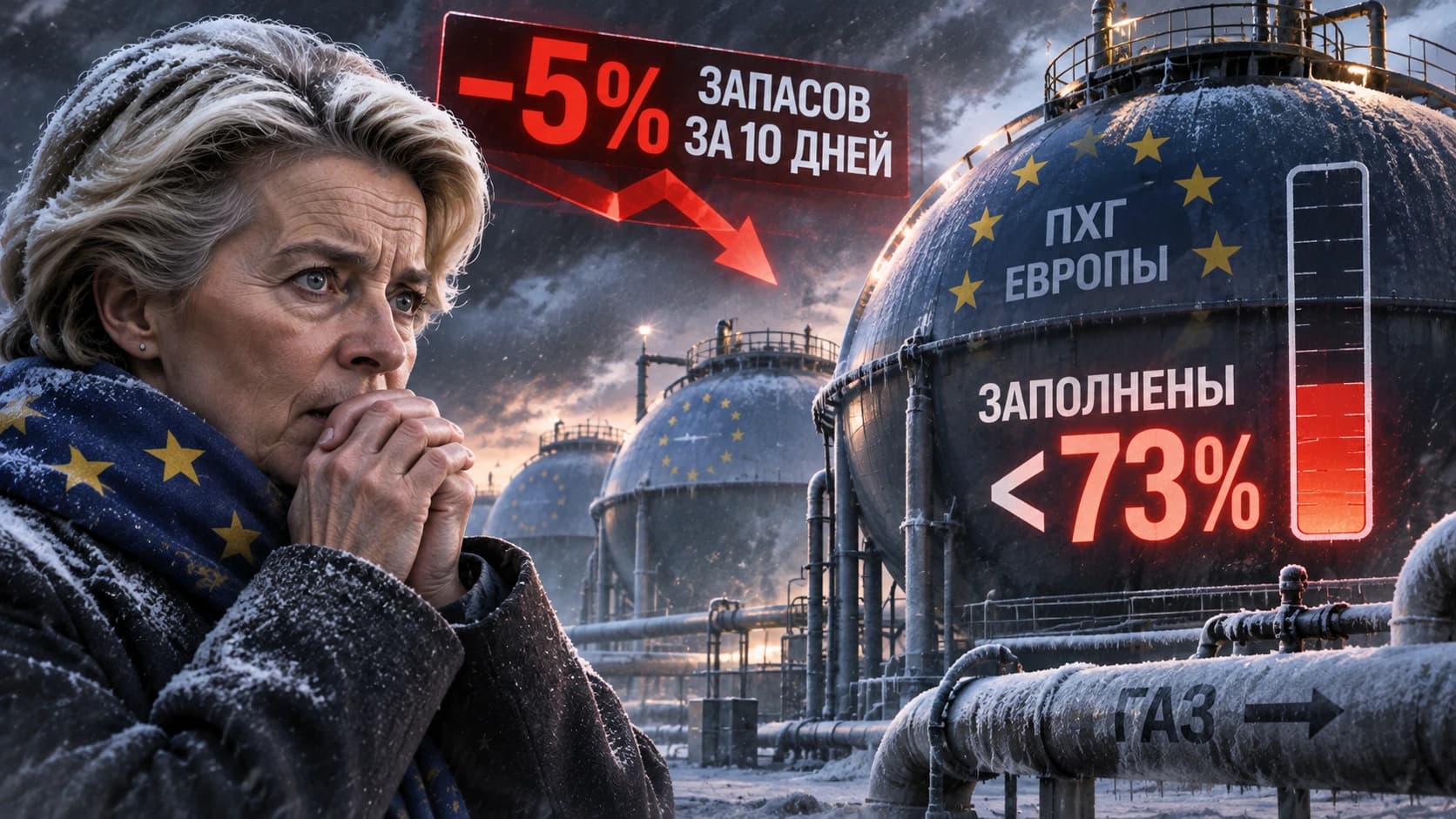
- The heating season began on October 28 with a peak fill level of 74.96%; by November 6 the figure had dropped to 72.98%
- Total withdrawals over ten days were almost 3 billion cubic meters, with net withdrawals exceeding 2 billion — three times the five-year average
- Less than 80 billion cubic meters remain in EU storage, 11.6 billion less than a year ago
Record pace of stock drawdown
Over the first ten days of the heating season, European countries consumed about 5% of the gas injected into underground storage over the summer. Such figures are provided by TASS calculations based on Gas Infrastructure Europe (GIE) statistics, which Life.ru and Gazeta.Ru cite. The season began on October 28, when storage fill level reached its autumn peak of 74.96%. Amid the cold snap, total withdrawals were 2.2 times higher than the average for the same period over the previous five years, and record daily withdrawal volumes for the corresponding dates were recorded seven times: October 28 and 29, as well as November 1, 2, 4, 5 and 6.
How much gas is left
In ten days, Europe extracted almost 3 billion cubic meters from storage, while the net withdrawal — the difference between gas extracted and injected — exceeded 2 billion cubic meters, more than three times the five-year average. A total of 51.2 billion cubic meters was injected over the summer season. By November 6, the fill level had fallen to 72.98% versus 82.8% a year earlier — 16.63 percentage points below the average for that date over five years. According to GIE, EU storage holds less than 80 billion cubic meters — roughly 11.6 billion less than a year ago; TASS assesses this as the lowest figure for early November since 2013.
Targets and context
EU countries failed to build up stocks at the level required by pan-European rules: the legislation calls for storage to be 90% full between October 1 and December 1, with permissible deviations depending on the market situation. Earlier, Life.ru reported that by early November storage was 74.62% full; a particularly low level was observed in Germany and the Netherlands, whereas Poland and Italy had accumulated more fuel. Gazeta.Ru, citing Politico, adds that the EU may face the largest gas shortage: in early October storage was about 72% full — a 15-year low — and in cold weather Brussels will have to either increase LNG imports or cut consumption; there were also reports of Germany warning about the absence of a safety stock for the winter. At the same time, as Life.ru notes, low fill levels do not yet mean an inevitable shortage: pipeline and LNG terminal deliveries continue, and the future pace of drawdown will depend on temperatures, consumption and supply stability.