The key facts
- Europe risks facing this year's first 'dunkelflaute' — a period of low solar and wind energy output
- German day-ahead electricity prices exceeded €300 per MWh, rising above €500 during the evening peak
- Since the start of the war with Iran, solar energy has saved the EU €42.9 billion on gas imports
Cloudy winter puts Europe's solar boom in question
Europe risks entering this year's first 'dunkelflaute' — a period when renewable energy output drops sharply due to a lack of wind and sunlight. Euronews reports that a prolonged spell of cool, cloudy and windless weather is slowing the continent's solar boom and pushing energy prices up.
What is a 'dunkelflaute' and why is it expensive
The term dunkelflaute ('dark doldrums' in German) refers to extended periods when wind and solar power output is low or absent. In Northern Europe this typically happens from October to February and is compounded by short daylight hours, dense cloud cover and fog — meaning it coincides with rising heating demand. Multi-day 'dunkelflautes' are rare, but when they occur, the power system has to rely more heavily on expensive backup sources, primarily natural gas.
Prices are already rising
According to a Bloomberg forecast, cited by Euronews, German day-ahead electricity prices for Thursday, October 29, exceeded €300 per megawatt-hour — roughly twice the October average — while hourly rates during the evening peak rose above €500.
Home panel owners feel the slump
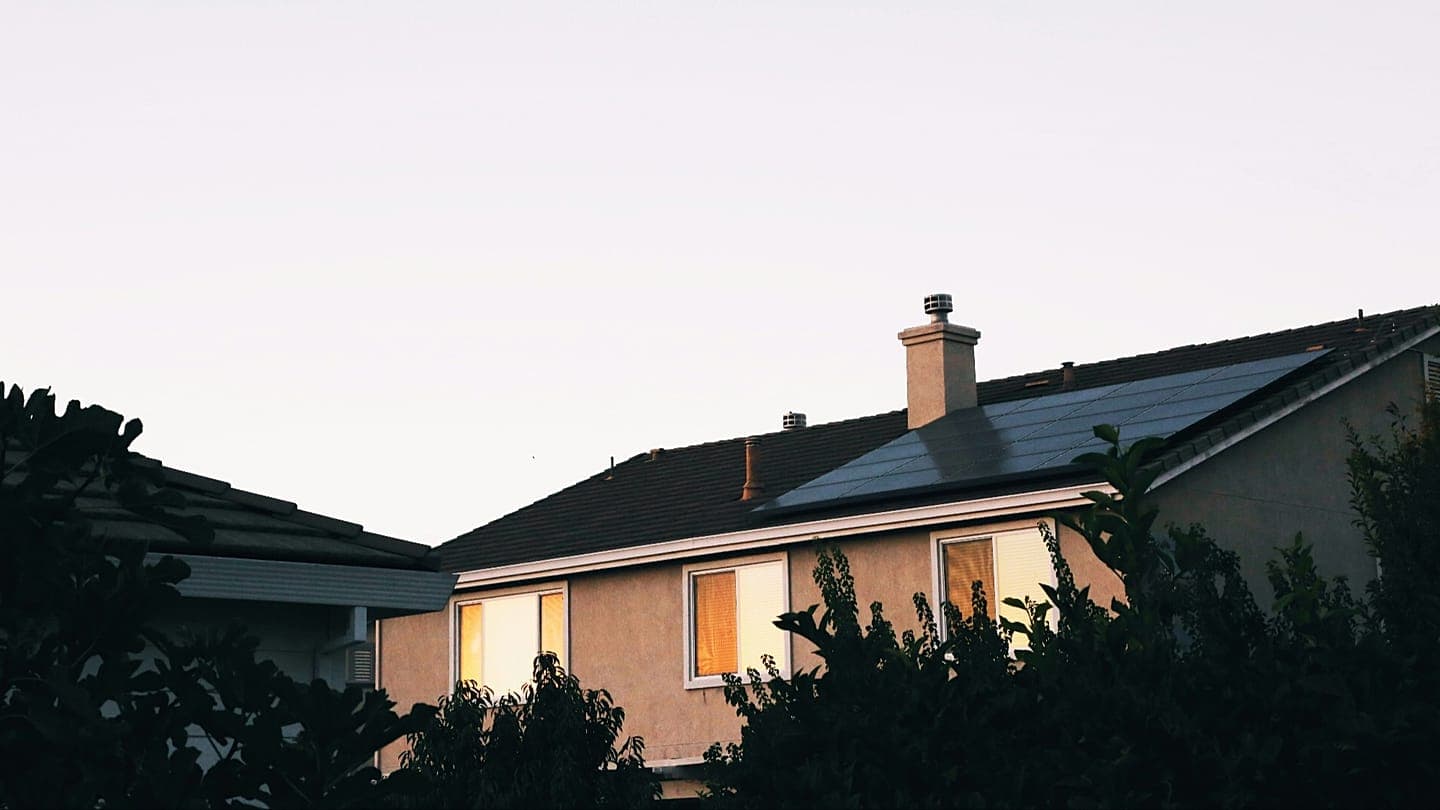
The slump is also noticeable at the level of individual households. A UK resident with 12 panels totalling 6.36 kW told Euronews Earth that on November 4 the panels produced only 10.90 kWh, and the house had to draw a further 27.40 kWh from the grid. The next day, when the city was overcast all day, output was just 2.40 kWh with imports of 20.60 kWh — and that was despite having an 11.52 kWh storage battery charged overnight on a discounted tariff. 'We are producing almost no electricity,' she said, adding that 'it is extremely disheartening to see that we are importing so much energy even though we spent thousands on the solar system.'
Summer sun versus winter sun: the contrast in numbers
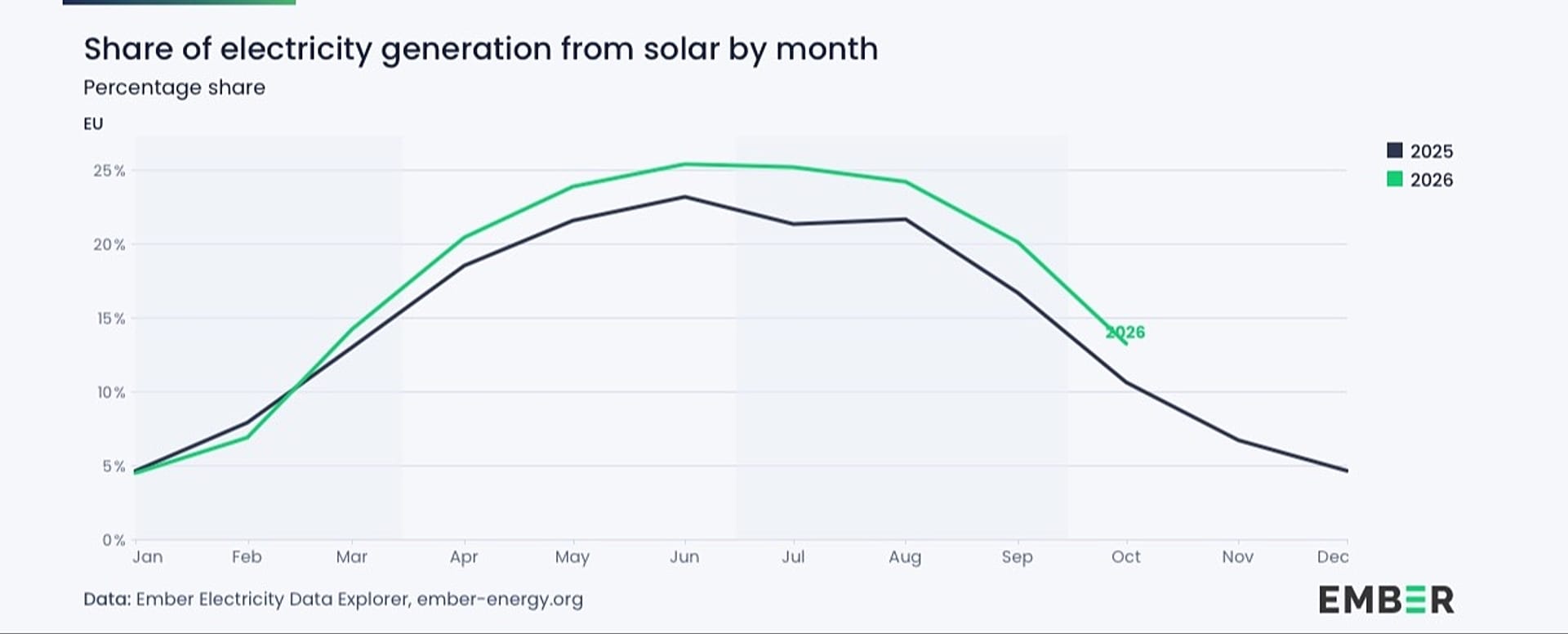
The scale of the seasonal swing is shown by Ember statistics: solar's share of EU electricity generation reached 25.4% in June but fell to 13.2% in October. At the same time, as Euronews notes, panels depend on daylight rather than heat, so rooftop installations generate electricity even on frosty days. According to green energy supplier Good Energy, home solar systems in the UK can deliver around 25–35% of their annual output in winter, which the company calls 'a decent cushion for winter bills'. Solar generation shortfalls usually coincide with increased hydropower output, which has been growing in the EU since October of last year.
The summer paradox: heat also tested the system
Notably, in the summer solar power looked like the 'shining star' of the energy transition: according to Ember, during the June heatwave daily electricity demand rose by 28% in Italy, 23% in Hungary, 14% in France and 13% in Spain, and the sun was the only major source performing 'better than usual' — average daily output was 17% higher in France and Hungary and 5% higher in Spain. Since the start of the war with Iran, which began on February 28, solar generation has saved the EU €42.9 billion on avoided gas imports. By contrast, water-intensive generation suffers in the heat: in August, Poland had to cut output at coal plants due to critically low water levels in the Vistula, temporarily removing 1.3 GW from the system — about 2% of the country's capacity, enough to power more than a million average households.