The key facts
- Germany, which has the largest storage capacity in the EU, saw its storage facilities less than 60% full in the first week of November for the first time
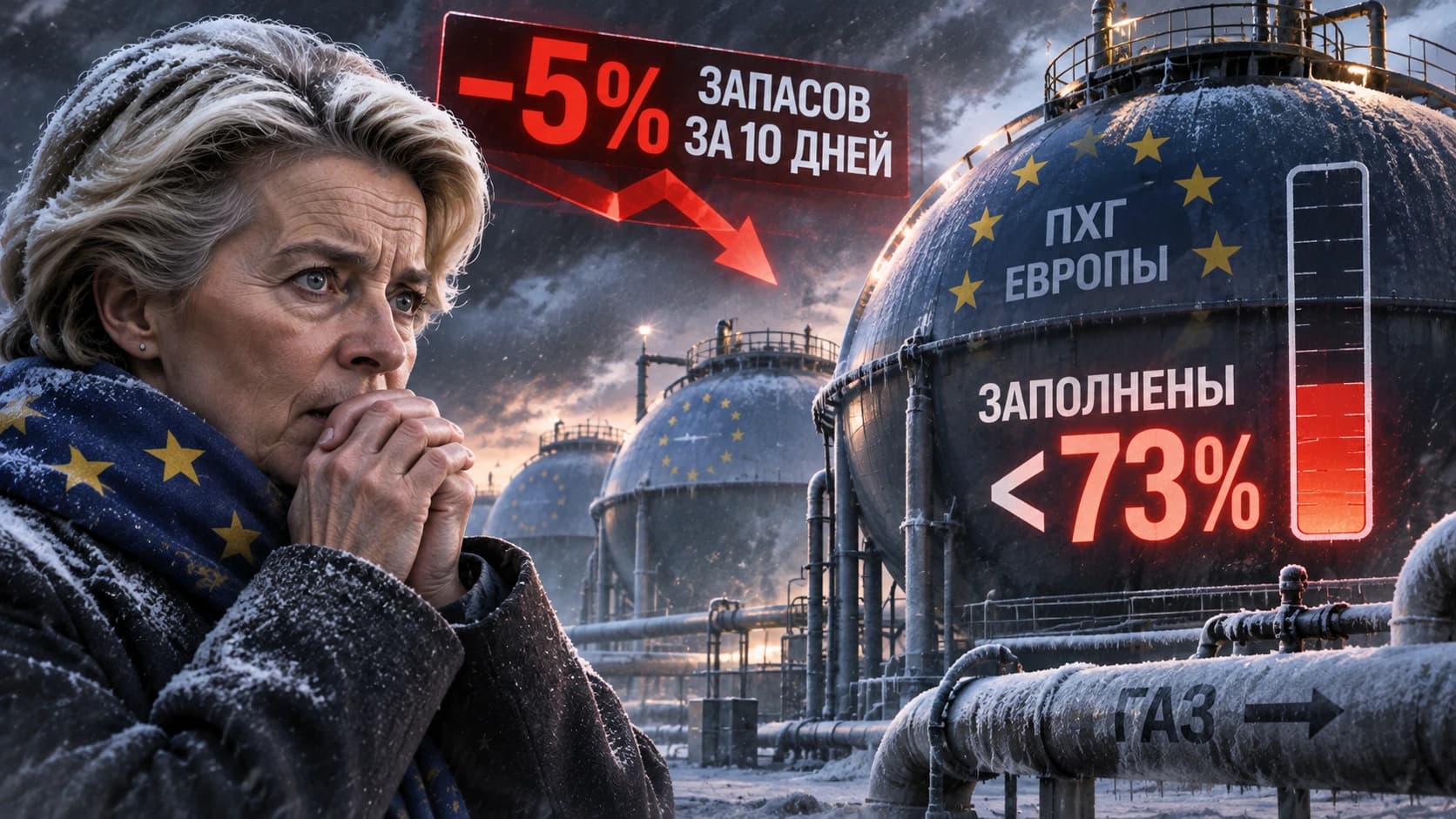
- At the start of the withdrawal season on October 28, storage was 74.9% full — the lowest on record
- The IEA called EU gas stocks at the start of the season the lowest since 2013
Germany's gas storage levels fell below 60%
Germany's gas storage facilities were less than 60% full in the first week of November for the first time, even though the country has the largest storage capacity in the European Union. This is reported by Life.ru, citing the company's calculations based on data from Gas Infrastructure Europe.
Record withdrawal volumes
On November 6, 83 million cubic meters more gas was withdrawn from European storage facilities than in the previous record for that calendar date — a difference of 23.9%. According to Gazprom, record highs for the corresponding dates have been recorded seven times since late October. The company links the series of records to colder weather and warns that rapid depletion of reserves will make it harder to supply consumers with fuel in winter.
The lowest season start on record
At the start of the withdrawal season, on October 28, storage facilities were 74.9% full — according to Gazprom's calculations, the lowest level for the start of a season on record. The International Energy Agency also assessed EU gas stocks at the start of the heating season as the lowest since 2013 and noted that with smaller reserves it will be harder for Europe to offset supply disruptions, especially during prolonged cold spells.
Context of restrictions on Russian gas
EU restrictions on Russian gas supplies under short-term contracts are already in force. For long-term LNG contracts, a ban will take effect on January 1, 2027; for pipeline gas, a deadline of September 30, 2027 has been set, with a possible deferral to November 1 if the European Commission identifies a risk of underfilled storage. Thus, low storage levels are being recorded even before the bans on long-term contracts come into force, and the deferral provided for pipeline gas is precisely tied to the risk of underfilled storage.