The key facts
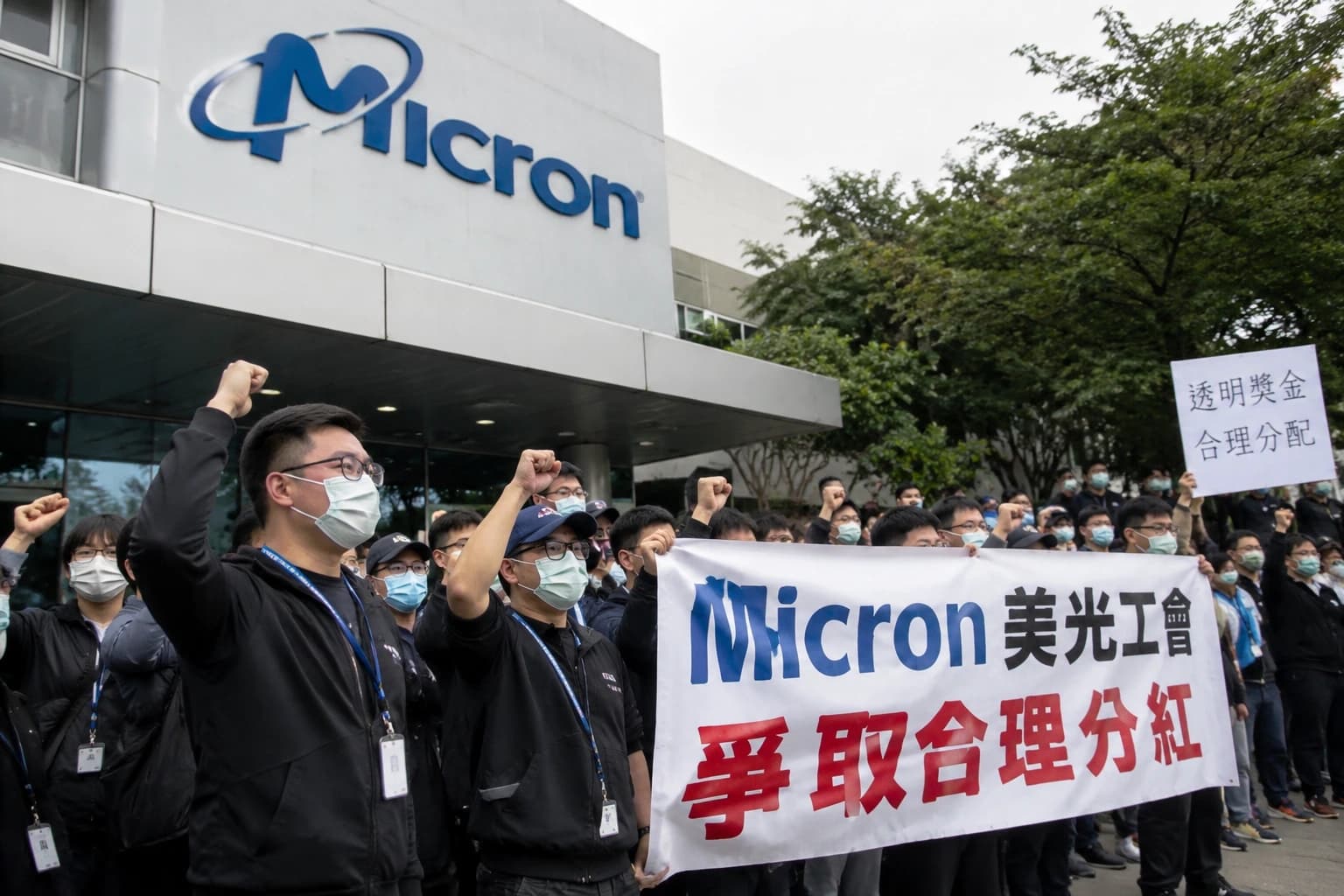
- On October 22, about ten Micron employees in Taoyuan held the first strike in the history of Taiwan's chip industry
- Workers demand that 15% of operating profit be allocated to bonuses; more than 15 thousand Micron employees in Taiwan provide over 60% of the company's DRAM production
- Micron has already agreed on wage increases with the union in Taichung, but Taoyuan representatives remained dissatisfied
A one-day action with potentially long-lasting consequences
On October 22, the first strike in the history of Taiwan's semiconductor industry took place at the Taiwanese city of Taoyuan plant of the American company Micron Technology. About ten employees took part, although earlier the idea of stopping work had been supported by more than two thousand union members. The cause was disagreements over wages, bonuses and the distribution of the company's profits amid the artificial intelligence boom. This was reported by Rest of World, whose material is cited by Life.ru.
Workers' demands and the company's response
The union demands that 15% of Micron's operating profit be allocated to staff bonuses, considering the current system opaque and pointing to the large gap between the pay of executives and ordinary employees. As an example, the workers cite their South Korean competitors Samsung Electronics and SK Hynix, which have profit-sharing agreements in place. Micron has already proposed new terms: with the union of the plant in Taichung, an agreement was reached on wage increases, quarterly bonuses and additional pension contributions; however, representatives of the workers in Taoyuan stated that their key demands had not been met. The company said it respects the lawful rights of employees and intends to continue negotiations; Taiwan's Ministry of Labor has joined the settlement efforts.
Why the conflict goes beyond a single plant
The scale of the dispute is explained by the role of Micron's Taiwanese sites in the global supply chain: more than 15 thousand of the company's employees work on the island, providing over 60% of its DRAM memory production, which is used, among other things, in servers for artificial intelligence. The membership of the two local unions grew over several months from about 440 to more than 13 thousand people. According to TrendForce analyst Ellie Wang, a short-term production stoppage is unlikely to lead to serious consequences; however, prolonged strikes or the spread of the protest to other plants could disrupt component supplies for AI equipment manufacturers, including Nvidia, and push prices up. Life.ru previously also described the context of component shortages amid the AI boom: according to the outlet, due to the shortage of components computers in Russia may rise in price by 20–50% by 2028–2029.