The key facts
- The volume of transport services grew from 36 trillion to 188.2 trillion soums since 2017; in the first half of 2026 it reached 85.3 trillion soums (+43%).
- The volume of transport services grew from 36 trillion to 188.2 trillion soums since 2017; for the first half of 2026 — 85.3 trillion soums (+43%).
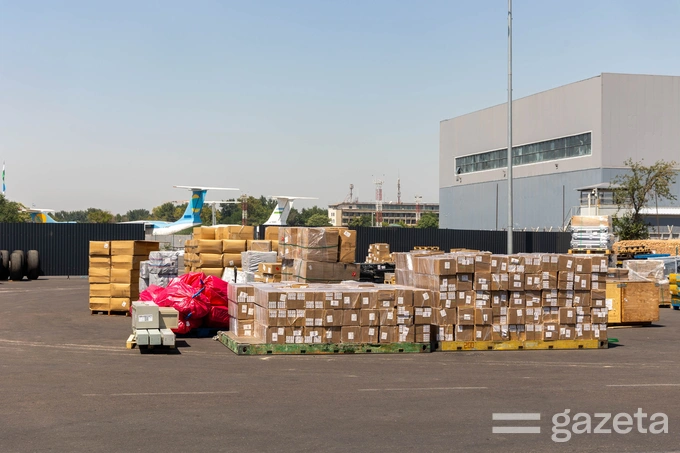
- The shortage of modern class A and B warehouses is about 400,000 square meters with a total volume of 795,000 square meters; more than 75% of the space is concentrated in the Tashkent hub.
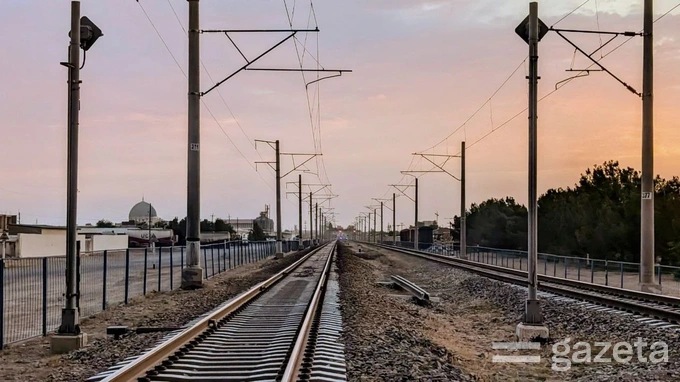
- The railway network lacks about 2,800 km; investment needs are estimated at $9–13 billion with an implementation period of 10–15 years.
- The railway network lacks about 2,800 km; investment needs are estimated at $9–13 billion with a 10–15 year implementation period.
What the study revealed
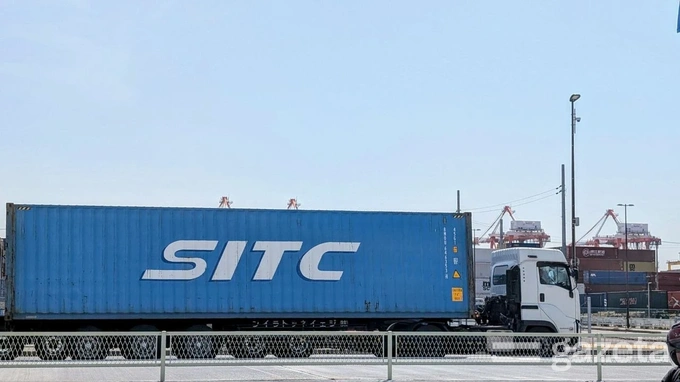
The Agency for Strategic Development and Reforms under the President of Uzbekistan has published a study of the transport and logistics industry, analyzing the state of freight transportation, the warehouse real estate market, investment constraints, and international experience. Gazeta prepared an overview of the document. According to the study, since 2017 the annual volume of transport services in the country has grown more than fivefold — from 36 trillion to 188.2 trillion soums; in the first half of 2026 it reached 85.3 trillion soums, 43% more than a year earlier. According to data from the Eurasian Development Bank cited by the agency, in 2025 the volume of rail container transportation reached 100,000 TEU for the first time, while total rail freight exceeded 107.9 million tons — with the bulk consisting of bulk cargo: coal, ore, and construction materials. For comparison, in Kazakhstan the containerization level is estimated at 8.5%, with container traffic at 2.2 million TEU.
International status without a unified system
In late 2025, at a meeting of the ESCAP working group in Bangkok, 27 transport and logistics centers of Uzbekistan — including Navoi Cargo, Kungrad Cargo Impex, Multimodal Trans Terminal, Universal Logistics Services, Orient Logistics Centre, and Termez Cargo Centre — were included in the international network of “dry ports,” expanding it by 15%. However, as noted in the study itself, international recognition alone does not eliminate existing problems: “the existing ‘dry ports’ do not yet function as a unified national transport and logistics system.” The authors warn that without the development of national terminals and container infrastructure, a significant share of the revenue from international cargo flows may be generated outside Uzbekistan. The agency links prospects to the Trans-Caspian route (with traffic projected to grow from 4.2 million tons in 2025 to 11 million tons by 2030), the construction of the China — Kyrgyzstan — Uzbekistan railway, and the CASCA+ and TRACECA corridors.
Shortage of warehouses and roads
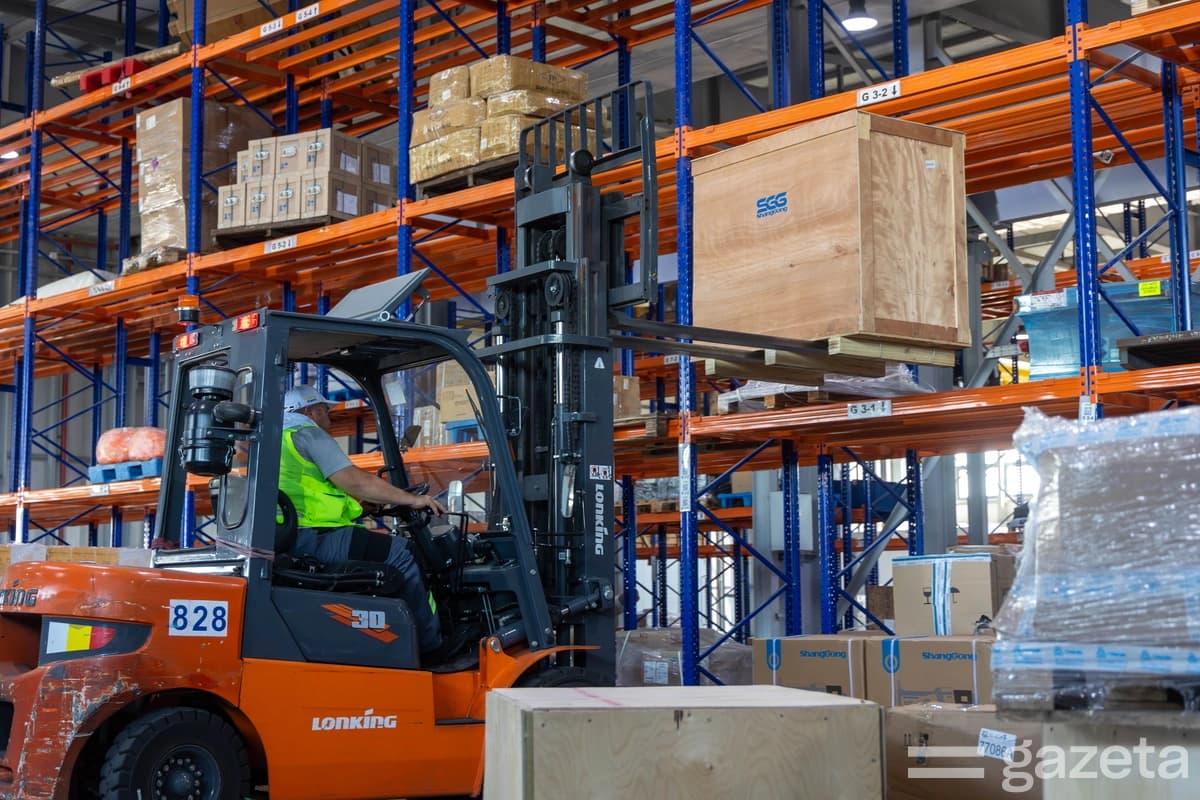
A separate section is devoted to warehouse real estate. In April 2026, IBC Global ranked Uzbekistan seventh (40.2 points) in its warehouse market attractiveness rating of 200 countries — with the best warehouse component score among the ten countries in the table (60.4 points). At the same time, according to the agency's estimates, the volume of modern class A and B warehouses is about 795,000 square meters, while unmet demand is nearly 400,000 square meters; more than 98% of class A space is occupied, and over 75% of existing space is concentrated in the Tashkent transport hub. The provision of modern warehouses is 0.02 square meters per person, compared with 0.7 square meters in Turkey and 2.1 square meters in Germany. The return on warehouse real estate is estimated at 15–18% per year with rents of about $12 per square meter per month; however, interest rates on loans in the national currency (21–23%) exceed the returns of most projects. The problem is most acute in the ten state-owned “dry ports” of Uztemiryulkontainer, most of which fall into classes B and C.
Infrastructure and administrative constraints
Among the key constraints, the agency cites the railway network: over nine years the population grew by almost 30%, GDP roughly 2.5-fold, while the length of mainline railways increased by only 12–14%, to about 4,800 km against a need of 7,560 km; the shortfall is estimated at 2,800 km, with investments of $9–13 billion over a 10–15 year implementation period. Until August 2025, Uztemiryulkargo used wagons belonging to Kazakh companies on the Tashkent — Altynkol route. The report also notes the fragmentation of digital systems with neighboring countries, the absence of a unified mechanism for through tariffs on the Trans-Caspian route, and additional costs from returning empty containers to China, which are borne in part by Uzbek exporters. Citing World Bank estimates, it states that obtaining land and permits can stretch the construction of logistics facilities from six to nine months to two years. A separate problem is the vertical integration of Uzbekistan Railways (Uzbekiston Temir Yollari), which, according to the agency, creates a potential conflict of interest and limits competition, despite the 2023 Law 'On Railway Transport'.
Seven proposed reforms
The agency proposed seven directions: a free 'dry port' regime with customs control moved inside terminals and a separate law; attracting international operators (DP World, AD Ports Group, PSA International, Duisburger Hafen AG, Lotte Global Logistics and COSCO Shipping are named) through public-private partnerships; establishing a National Fund for Logistics Infrastructure Development, including the issuance of infrastructure bonds and sukuk; a pilot opening of locomotive traction to private companies; a unified digital platform, Cargo Community System, cutting document processing from several days to 10–15 minutes; cooperation among small road carriers; and simplified land allocation and construction procedures. In support, it cites the experience of Rwanda (transit reduced from 14 to 3 days), Laos (delivery to Europe cut from 45 to 15 days), India, and Kazakhstan, where 74% of the freight wagon fleet is privately owned. It is emphasized that the initiatives presented are proposals of the agency, not adopted decisions.