The key facts
- India's most expensive film (around $500 million for two parts) has been released worldwide ahead of Diwali
- Reviews are divided: from four stars in The Guardian and Hindustan Times to 4/10 from IGN
- The use of AI to adjust the lips in the English-language version has drawn criticism
India's most expensive film has hit cinemas
Ramayana: Rise of a Legend has been released worldwide — the first of two planned parts of the most expensive production in the history of Indian cinema, reportedly made for $500 million. Director Nitesh Tiwari has brought to the screen one of the foundational epics of Hinduism: Ranbir Kapoor plays Rama, the exiled prince of Ayodhya, Sai Pallavi plays Sita, and the South Indian film star Yash plays the ten-headed Ravana, who abducts Sita. Rama's battle with Ravana is left for the second part, due out next year. This is reported by BBC News.
Hollywood resources and the actors' caution
Producer Namit Malhotra heads the visual effects company DNEG, which worked on Dune and Interstellar; the music was composed by Oscar winner A. R. Rahman and Hans Zimmer. The premiere is timed to Diwali — the festival celebrating Rama's return to Ayodhya. Kapoor told the BBC Asian Networkthat he felt fear at playing a deity worshipped by millions: the role left him less creative freedom than his previous work. Sai Pallavi described working on Sita as not only an artistic but also a spiritual experience.
Critics are divided
Reviews differ markedly. Saibal Chatterjee of NDTV gave it three stars out of five, judging that the visual scale is 'mostly the only thing that stands out' and that the acting is 'wildly inconsistent'. Rishabh Suri of Hindustan Times gave four stars, noting that 'all that money is visible on screen', although the first half drags. Shubhra Gupta of The Indian Express, after initial doubts, called the film 'the perfect epic'. Peter Bradshaw in The Guardian gave four stars, seeing echoes of Shakespeare and Homer in the plot and comparing the landscapes to The Lord of the Rings. The critics at IGN and Next Best Picture were far more reserved — 4/10 and 5/10: the former called the CGI 'an eyesore', the latter felt that the sprawling plot would have been better suited to a series in the vein of Game of Thrones. Separate criticism was drawn by the use of AI to adjust the actors' lips in the English-language version — Tiwari himself explained this as a matter of accessibility for an international audience.
The shadow of the 1987 series and the political context
The new adaptation is inevitably compared with Ramanand Sagar's 1987 television series, whose 78 episodes on state-run Doordarshan drew, by estimates, 80–100 million viewers; streets emptied, and viewers prepared for the broadcast almost as for a religious service. Arun Govil, who played Rama back then, returns in Tiwari's film as Rama's father, Dasharatha. The BBC also notes that the film is coming out at a politically charged moment: Rama has become a symbol of Hindu identity, and even retellings of the epic have sparked controversy over the past decade and a half — thus, Adipurush in 2023 faced calls for a ban and criticism over its depiction of Ravana, its dialogue and its effects. What verdict audiences will deliver will become clear as the cinemas fill up.
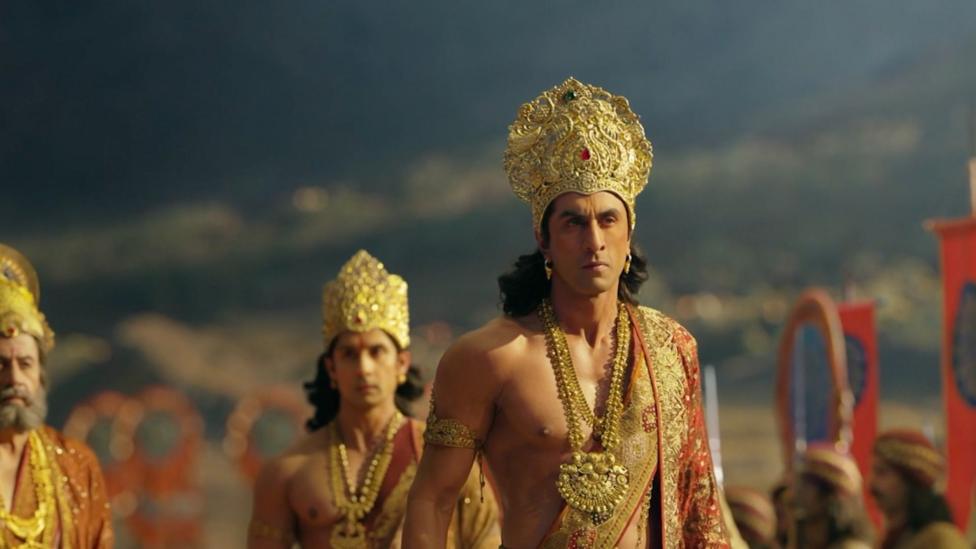 Image source, Ramayana: Rise of a Legend, Sony Pictures
The film adapts the revered Hindu epic Ramayana
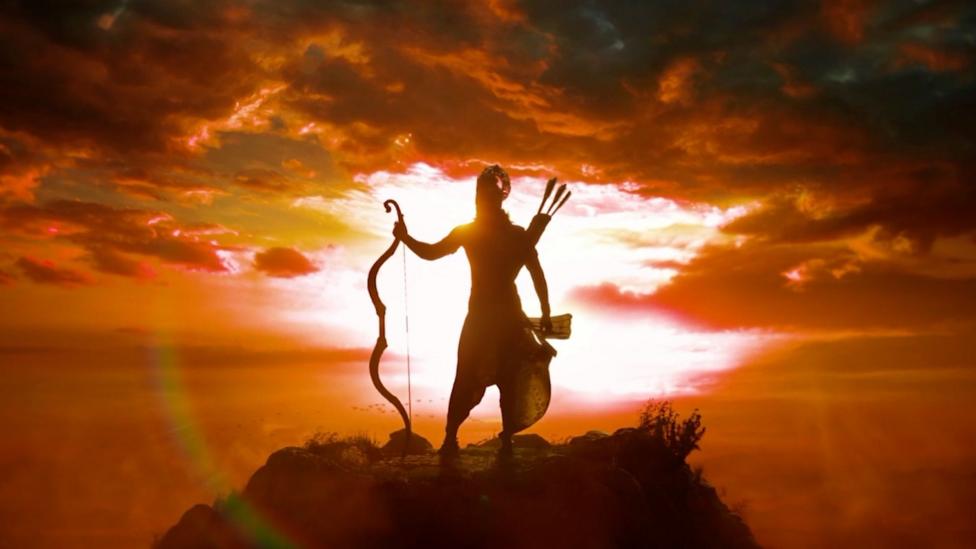 Image source, Ramayana: Rise of a Legend, Sony Pictures
The film's release comes days ahead of Diwali, which celebrates Ram's return to Ayodhya and the 'victory of good over evil'
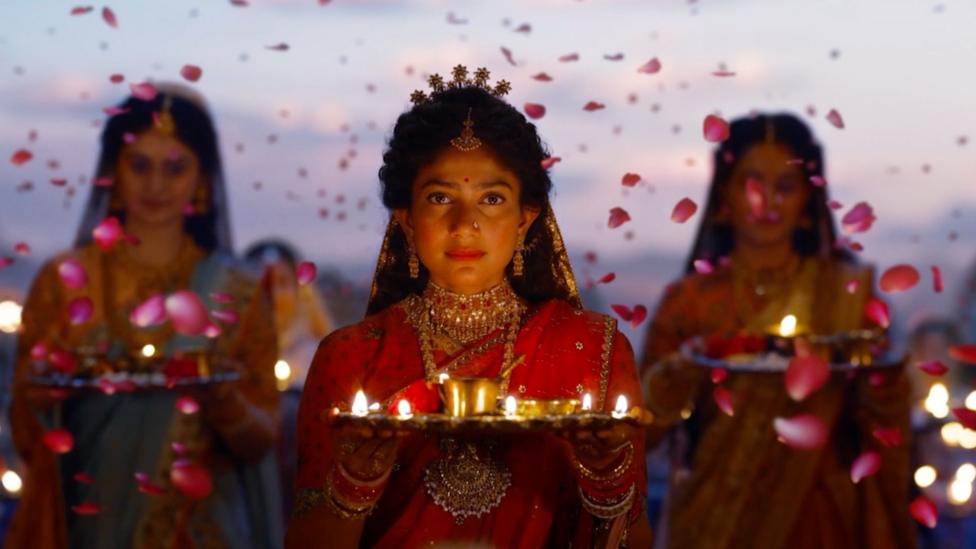 Image source, Ramayana: Rise of a Legend, Sony Pictures
Sita's abduction by Ravana sets off an epic battle
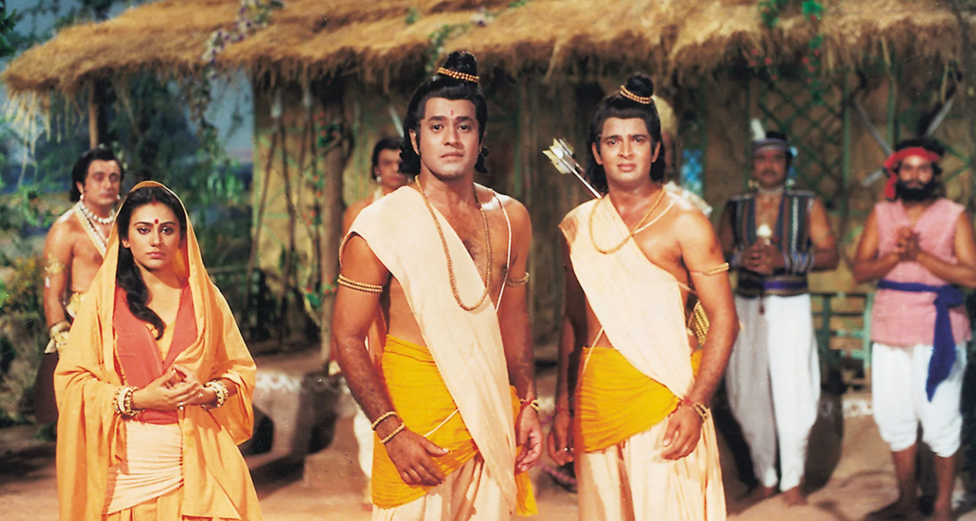 Image source, Ramanand Sagar Productions
Ramanand Sagar's Ramayan remains the most popular adaptation of the Hindu epic till date