The key facts
- A Pobeda Boeing 737-800 was performing a technical ferry flight from Minsk to Moscow without passengers and landed safely at Vnukovo
- The carrier confirmed the crew's report of a malfunction in one engine; initial media reports mentioned a Pan-Pan signal
- The failure of one engine on a twin-engine airliner is a certifiable scenario: the aircraft is designed to continue flight and land
- The failure of one engine on a twin-engine airliner is a certifiable scenario: the aircraft is designed to continue the flight and land
The Pobeda Boeing 737 incident
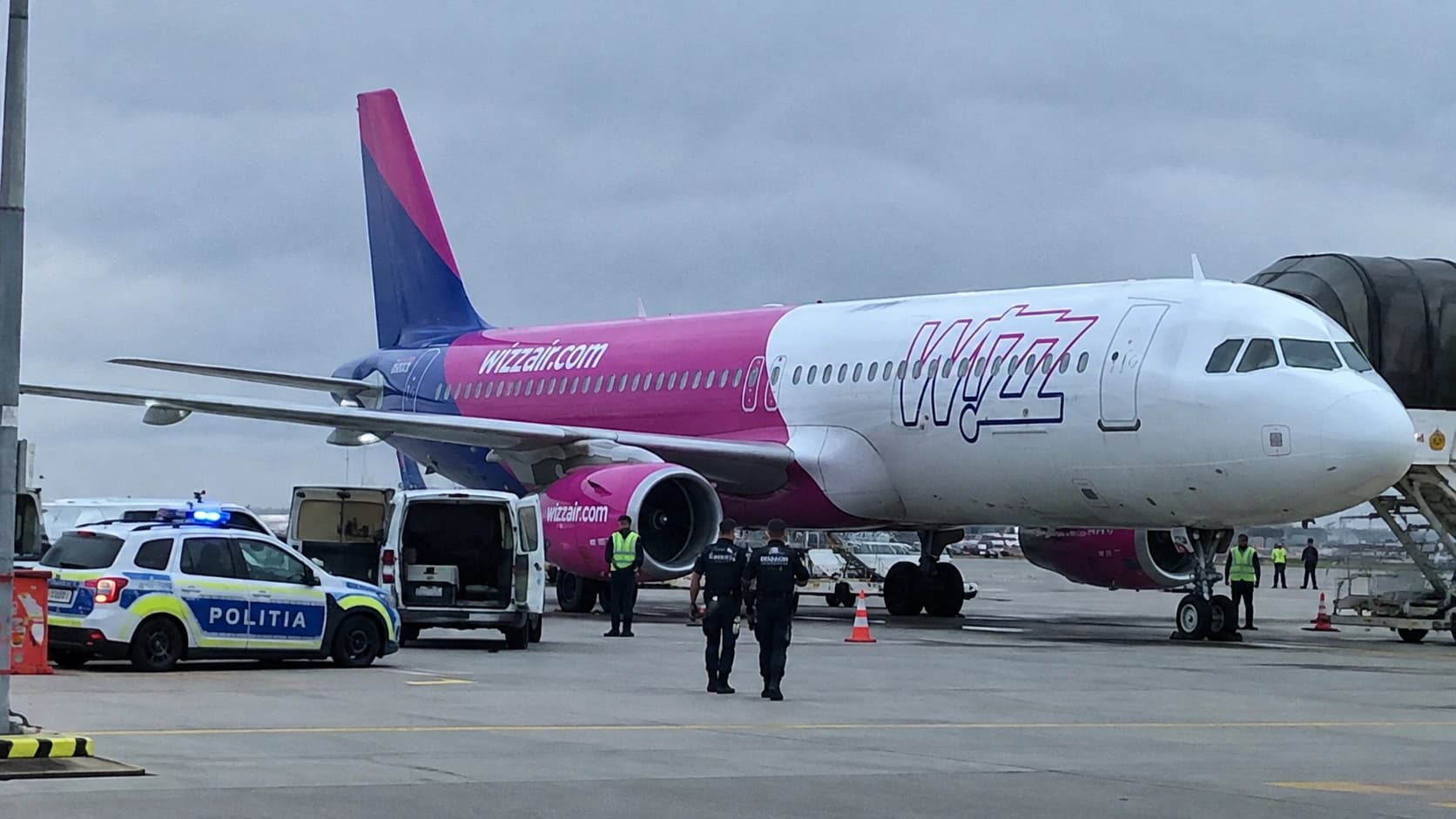
The trigger for the discussion of engine failure was an incident involving a Pobeda Airlines Boeing 737-800. The carrier confirmed that during a technical ferry flight from Minsk to Moscow, the crew reported a malfunction in one engine. There were no passengers on board, the aircraft landed safely at Vnukovo, and after maintenance work it was cleared for further operation. Initial media reports also mentioned a Pan-Pan call. Continuing the approach to Vnukovo after reporting the malfunction is not in itself a sign that the pilots 'risked flying on': if the aircraft is stable on the approach path, the runway is suitable, and the plane is controllable, continuing the approach is sometimes safer than starting a new maneuver.
Why an aircraft can fly on one engine
The failure of one engine on a twin-engine passenger airliner is a scenario taken into account at the design and certification stage. European requirements CS-25 specifically provide for testing with one engine inoperative: climb performance after takeoff, en-route flight, controllability, approach, and go-around are checked; American FAA requirements follow the same principle. With one engine shut down, the aircraft does not lose all thrust, but the flight becomes more complicated: a tendency to yaw toward the inoperative engine appears, climb performance decreases, and the operating engine carries an increased load. That is precisely why the ability to fly on one engine does not mean the flight will continue to its original destination — the crew selects a suitable airport for landing. Russian aviation rules explicitly provide for multi-engine aircraft flight with an engine failed, provided the performance allows the flight to be safely continued to the landing airport.
Pan-Pan and Mayday: what is the difference
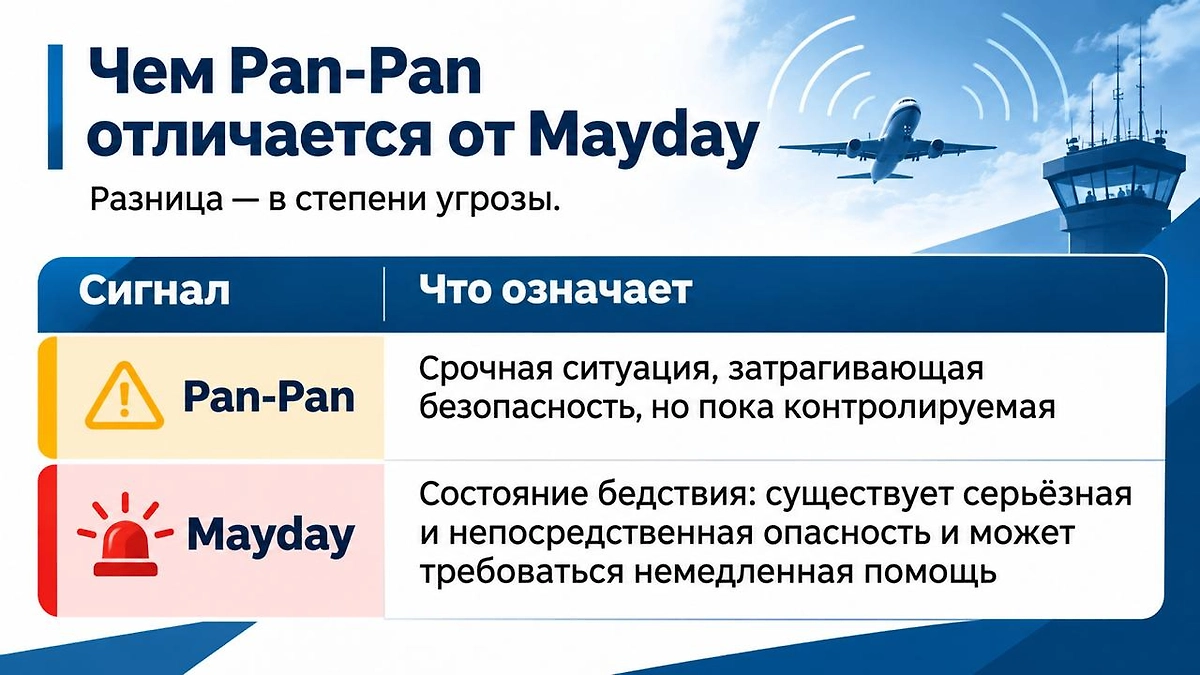
Pan-Pan is an international radiotelephone urgency signal, usually spoken three times. The FAA defines it as a message about a situation involving the safety of the aircraft or people that requires priority attention but does not require immediate assistance right now. After such a message, controllers give the aircraft priority over normal air traffic. Mayday, by contrast, signifies distress and has absolute priority in radio communications; the FAA distinguishes these categories as urgency and distress. The boundary can change in flight: a situation that began as Pan-Pan can escalate to Mayday if the aircraft's condition deteriorates. The engine failure itself does not automatically mean that Mayday must be declared — what matters is the overall condition of the aircraft and the ability to continue the flight safely.
How crews act and how they are trained
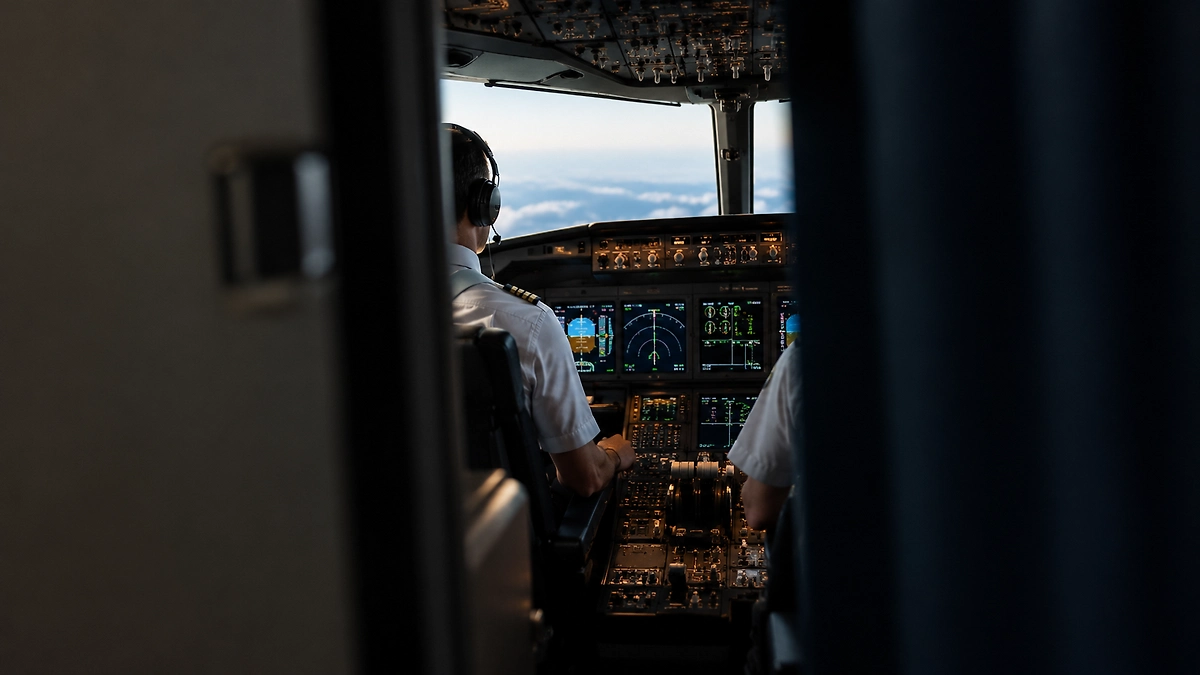
The exact actions in the event of an engine failure depend on the aircraft model, the phase of flight, and the nature of the malfunction: there is no universal sequence; the crew works according to the specific aircraft's manual and checklists. The main task is to maintain control, determine the nature of the malfunction, and decide where it is safer to land, informing the controller and requesting the necessary priority. Engine failure is a standard part of training for pilots of multi-engine aircraft: the Russian commercial pilot training program specifically includes flight with one engine inoperative, approach, go-around, and landing in this configuration, and on airliners these situations are regularly practiced on full-flight simulators. Takeoff engine failure is also practiced separately: before the calculated decision speed V1, the takeoff can be aborted; after reaching it, the takeoff, as a rule, continues on the remaining engine, since attempting to stop on the remaining part of the runway may prove more dangerous.