The key facts
- The cost of a homemade breakfast for four rose by 6% over the year — to 82 rubles
- Kefir, flour, eggs and vegetable oil rose in price by 5–8%
- A serving of pancakes in a cafe rose in price by 11% — to 166 rubles
Homemade pancakes have become more expensive
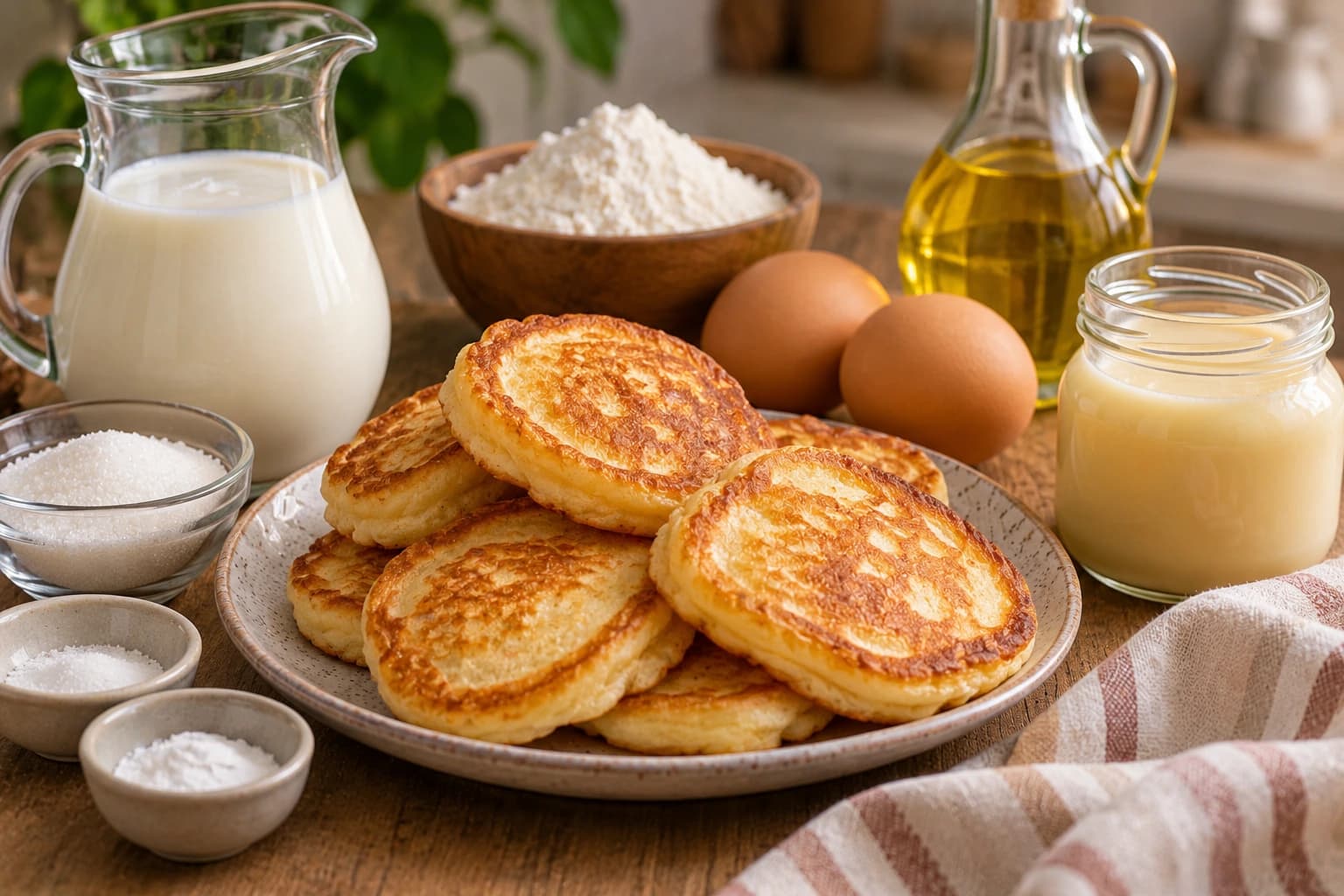
Making pancakes for a family of four in Russia in October 2026 cost an average of 82 rubles — the set of ingredients rose in price by 6% over the year. This is according to data from the Chek Index analytical center, cited by Vedomosti; Life.ru writes about the results of the study. The calculation was based on a standard recipe: the basket included kefir, eggs, flour, sunflower oil, sugar, salt and baking soda, with analysts accounting for the required amount of ingredients rather than the cost of whole packages.
What became more expensive and where breakfast costs more
Basic products made the main contribution to the increase: according to analysts, kefir, flour, eggs and vegetable oil rose in price by 5–8% over the year. The cost of breakfast varies noticeably across cities: in Moscow the set costs 87 rubles, in St. Petersburg — 85, in Yekaterinburg — 90, in Kazan — 83 rubles. The highest figure among the cities studied was recorded in Novosibirsk — 92 rubles.
Ready-made pancakes and toppings
Alternatives to home cooking have also become more expensive. The median cost of a serving of pancakes in a cafe reached 166 rubles, up 11% over the year, while the number of purchases grew by 3%. Ready-made pancake mixes rose in price by 11% — to 110 rubles, and were bought 5% more often. Among breakfast toppings, condensed milk rose in price by 4% — to 135 rubles (sales grew by 5%), while a jar of jam cost 183 rubles on average, but was bought 3% less often.
Contrast with the food basket
The rise of the 'pancake index' contrasts with the dynamics of the minimum food basket: Life.ru previously reported, citing Rusprodsoyuz, that in September its cost fell by 1.5% — to 7,845 rubles per month per person on average across Russia (9,253 rubles in Moscow and 9,151 rubles in St. Petersburg). This indicates that the price increase affected individual basic product categories rather than the entire set equally.