The key facts
- A study on 14,000 newborns was planned: half would have received the vaccine at birth, half would not
- The study planned to involve 14,000 newborns: half would have received the vaccine at birth, half would not
- The CDC allocated $1.6 million to the University of Southern Denmark in December 2025
- The government of Guinea-Bissau banned the trials in January; police seized a batch of vaccines on 19 October
- The government of Guinea-Bissau banned the trial in January; police seized a batch of vaccines on 19 October
What was planned and why it caused a scandal
The study was to take place at the Bandim Health Project research centre, which has been operating in Guinea-Bissau since 1978. It was planned to include 14,000 newborns: half would receive the hepatitis B vaccine shortly after birth, and the other half would not. According to Bandim, the aim was to study whether the vaccine given at birth has broader effects on health beyond protection against infection. The project was funded by the CDC, which allocated $1.6 million to the University of Southern Denmark in December 2025 — that is, by the US government at a time when vaccine policy was overseen by Health Secretary Robert F. Kennedy Jr., known for his scepticism about vaccines — as reported by BBC News.
Ethical objections
The criticism was based on the fact that in one of the world's poorest countries, where nearly a fifth of the population is infected with hepatitis B, some newborns would be left without the WHO-recommended vaccination. The WHO representative in Guinea-Bissau, Valter Casadei Mulombo, told the BBC that the organisation became concerned after failing to find a publicly available study protocol: 'The vaccine has been used for more than 30 years in more than 115 countries. A study that denies this intervention to other newborns is unethical.' Duke University professor Gavin Yamey called the project 'redolent of neocolonialism', asking why the study was not being conducted in Denmark. Earlier studies in Gambia and Guinea-Bissau had raised the question of a possible link between the vaccine and increased mortality, but subsequent work by some of the same authors did not confirm the previously described effect.
Cancellation, seizure of vaccines and the Danish university's position
The government of Guinea-Bissau banned hepatitis B vaccine trials involving children back in January and requested assistance from Africa CDC. Health Minister Quininha Nantote said in October that the ban remained in force and had not been lifted by the Council of Ministers, expressing outrage that she had learned of the possible continuation of the study from the media. Dean of the University of Southern Denmark Jakob Grauslund stressed that the trial had never begun, no child had been enrolled and no vaccination had been given; the university had received a positive opinion from its own ethics committee, but this did not replace permission from the Guinea-Bissau authorities. On 19 October, the judicial police searched the premises of the Bandim Health Project in Bissau and seized a batch of hepatitis B vaccines, disclosing neither the number of doses nor the grounds for the investigation; the police emphasised that the seizure itself did not mean the vaccines were defective or unsafe.
What changes for the country
Guinea-Bissau currently vaccinates children against hepatitis B from six weeks of age, which reduces the vaccine's effectiveness: infection during childbirth from an infected mother is one of the main routes of transmission, and those infected in infancy are especially prone to chronic forms which, according to 2020 data, kill up to 25% of carriers, mainly through liver failure or liver cancer. The country had planned to add a birth dose to the vaccination schedule in 2028, but, according to the WHO representative, the authorities are considering introducing it as early as the first quarter of next year. The cancellation of the trial effectively removes the main argument for delaying the birth dose until 2028 — the 'unique opportunity' to study the vaccine's effects before its introduction, which the researchers had cited. The BBC notes that the available information contains no evidence that the trial was intended to justify changes to US policy, although critics raised this question against the backdrop of an attempt by the US vaccine advisory committee to rescind the recommendation to vaccinate all newborns — an attempt subsequently blocked by a federal judge.
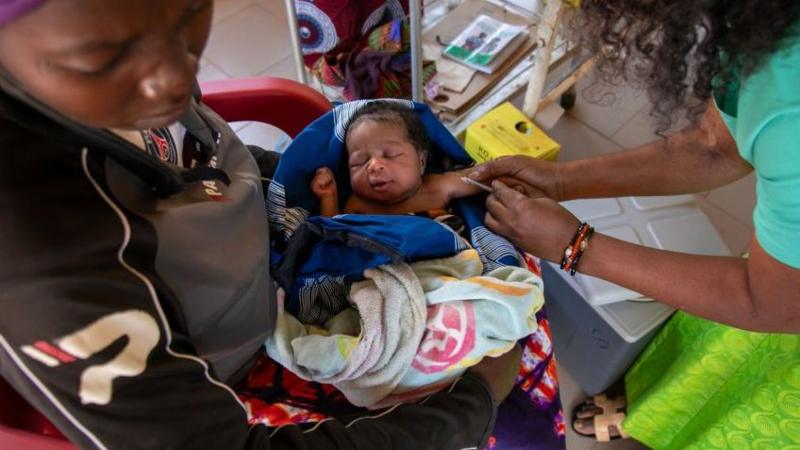 Image source, Getty Images
Like many neighbouring countries, Guinea-Bissau waits until babies are six weeks old to vaccinate them against hepatitis B, while the WHO says it should be done at birth (file photo)