The key facts
- Trump announced the end of aid to Israel (~$4 billion a year) by the end of the year, claiming an agreement with Netanyahu was reached several months ago
- Israel's defense ministry, according to KAN, will lose about 12 billion shekels ($4 billion) annually
- Since 1948, aid to Israel, per CFR estimates, has exceeded $300 billion adjusted for inflation; the US State Department cited more than $130 billion
Trump's announcement and the reaction in Israel
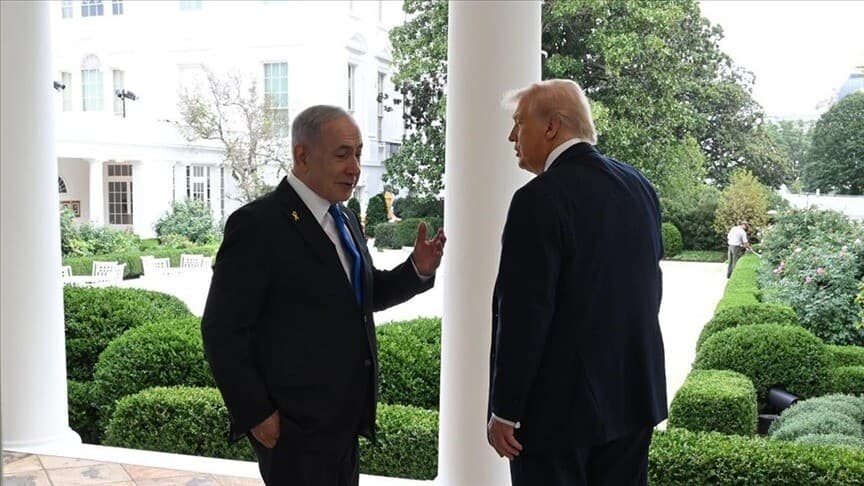
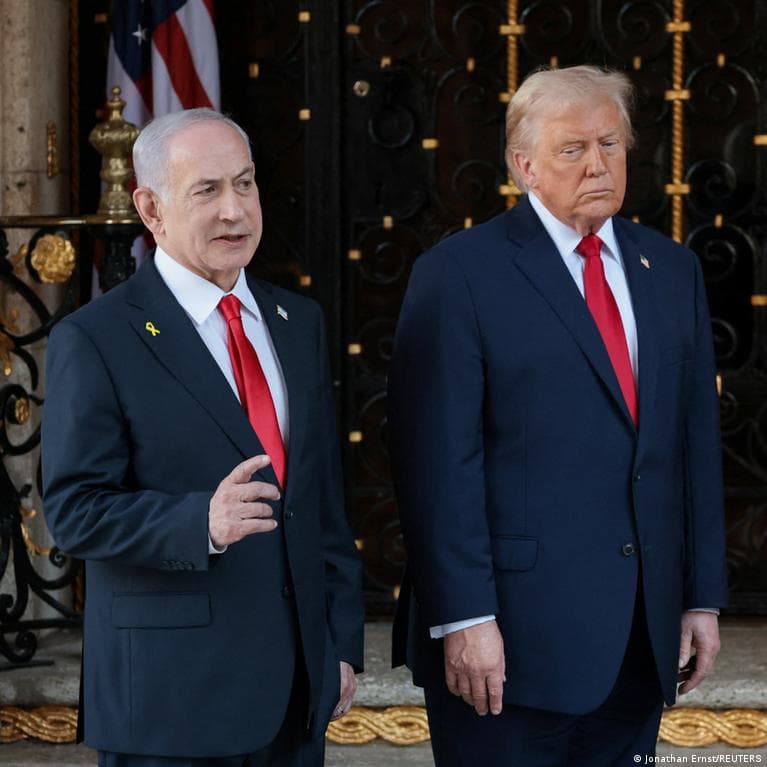
US President Donald Trump said on Fox News on Tuesday that Washington will end financial aid to Israel by the end of the current year — the amount in question is roughly $4 billion annually. According to him, such an agreement was reached with Israeli Prime Minister Benjamin Netanyahu several months ago. This was reported by Anadolu citing the American leader.
A surprise for Israeli agencies
The decision caught Israeli institutions off guard. A senior official at an Israeli security agency told public broadcaster KAN: 'We did not expect this announcement, and certainly not today. There is a constant dialogue with the Americans, and it is fair to say we were surprised.' According to KAN figures cited by Anadolu, Israel's Ministry of Defense will lose about 12 billion shekels ($4 billion) a year, and the treasury will have to cover the shortfall at taxpayers' expense. According to the KAN source, the announcement has not yet reached the relevant professional agencies.
The scale of aid: two different estimates
The stated annual aid amount fits within existing arrangements. According to the US State Department, the aid is formalized by a 10-year memorandum of understanding for 2019–2028: $3.8 billion annually, of which $3 billion comes under the Foreign Military Financing program and $500 million funds missile defense cooperation programs. The deadline named by Trump will arrive before the memorandum expires in 2028.
The scale of aid: two different estimates
The cumulative size of American aid to Israel is assessed differently depending on methodology. According to a Council on Foreign Relations (CFR) report from October 2025, since 1948 economic and military aid, adjusted for inflation, has exceeded $300 billion, and Israel is the largest cumulative recipient of US foreign aid. The US State Department, in an April 2025 report, put bilateral aid since 1948 at more than $130 billion; Anadolu notes that the figures reflect different scopes and calculation methods, and they should be compared with their respective bases and periods in mind.
The military component and talks on a new agreement
Since the start of the war in the Gaza Strip in October 2023, according to CFR data, Washington approved at least $16.3 billion in direct military aid to Israel through three pieces of legislation, including $8.7 billion in April 2024; $6.7 billion of the total went to missile defense systems. The State Department also reported 751 active Foreign Military Sales cases worth $39.2 billion, and ongoing arms export deliveries of more than $12.2 billion through Direct Commercial Sales in 2018–2022.
Reaction of the Israeli press and economy
The newspaper Yedioth Ahronoth reported on Tuesday that the sides had been negotiating a new cooperation agreement to replace the current memorandum, and it was expected that funding would shift toward joint defense R&D — before Trump's announcement. The outlet noted that Trump could present the move to voters as a cut in foreign spending, and Netanyahu as a move away from dependence on the US, but it quoted a senior Israeli economic official who warned: 'If Trump's statement is true, this is an extremely dangerous decision for the Israeli economy. Giving up two years of American aid effectively means losing $8 billion. Where are we supposed to get this money? Obviously, through taxes on citizens.' Another unnamed official, according to the newspaper, viewed the announcement, which coincided with the US congressional midterm elections, as an election maneuver. Haaretz, for its part, suggested that Trump may have aimed the statement at Republicans, who have become more cautious in their relations with Israel after the two countries' confrontation with Iran. There is no official confirmation of the details of the agreement with Netanyahu in the publications.