The key facts
- From January to October, more than 243,000 vehicles passed through Olot — 2.3 times more than in 2022; up to 1,200 vehicles daily in both directions.
- A new bridge over the Yomonjar canal is proposed, with at least two lanes for trucks in each direction, replacing the 1978 bridge.
- The Ministry of Transport proposes abandoning the trailer swap mechanism introduced by the Turkmen side during the COVID-19 pandemic.
Officials' visit to Olot and the growing load on the checkpoint
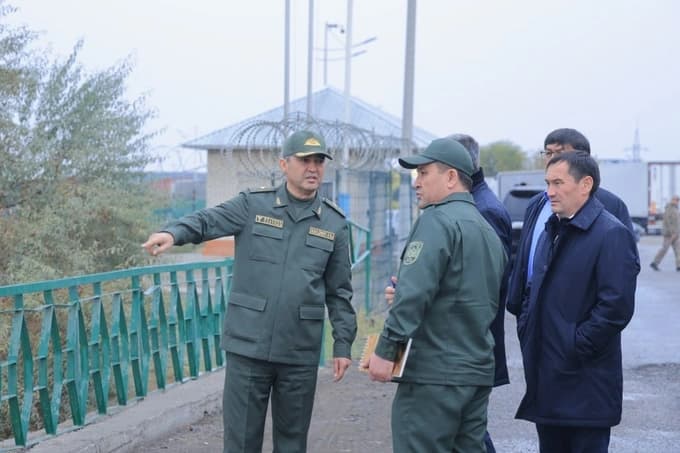
Uzbekistan plans to increase the capacity of the Olot border checkpoint on the border with Turkmenistan, the Ministry of Transport's press service reports. On November 4, the checkpoint was visited by Transport Minister Ilhom Mahkamov, Customs Committee head Akmalxodja Mavlonov, Uzavtoyul chairman Jamshid Tursunov and Uzsuvta'minot head Ahmad Suvankulov; they reviewed the checkpoint's operations and studied options for speeding up the passage of vehicles.
What changes are proposed
The load on the crossing has grown noticeably: from January to October, more than 243,000 vehicles passed through Olot — 2.3 times more than in 2022 — and up to 1,200 vehicles pass through the checkpoint daily in both directions. The Ministry of Transport noted the need to modernize the checkpoint's infrastructure and the task of revising organizational mechanisms and establishing traffic flow management; issues of simplifying freight transportation and developing logistics infrastructure were also raised.
Abolishing trailer swapping and a new bridge
The key organizational proposal is to abandon the trailer swap mechanism introduced by the Turkmen side during the COVID-19 pandemic and return to the traditional transportation system. Currently, cargo trailers are detached from tractors registered in one country and attached to vehicles from the other country; according to the ministry's assessment, abolishing the mechanism will reduce excessive control procedures and speed up the movement of transport.
The bridge over the Yomonjar canal
On site, a proposal was also examined to build a new bridge over the Yomonjar canal, which connects the border neutral strips of the two countries, replacing the outdated structure built in 1978. The new bridge should have at least two lanes for trucks in each direction; its construction will make it possible to speed up transportation, reduce congestion in the border area, and create convenience for passenger cars and pedestrians. For now, this concerns proposals examined on site — the Ministry of Transport's statement does not mention timelines or decisions made.