The key facts
- The EC recognized Türkiye as an important partner in security and connectivity, but EU accession talks have not resumed since 2018
- The European Commission recognised Turkey as an important partner in security and connectivity, but EU accession talks have not resumed since 2018
- Progress was noted in the market economy, restored confidence in the central bank and growth of the defense industry
- Relations with Russia, Ukraine, the US, Gulf countries and Israel, as well as hybrid threats to Türkiye, were highlighted separately
- Relations with Russia, Ukraine, the US, the Gulf states and Israel, as well as hybrid threats to Turkey, were highlighted separately
Strategic importance amid frozen membership
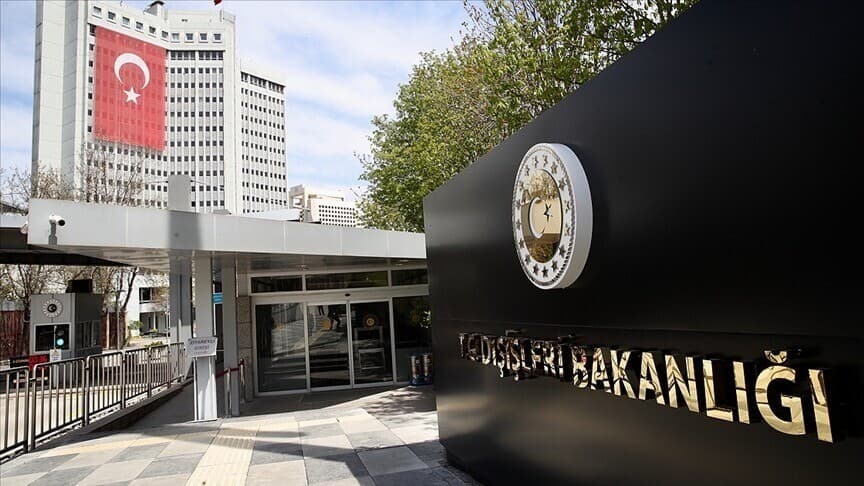
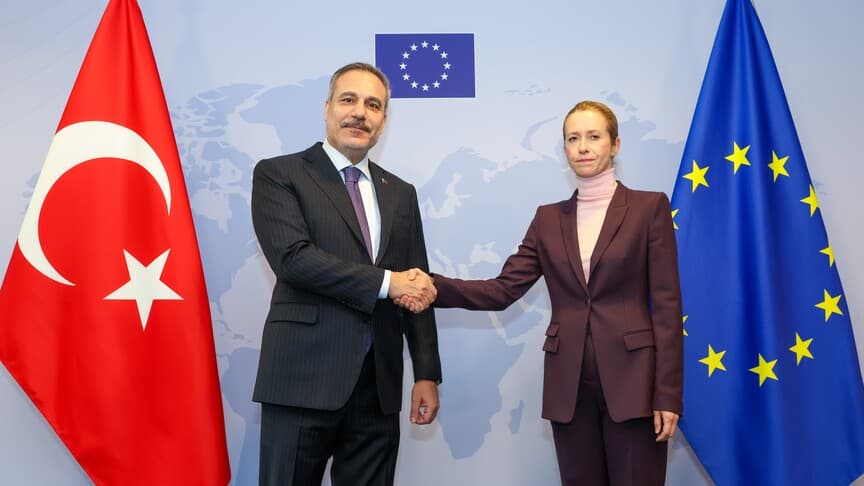
The European Commission has published its annual report on Türkiye for 2026, in which it recognizes Ankara's growing strategic, economic and defense importance for the EU, while at the same time noting that accession negotiations have remained frozen since 2018. This was reported by the Turkish bureau of the Anadolu agency citing the document. The Commission describes Türkiye as a candidate country and an important partner which, 'as a close neighbor in a key geostrategic position, plays an important role in European security and the transregional connectivity agenda.' According to the report, the growth of geopolitical challenges has underscored Türkiye's regional role — in the context of the situations in Syria, Ukraine, Gaza, the Middle East and the South Caucasus.
Democracy and Cyprus — the main criticisms
Alongside the positive assessment, the report repeats previous formulations: in the Commission's view, the EU's serious concerns about the deterioration of democratic standards, the rule of law, the independence of the judiciary and the observance of fundamental rights remain unanswered. It is separately emphasized that for the development of EU–Türkiye cooperation, particular importance is attached to the resumption of negotiations on resolving the Cyprus issue. At the same time, the Commission noted that the parties continue to restore interaction on issues of common interest, and that Türkiye has established institutional mechanisms to coordinate its own accession process.
Foreign policy: balancing between centers of power
The report describes Türkiye's 'active and multi-tiered' foreign policy, which balances relations with key geopolitical players and seeks strategic autonomy. In 2025, Ankara maintained a mediating role in the Russia–Ukraine war: relations with Kyiv are described as strategically important, while Türkiye also maintains close ties with Moscow — through high-level contacts, regular consultations and strong economic links. The United States is characterized as 'an important but difficult partner.' In the Middle East, Türkiye maintained a balanced position; cooperation with the Gulf countries is most visible on Gaza and the stabilization of Syria, and the Middle East conflict fueled Türkiye's connectivity strategy — the ambition to become the main land bridge between the Gulf and Europe. Relations with Israel, according to the Commission, continued to deteriorate, while Türkiye advocated recognition of Palestine and provided significant humanitarian aid to Palestinians. Türkiye also remains a key player in Libya; the Commission once again criticized the 2019 memorandum between Ankara and Tripoli, stating that it violates the sovereign rights of third states.
Economy and defense: strengths according to the EC
In the economic section, the commission states that Turkey has 'largely advanced' in establishing a functioning market economy, citing its industrial base and diversification as important advantages. It notes the progress of Turkey's central bank in restoring confidence and a moderate current account deficit. The report highlights the country's role in European supply chains — especially in machinery, textiles, transport equipment and critical raw materials; since 2021 progress has been made in reducing trade barriers, and contacts on the functioning of the customs union continue. In the defence sphere, the report records significant growth in production and exports: Turkey has NATO's second-largest army and has become an important arms supplier, with Ukraine among its main export markets, while the Middle East crisis has expanded defence cooperation with the Gulf states. According to the commission, domestic production covers artillery and missile ammunition, drones, unmanned vessels, armoured personnel carriers and electronic warfare systems; Turkish companies are increasingly entering EU markets through joint production ventures. Separately, the commission noted that Turkey faces hybrid threats — cyberattacks, disinformation campaigns using AI, vulnerabilities in critical infrastructure and possible manipulation of migration flows.
What the combination of assessments means
In substance, the new report reproduces a formula that has become familiar to Brussels: the political conditions for membership are not being met, but the commission is not ready to remove Turkey from the European agenda — the document directly links Ankara to European security, supply chains and defence capabilities. For Turkey itself, what matters in practical terms are the areas recorded in the report where cooperation continues regardless of the frozen accession talks: the functioning of the customs union, defence companies' access to EU markets and joint projects. At the same time, the resumption of negotiations is tied to the Cyprus question and democratic standards — that is, to the very points that, by the commission's own assessment, remain unresolved.