The key facts
- The EC allows for the completion of negotiations with Montenegro by the end of 2026 and accession in 2028
- The treaty will need to be ratified by all 27 member states
- Albania is roughly a year behind; Ukraine has been urged to accelerate reforms
Montenegro — the leader among candidates
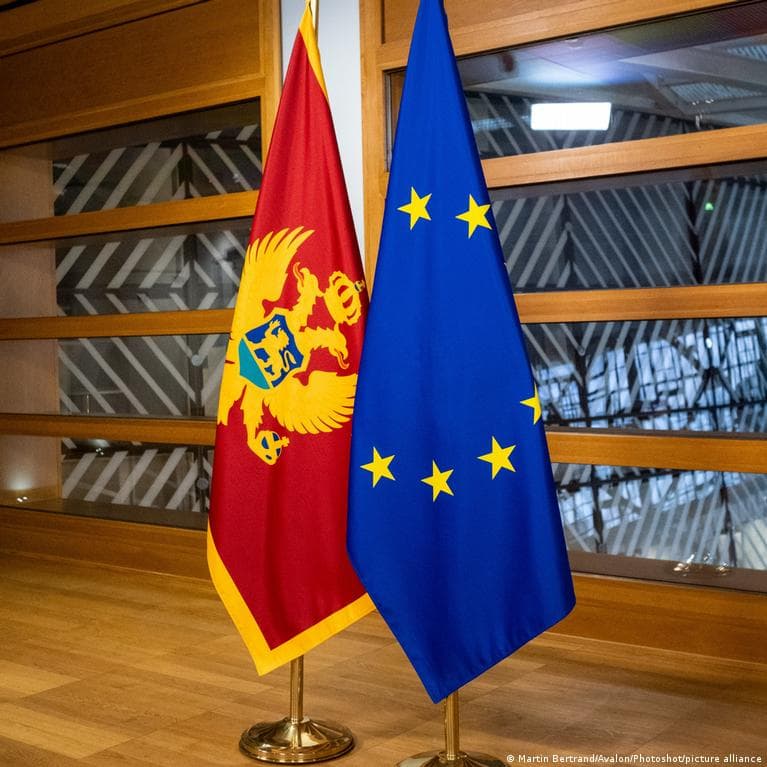
The European Commission, in its annual enlargement policy report, stated that negotiations on Montenegro's accession to the EU could be completed as early as the end of this year, opening the country's path to membership in 2028. In Brussels, this was called evidence of Podgorica's sustained efforts to implement the reforms needed to make membership a reality. Montenegro, with a population of 630,000, has been recognized as the leader among the nine candidate countries; the most recent country to join the union remains Croatia (2013). European Commission President Ursula von der Leyen said that the significant progress made by a number of candidates over the past year makes it possible to 'turn the promise of enlargement into reality.' This is reported by Deutsche Welle.
What else needs to happen
Despite Brussels' optimism, Montenegro still has to implement a number of reforms, primarily in the areas of fundamental rights and financial services. If negotiations are indeed closed this year, the accession treaty could be signed in June 2027, after which it must be ratified by all 27 member states — only then will membership be finally formalized in 2028. As part of the negotiations, candidates are required to align their national legislation and standards with EU requirements — from environmental protection to human rights.
The situation of other candidates
According to the Commission, Albania is roughly a year behind Montenegro: to complete negotiations by the end of 2027, it needs to continue judicial reform and the fight against organized crime and corruption. The Commission called Moldova's goal of implementing the necessary reforms by early 2028 'ambitious but achievable' if the current pace is maintained. Brussels praised Ukraine for its progress despite the Russian invasion, but urged it to speed up reforms of the rule of law and democratic institutions. Kosovo still does not have candidate status, while Georgia and Turkey are considered the furthest from membership due to democratic backsliding.
Serbia: a chance after a change of power
Progress in North Macedonia, Bosnia and Herzegovina, and Serbia is slower, according to the Commission's assessment. At the same time, Brussels suggested that Serbia's negotiations could gain momentum if the student movement that won last month — defeating long-serving President Aleksandar Vučić — forms a government ready to strengthen democracy. 'Serbia now has a chance for a new start,' enlargement commissioner Marta Kos told members of the European Parliament on Wednesday, adding that Serbia's new government has the opportunity to 'turn the page,' strengthen democratic institutions, and advance along the path to accession.