The key facts
- Democrats won majorities in the Senate and the House of Representatives, but without a filibuster-proof majority and with Trump's veto power, experts predict two years of political gridlock
- 56% of Americans consider Trump's tariff policy harmful to the country (Pew, early October)
- Discontent over data centers helped many Democrats win and may complicate their construction
The economy became the main theme of the election
In the US midterm elections, the Democratic Party achieved an unexpectedly convincing victory, winning majorities in both the Senate and the House of Representatives. For millions of voters, the decisive issue was the economy — it outranked all other topics, writes Deutsche Welle. At the same time, the Republican president Donald Trump remains in office for another two years, so the election outcome means not a change of course but a division of power.
Gridlock in Washington and pressure on tariffs
The markets' reaction after an initial dip turned out to be positive: global stocks rose, as investors saw the Democrats' victory more as stabilization. Analysts, however, agree that there will be no immediate changes. Stephen Brown of Capital Economics notes that the Democrats lack a filibuster-proof majority in the Senate, while Trump retains veto power; the president himself has already declared that he will become 'Mr. Veto' and block any of their bills. Jacob Funk Kirkegaard of the Peterson Institute predicts 'two years of complete, one hundred percent gridlock.'
Tariffs: there is discontent, but few levers
Tariff policy — the hallmark of Trump's second term — became one of the drivers of the Democrats' victory. According to a Pew Research Center poll conducted in early October, 56% of Americans believe tariffs will mostly harm the country, and only 20% think they will bring benefits. This was especially pronounced in states dependent on exports and trade with Canada: Texas, Michigan, Iowa and Illinois, where retaliatory tariffs from other countries have already hit local industries.
What Congress can and cannot do
Formally, the Constitution gives Congress the power to set tariffs, but laws adopted over the years allow the president to impose them by invoking national security or an economic emergency — Trump has already used these mechanisms and continues to do so despite individual court rulings. The Democrats are unlikely to force him to lift the existing duties: as Deborah Elms of the Hinrich Foundation noted even before the election, 'Trump will not become more moderate.' But the new Congress can go to court to block further escalation of the tariff war.
Iran, oil and data centers
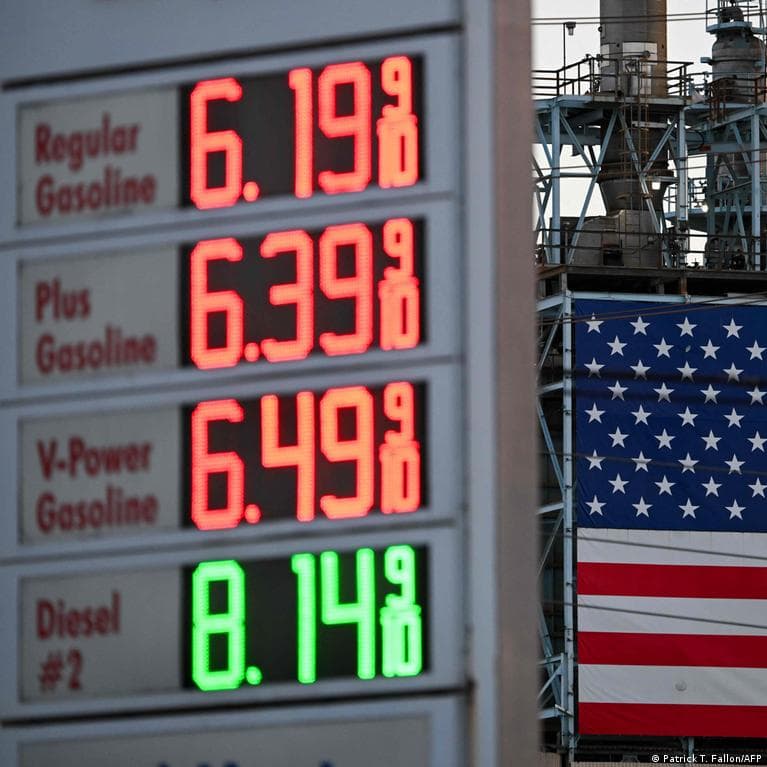
The scale of the Republicans' defeat may, in Kirkegaard's view, make Trump more cautious — from the trade war with Canada to Iran policy. The president himself said after the election that he is ready to 'work with' the Democrats, and before the vote he told the Financial Times that he is unlikely to escalate the war in Iran. An agreement with Iran would lower energy prices, which have risen — one of the key campaign issues; Deutsche Bank analyst George Saravelos notes that the market is already adjusting in anticipation of restored oil flows through the Middle East.
Risks to the AI boom and possible investigations
Another unexpected election outcome was the protest against data centers, the key infrastructure of artificial intelligence: discontent with them among the majority of the population helped many Democratic candidates win. Kirkegaard believes that even without federal regulation, local resistance will make it harder to build new facilities and could hit the valuations of major tech companies: 'the political foundation of the AI boom story is shaky.' If the Democrats win the 2028 presidential election, Brown suggests possible tax increases on corporations and high incomes, as well as regulation capable of slowing AI deployment. Finally, corruption was an important issue for voters: the new Congress could launch legal investigations and potentially another impeachment, which, in Kirkegaard's view, could push Trump to bargain on economic issues for the sake of political survival.