The key facts
- The Democrats took both the Senate and the House of Representatives, delivering a major defeat to Trump and the Republicans
- The Democrats took both the Senate and the House of Representatives, inflicting a major defeat on Trump and the Republicans
- Reactions in Europe were divided: from congratulations by Tusk and Sánchez to assurances by Tajani and Marinakis that bilateral relations would remain unchanged
- Babiš and Francken warned of the risk of a political deadlock between the president and Congress
- Babiš and Franken warned of the risk of a political deadlock between the president and Congress
Republican defeat and a spectrum of reactions
Following the US midterm elections held on Tuesday, the Democratic Party gained control of both chambers of Congress — the Senate and the House of Representatives. This was a major defeat for President Donald Trump and the Republican Party. The reactions of European leaders, as described by the news agency Anadolu, were divided: some politicians saw the result as a signal of political change, while others stressed that relations with Washington would not change. The consequences for NATO, support for Ukraine, trade policy, and the prospect of gridlock in American government were discussed.
Congratulations and hopes for a change of course
Polish Prime Minister Donald Tusk called the Democrats' victory a success for American democracy: 'Today democracy won in America. I love democracy, it is a wonderful thing,' and expressed hope that the election outcome would contribute to stability in Poland's region. He also advised Trump not to use the veto as a method of governing. Spanish Prime Minister Pedro Sánchez saw the result as a rejection of Trump's policies and a broader blow to international right-wing forces, saying that American voters had rejected 'policies that impoverish people,' as well as hatred, sexism, climate change denial, and elite privilege; in his view, a similar shift is possible in Spain as well. Spanish Foreign Minister José Manuel Albares added that the result could also have positive political consequences for Spanish socialists. Norwegian Prime Minister Jonas Gahr Støre called the outcome a powerful signal of voters' desire for a change of course and noted that positions closer to Norway are gaining strength in the US — in particular on climate, environmental protection, foreign policy, and development aid.
Caution and warnings of paralysis
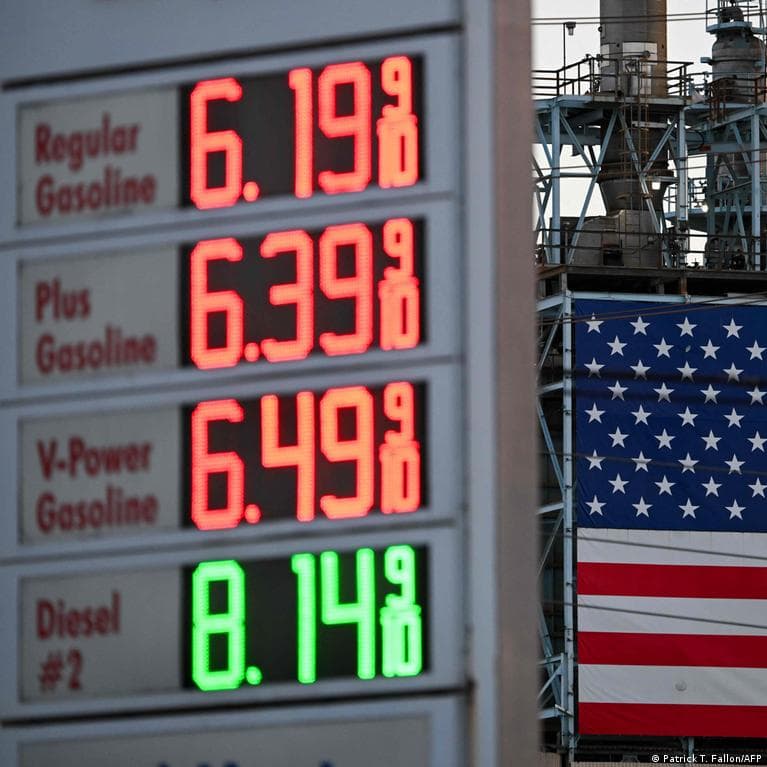
German Defense Minister Boris Pistorius congratulated the Democrats on their 'historic victory,' but stressed that Europe must continue to take greater responsibility for its own security, and that NATO must become 'more European' in order to preserve its transatlantic character. French Economy Minister Roland Lescure called the Democrats' success 'undeniable,' but warned that Trump will retain significant powers in foreign policy and will either adjust course — in particular on gasoline prices — or continue his previous line. Czech Prime Minister Andrej Babiš, calling the Democrats' victory expected but exceptionally large, warned that until the end of Trump's presidency, political paralysis with impeachments and vetoes is possible in Washington; at the same time, he expressed hope that Trump would continue efforts to end the war in Ukraine and resolve the crisis around the Strait of Hormuz. Belgian Defense Minister Theo Francken also predicted a prolonged standoff between the president and Congress and said that, from a European point of view, he would watch above all US trade policy, support for Ukraine, and Washington's position on NATO.
'Relations will not change' and a bet on autonomy
A number of European officials emphasized the continuity of bilateral ties. Italian Deputy Prime Minister and Foreign Minister Antonio Tajani stated that the election results would not change relations between Rome and Washington: 'We always respect the will of the American people,' noting that Italy has worked with both Democratic and Republican administrations. British Health Minister James Firth called the outcome a 'seismic shift' in US domestic politics, but said that relations between London and Washington would remain unchanged. Greek government spokesman Pavlos Marinakis said that 'Greek-American relations will remain strong,' and that major bilateral projects and agreements would not suffer. European Parliament Vice-President Christel Schaldemose expressed cautious optimism that the Democrats' victory could benefit Ukraine, the 'green transition,' and international cooperation, but at the same time urged the EU to continue strengthening its strategic autonomy, without relying on changes in American domestic politics.
What lies behind the divergence of assessments
A comparison of the statements shows that the disagreements concern not the fact of the Democrats' victory itself, but its consequences. Some leaders — above all Tusk, Sánchez and Støre — interpret the result as a political signal and a possible shift toward their positions, whereas Tajani, Fritt and Marinakis immediately affirm the unchanged nature of bilateral relations, while Pistorius and Schaldemose, regardless of how the outcome is assessed, call on Europe not to depend on American domestic politics. The warnings from Babiš and Franken about paralysis in Washington set the practical frame: until the end of Trump's presidency, the issues vital for Europe — trade, Ukraine and NATO — may be decided amid confrontation between the president and Congress. Separately noteworthy is the reaction of co-chair of the German AfD Alice Weidel, who, according to Anadolu, linked the Republicans' defeat in part to Trump's failure to keep his promise to avoid an interventionist foreign policy.