The key facts
- French special representative Gérard Wolf held meetings at the presidential administration and the ministries of transport, energy, economy and finance, as well as at the Yangi Tashkent directorate.
- According to him, French companies are ready to expand investments in Uzbekistan, 'if they are chosen.'
- The offers place emphasis on training local specialists and digital twins of infrastructure facilities.
The visit and the agenda
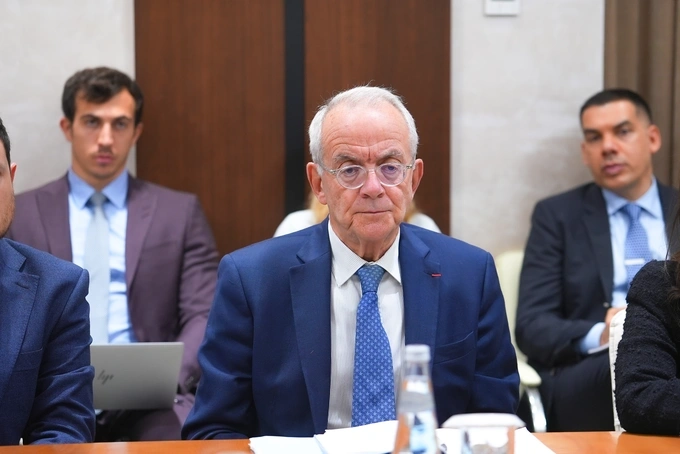
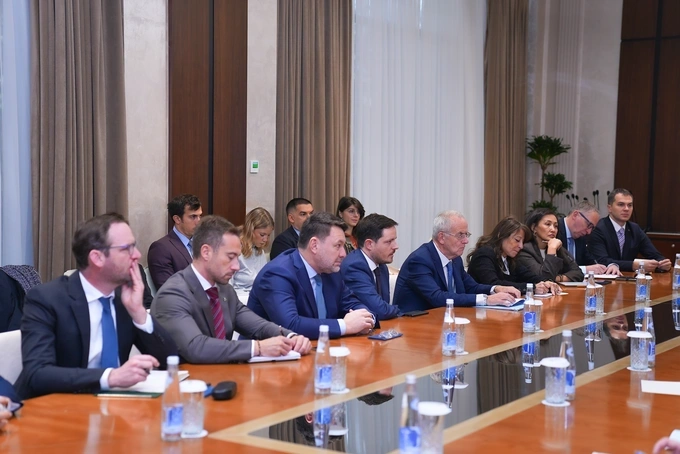
The special representative of the French Minister for Europe and Foreign Affairs for transport and sustainable urban development Gérard Wolf visited Uzbekistan and told Gazeta.uz in an interview, that over two days he held meetings at the presidential administration, at the ministries of transport, energy, economy and finance, investments, industry and trade, as well as at the Tourism Committee and the Yangi Tashkent directorate. According to him, the goal was not to promote one specific project, but to understand the needs of the ministries and city authorities and to offer solutions adapted to the country.
What French companies are offering
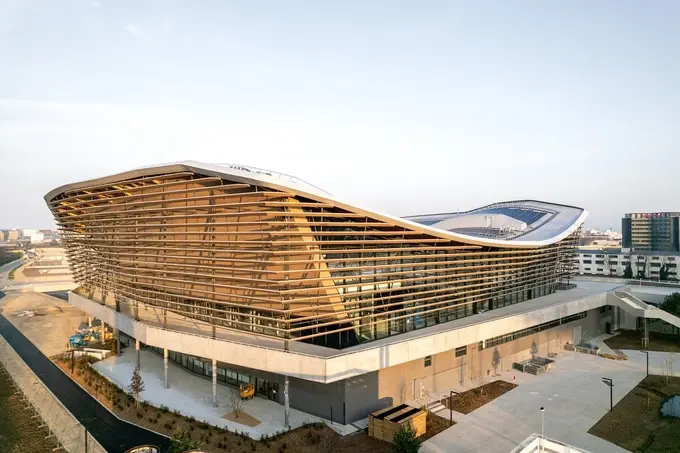
Wolf described a city as a 'mosaic' of four basic services — water, energy, transport and waste management (plus healthcare as a separate type of service) — and stated that in each of these areas France can offer solutions adapted to a specific country, with an overall emphasis on decarbonization. Among the examples is the use of 'lost' energy: heat from data center servers can be captured for heating. He cited the example of the Paris Olympics Aquatics Centre, where, according to him, about 90% of energy needs are covered by renewable sources and heat recovery. In transport, the French approach, as he described it, is built on combining different modes of transport and interchange hubs rather than on a single solution: what suits Tashkent does not necessarily suit Samarkand, where, unlike Yangi Tashkent, which is being built from scratch, the space cannot be reconfigured for a tram.
Training and digital twins as the distinguishing features of the offer
Wolf highlighted two elements that, in his words, distinguish French offers: mandatory training of local specialists in equipment operation and the inclusion of digital twins in infrastructure projects. Using a digital model, he explained, it is possible already at the design stage to assess how the orientation of a building in Yangi Tashkent will affect energy consumption, or to choose the optimal route for a tram or cable car. He also mentioned sensors for detecting losses in water and electricity networks as an alternative to simply building networks without loss control.
Investments and competition
When asked about the plans of French companies already operating in Uzbekistan — Veolia, EDF, Suez — Wolf replied that they are 'definitely ready' to invest more, 'if we are chosen,' and noted that the meetings, including with the deputy prime minister in Yangi Tashkent, showed interest in French solutions. He also stated his readiness to host Uzbek engineering students and to develop ties between universities. Speaking about competition with Chinese companies, which often offer cheaper solutions, Wolf emphasized that he himself worked with Chinese partners on a nuclear power plant at EDF and does not consider their offers 'absurd': the difference, according to him, lies in the composition of the offer — whether only equipment is sold or together with personnel training — and the cheapest is not always the most effective.
Context
According to Gazeta.uz, Veolia and Suez are already operating in Uzbekistan — in the energy and water sectors respectively, which matches the list of companies Wolf named as already present on the market. The publication does not report any specific signed agreements or selected projects as a result of the visit: for now, the discussion is about offers and readiness, and the choice of solutions remains with the Uzbek side.