The key facts
- Abdul El-Sayed is the first Muslim elected to the US Senate; he will take his seat in January with the convening of the new Congress
- The campaign was marked by Trump's attacks on the candidate's faith and conflict within the Democratic Party
- On election day, Trump announced the end of $4 billion in annual military aid to Israel
Victory in Michigan
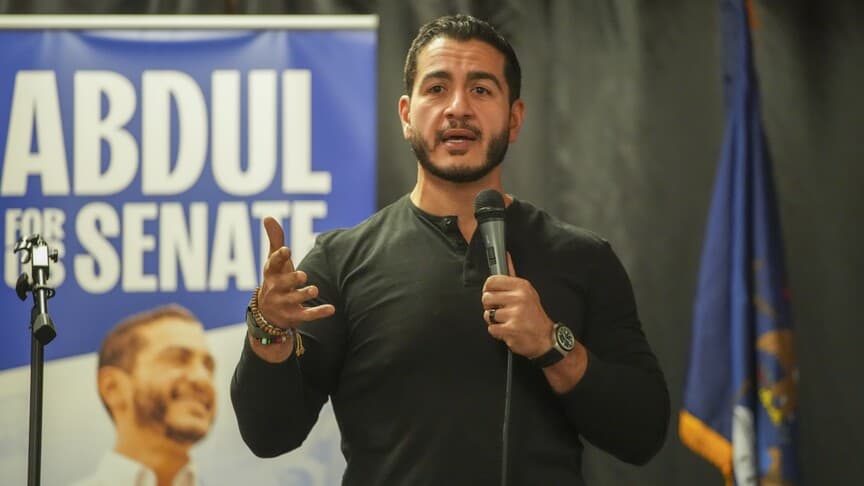
Democrat Abdul El-Sayed, according to projections by American media,has defeated former Republican congressman Mike Rogers in the US Senate election in Michigan, holding the important seat for the Democrats that was vacated by outgoing Senator Gary Peters. This was reported by Anadolu and The National. El-Sayed, a physician and epidemiologist, the son of Egyptian immigrants, and a former health official, has become the first Muslim elected to the Senate; he will take office in January with the convening of the new Congress.
Faith as a central campaign theme
The campaign unfolded amid sharp confrontation, in which the candidate's Muslim faith became one of the central issues. Donald Trump and other Republicans repeatedly attacked El-Sayed on religious grounds: according to The National, the president called him a 'jihadist lunatic' and mocked his name, saying he would call him 'Mohammed.' Opponents also accused the candidate of ties to the 'Muslim Brotherhood'; El-Sayed rejected the accusations of links to extremism. In The National's assessment, these statements alienated many voters, including nearly 300,000 Arab Americans in Michigan — the largest concentration of Arabs in the US, which became El-Sayed's key electoral group.
Split in the Democratic Party
El-Sayed's path to victory was difficult: the party leadership initially backed Haley Stevens, who lost to him in the August primary, and considered him too progressive for a swing state. The conflict was intensified by an ad from a committee supporting El-Sayed, which blamed rising prices in the US on American military support for Israel. Stevens, a staunch supporter of Israel, demanded that the candidate condemn the ad; Jewish organizations called it offensive and antisemitic. El-Sayed himself stated that the ad was created by a third party and his campaign was not involved in its production. In the end, Stevens broke party discipline and on the Sunday before the election endorsed the Republican Rogers. However, in the final weeks of the campaign, Barack Obama and Kamala Harris came out in support of El-Sayed in Michigan.
Aid to Israel against the backdrop of the election
The candidate had long criticized Israel, calling the war in Gaza a genocide, and demanded an end to American military aid, redirecting the funds to healthcare and education. On Tuesday morning, after the polls opened, Trump announced that the US would end its annual $4 billion in military aid to Israel after the end of the year, presenting the decision as a response to Democratic criticism and specifically mentioning El-Sayed: 'Why should we tolerate attacks from lunatics like El-Sayed when they don't need it? That's a bad argument,' The National quotes him as saying. This announcement followed another shift: last month the lobbying organization AIPAC announced that it would no longer support candidates or make direct contributions to their campaigns, continuing its work through its Super PAC United Democracy Project. According to The National, the lobbyists previously directed $30 million to Stevens' campaign, and then about $9 million to Rogers.
Context of the results
El-Sayed's victory took place in a state that Trump won by a narrow margin in 2024 and where he had won twice, even though Michigan's Senate seats had been held by Democrats in recent decades. The National notes that the midterm results largely reflect the country's divisions and became a referendum on Trump, who approached them with historically low approval ratings amid discontent over fuel and food prices and the unpopular war with Iran. The publication also records declining support for Israel among Democrats and part of Trump's Republican base: polls showed a significant shift in public opinion about the US and its policy toward Israel. El-Sayed's victory, in The National's assessment, could become a turning point for the Democratic Party, which for decades had made support for Israel one of the pillars of its policy.