The key facts
- In October 2026, MI5 chief Ken McCallum warned that AI could increase the risk posed by existing and new types of biological weapons, including from non-state actors.
- In September 2026, Anthropic reported blocking attempts to use Claude for research related to possible biological weapons development.
- In September 2026, Anthropic reported blocking attempts to use Claude for research related to the possible development of bioweapons.
- Oversight of biological weapons remains weaker than for chemical weapons: the Biological Weapons Convention has no inspection mechanism comparable to the OPCW.
- Biological weapons control remains weaker than chemical control: the Biological Weapons Convention has no inspection mechanism comparable to that of the OPCW.
AI as a new risk factor
Advances in biotechnology make it possible to analyze and modify pathogens with ever greater precision, while artificial intelligence can process huge volumes of data at high speed. Against this backdrop, experts warn that modern technologies could, in the long term, also be used to develop biological weapons. This is discussed in detail in an analysis by Deutsche Welle (DW).
Intelligence warnings and the Anthropic report
The intelligence community's concern has become public: in October 2026, the head of Britain's MI5, Ken McCallum, warned that AI could increase the risk posed by existing or new types of biological weapons — including from non-state actors. The relevance of the topic is also underscored by a report from the American company Anthropic for September 2026: the company said it had identified and blocked numerous attempts to use its assistant Claude in connection with possible biological weapons research. Among them were grant applications for so-called 'gain-of-function' research and projects studying bird flu variants potentially most transmissible to mammals. Anthropic emphasized, however, that such research may also relate to medical prevention: the difficulty of distinguishing legitimate science from its potential misuse is one of the main challenges in controlling modern biotechnologies.
What biological weapons are and how they differ from chemical weapons
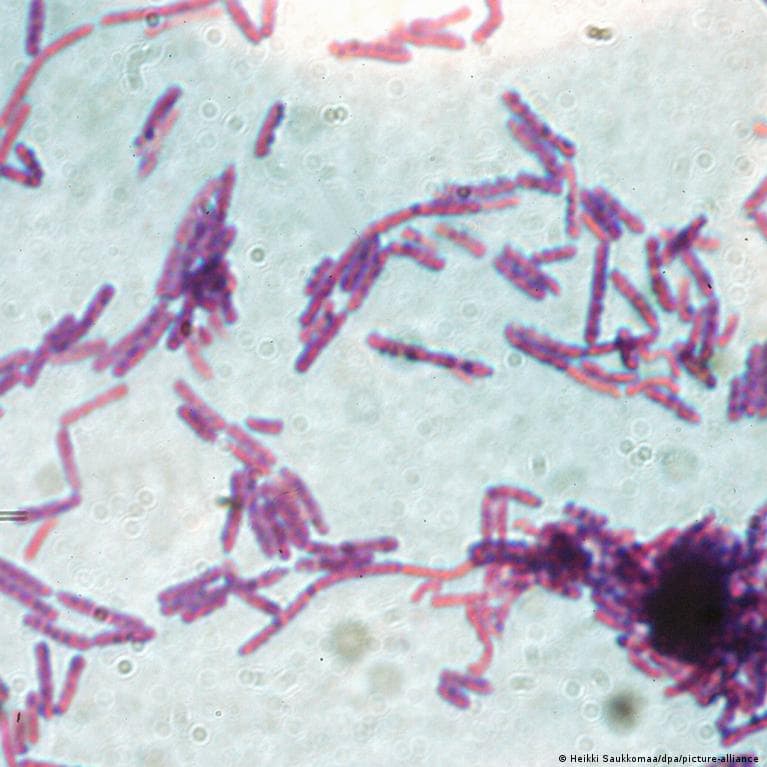
The WHO and the UN Office for Disarmament Affairs define biological weapons as the deliberate release of biological agents — bacteria, viruses, fungi or biological toxins — to harm people, animals or plants. Such weapons typically consist of two components: the agent itself (a virus or bacterium) and a delivery mechanism — missiles, spraying systems or contaminated food. Known agents include plague, smallpox, botulinum toxin and anthrax, whose resilient spores persist in the environment for a long time. Biological weapons belong to the so-called 'ABC weapons' alongside nuclear and chemical weapons and are often classified as weapons of mass destruction. They differ from chemical weapons in their mechanism of action: chemical substances such as sarin or mustard gas act within minutes or seconds, whereas biological weapons cause infectious diseases that manifest hours, days or even weeks later. Some pathogens can spread from person to person, making the consequences especially hard to predict.
A ban exists, but no oversight
Biological weapons are banned under international law: the Biological Weapons Convention entered into force in 1975 and has been ratified by 189 countries; it prohibits the development, stockpiling, production and transfer of biological and toxin weapons. Several countries, including Israel, Egypt and Syria, have not signed the agreement, or have signed but not ratified it. However, as DW notes, oversight of biological weapons is considerably weaker than for chemical weapons: the Chemical Weapons Convention is implemented by the OPCW,which can conduct inspections and monitor the destruction of stockpiles, whereas no comparable system exists for biological weapons. States fear that inspections could expose sensitive research data in medicine, biotechnology and pharmaceuticals, so oversight relies largely on transparency, voluntary reporting and good faith. The US example of 2001 is telling: a few weeks after the September 11 attacks, letters containing anthrax spores were sent to several people — 22 people were infected and five died.
Why biological weapons are so hard to detect
Detecting biological weapons programs is harder than monitoring nuclear or chemical production: many technologies are dual-use — the same laboratory equipment used to develop vaccines and medicines could, in theory, also serve military research. Moreover, a biological attack may initially look like a natural disease outbreak: establishing whether the pathogen was released intentionally or emerged naturally, is often possible only after a lengthy investigation. It is precisely this uncertainty, according to DW's analysis, that explains why the combination of accessible biotechnologies and AI capabilities is causing growing concern among intelligence services and AI developers — even as the very line between legitimate science and its misuse remains blurred.