The key facts
- From November 20, on the Chilonzor, Uzbekistan and Yunusabad lines and the ground-level ring line, trains will be strictly five cars during peak hours (07:30–09:30, 12:00–14:00, 17:00–19:30)
- Train intervals during rush hours will be reduced to 2–3 minutes
- 85.4% of surveyed residents complained about overcrowded metro and buses in the morning and evening
The Council's decision and its grounds
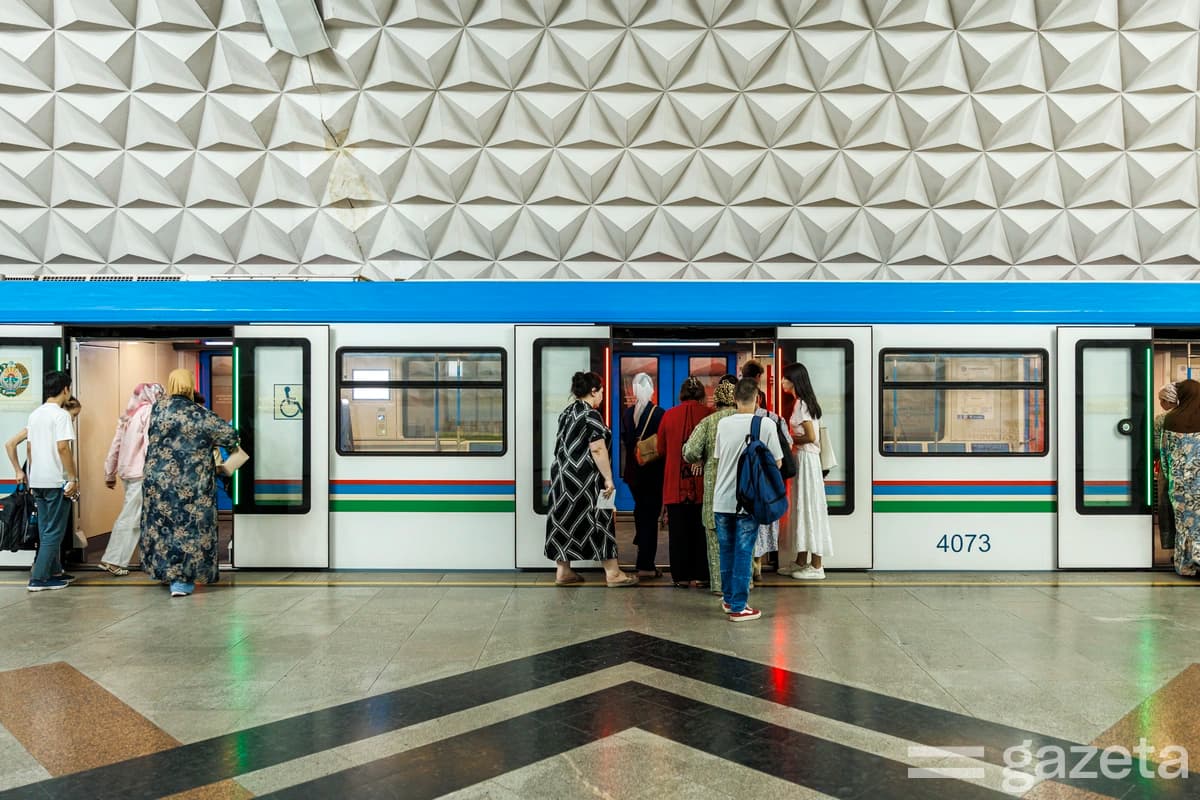
On October 30, the Tashkent City Council of Deputies adopted a decision aimed at combating metro overcrowding. According to Gazeta, the results of a sociological survey were presented at the Council meeting: 85.4% of residents complained about excessive crowding on the metro and buses in the morning (07:00–09:30) and evening (17:00–19:30). Half of the respondents (50.6%) noted difficulties entering the metro and doors closing, as well as increasingly frequent cases when passengers failed to get off at their station.
Who was affected by the problem the most
According to the survey, crowding problems are especially pronounced in certain districts: 91.3% of respondents noted them in Yangihayot, 89.8% in Yashnobod, 88.3% in Sergeli, and 87.5% in Uchtepa. These districts are located on the outskirts of the city, from where residents commute to the center daily, which explains the peak load on station entrances and exits.
What exactly is changing in metro operations
Under the decision, Tashkent Metro is instructed to form trains of strictly five cars by November 20 on the Chilonzor, Uzbekistan and Yunusabad lines and on the ground-level ring line 'Thirtieth Anniversary of Uzbekistan's Independence' during morning hours (07:30–09:30), midday (12:00–14:00) and evening (17:00–19:30). During the same intervals, the time between trains will be reduced to 2–3 minutes. By December 1, practical safety and crowd-flow management measures must be taken at stations with the highest passenger traffic — at transfer hubs and in front of escalators. Gazeta previously reported that to renew the fleet, 14 five-car electric trains are planned to be purchased — 70 cars in total.
Comfort, accessibility and behavior culture
Beyond the schedule, the decision also covers other aspects. From November 10, seasonal heating or cooling must operate continuously in all trains, and the microclimate in the cars must be under constant monitoring. By December 1, substandard or non-working ramps will undergo a second inspection and be fully adapted for passengers with disabilities and wheelchair users. Stable operation of cashless payment validators and the banking network is also to be ensured, and automatic voice announcements and electronic displays at stations and in trains will be monitored for uninterrupted operation. A broad awareness campaign starts on November 15 via the Tashkent TV channel, metro monitors and social media: passengers will be urged to stand on the right side of escalators, let people exit the train first, and not block doors and passageways. By the same date, professional development courses on communication culture and safety rules will be organized for station staff and train drivers.