The key facts
- Pensioners with Turkish citizenship receive an average pension of €890 versus €1,250 for German pensioners (end of 2025)
- 9.3% of pensioners with Turkish citizenship received pension supplements in June 2026, versus 2.7% among Germans
- By 1973, around 870,000 Turkish workers had come to Germany
A symbolic ceremony and its double meaning
In mid-September, a ceremony was held at Düsseldorf Airport marking the 65th anniversary of the arrival of the first Turkish 'guest workers' — this was where they once landed in Germany. North Rhine-Westphalia's Minister-President Hendrik Wüst honored the courage of the first generation of migrants and their contribution to the country's prosperity: 'They made our country more diverse, more open, and stronger.' At the same time, he added: 'We will only reach our goal when name, skin color, and religion no longer matter.' This is reported by Deutsche Welle.
The scale of the agreement and the journey of the first generation
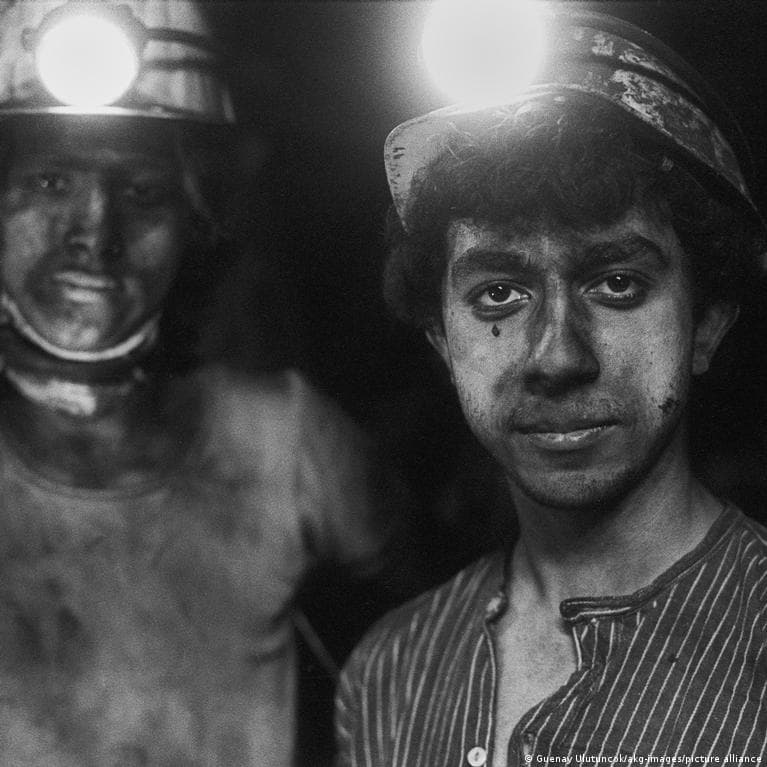
By the time recruitment of workers ended in 1973, around 870,000 Turkish men and women had come to Germany for work. They worked in coal mines, on assembly lines, and cleaning factories; most settled in Düsseldorf, Cologne, or Duisburg. North Rhine-Westphalia's Minister-President Hendrik Wüst emphasized the migrants' contribution at the ceremony at Düsseldorf Airport, but acknowledged that the goal of full equality has not yet been achieved.
The figures on poverty in old age
A special analysis by the German pension fund (DRV), prepared for Mediendienst Integration, showed: at the end of 2025, pensioners with Turkish citizenship received an average of €890 per month versus €1,250 for German pensioners — a difference of about €360. In June 2026, 9.3% of pensioners with Turkish citizenship received pension supplements — more than three times the rate among Germans (2.7%). Sociologist Hacı-Halil Uslucan also cites broader figures: poverty in old age among migrants is twice as high — 25–30% versus 12–14% among Germans — and the rates of disability and early retirement are noticeably higher due to the heavy physical labor of the first generation.
The causes: low wages, interrupted work histories, lack of retraining
Sociologist Erik Seils from the Hans Böckler Foundation in Düsseldorf explains the pension gap by the fact that many 'guest workers' arrived not at the start of their working lives and thus paid in fewer contributions, and above all received low wages and had shorter working careers: they went straight to factories, mines, and construction sites, often without an education. With the deindustrialization of the early 1970s and the oil crisis, many lost their jobs, and gaps in their work histories affected their pension payments. Researcher Janina Söhn from the University of Göttingen adds that further training programs for this category of workers were absent, and the people who did the hardest work 'paid for it with their health.' According to the Federal Employment Agency, employment among older people of Turkish origin is half that of Germans (5.2% versus 10.8%), so they often cannot find work to supplement their pensions.
Successes and persisting discrimination
Uslucan calls the recruitment agreement, on the whole, a success story: the number of university graduates has grown, there has been professional and political advancement — he cites Baden-Württemberg's Minister-President Cem Özdemir, the best-known German politician of Turkish origin, as an example. However, in his words, 65 years on, significant discrimination against people of Turkish origin still exists in Germany. Söhn notes that about a third of immigrants are at risk of poverty — this group experiences greater hardship than women in general, and she describes the situation of migrant women living alone as 'truly distressing': without family support, it would be even worse.