The key facts
- Steinmeier has served two terms and cannot run again
- The nomination right lies with Merz's CDU; the candidate will most likely be elected by the Federal Assembly, where the governing parties hold 682 votes out of the 631 needed
- Among the likely candidates are Ilse Aigner (CSU), Julia Klöckner, Annegret Kramp-Karrenbauer, Karin Prien, and Boris Rhein
Who will succeed Steinmeier
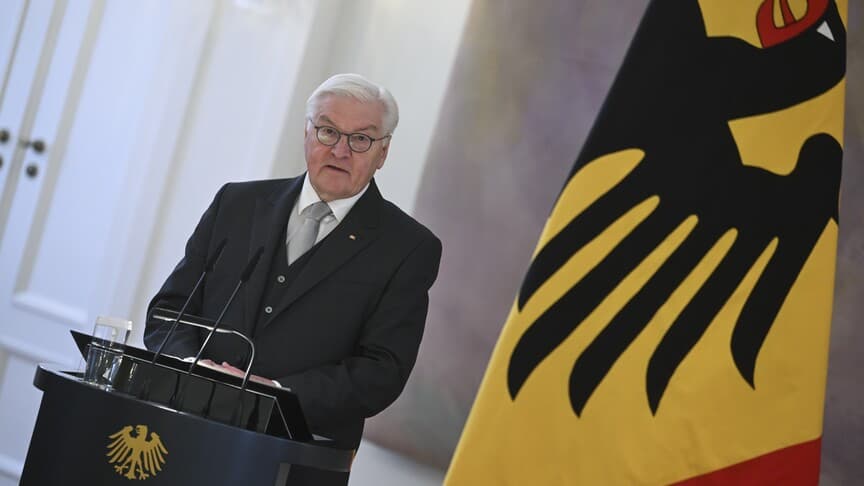
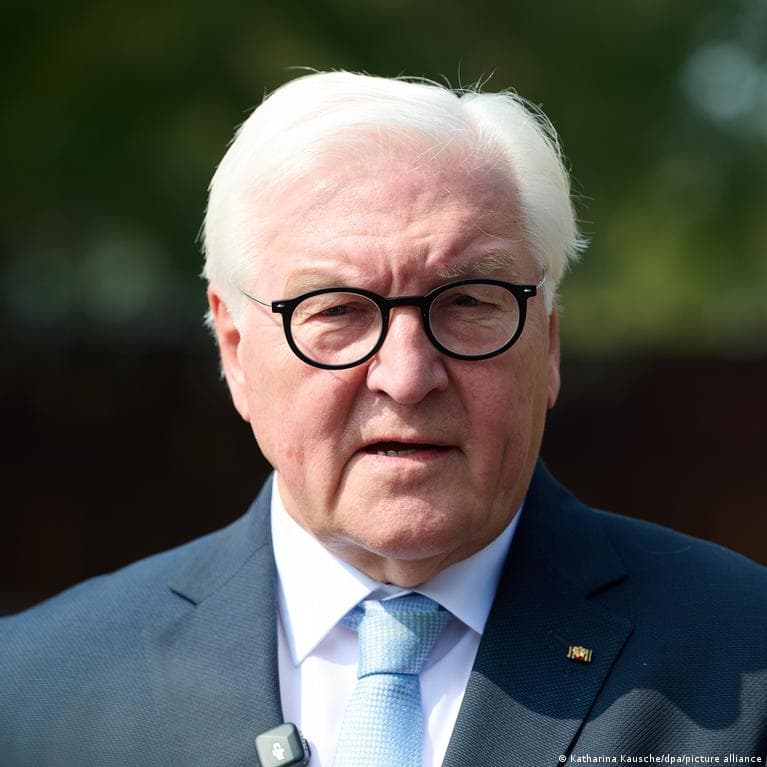
Germany's incumbent president, Frank-Walter Steinmeier, has served two terms and is not allowed to run again, so the country is looking for a new head of state. The requirements for a candidate are minimal: German citizenship, the right to vote, and an age of at least 40. The election will take place by January 30, 2027, and the new president will take office on March 19, 2027. This is reported by Deutsche Welle.
How the election works
In Germany, the president is the head of state and the country's representative, embodying moral authority, but, unlike in the US, France, or Russia, he does not directly run the government. The president is elected by the Federal Assembly, which consists of all 630 members of the Bundestag and an equal number of electors from the state parliaments, including figures from culture, science, and sports. More than 631 votes are needed to win; the governing CDU/CSU and SPD together hold 682 votes — a comfortable majority. Political scientist Ursula Münch noted in a comment to DW that the candidate must be well-known, politically impartial, and able to unite people.
Candidates and the balance of power
The right to nominate a candidate this time belongs to Chancellor Friedrich Merz's CDU — the senior partner in the coalition with the SPD and the CSU. Ilse Aigner, president of the Bavarian Landtag from the CSU, is considered the most likely successor: she is seen as a unifying figure, has experience as federal minister of agriculture, and enjoys the support of CSU leader Markus Söder, who said her election would be «magnificent». Her candidacy is praised even by the opposition Greens and the SPD: SPD parliamentary group leader Matthias Miersch asked what more one could wait for, if Aigner would long since have secured a majority across party lines. Merz himself, who is friends with Aigner, has so far remained silent — possibly because she belongs not to his party but to the smaller «sister» CSU.
Other figures and next steps
Other CDU candidates are also being discussed: Bundestag president Julia Klöckner, former defense minister Annegret Kramp-Karrenbauer, education minister Karin Prien, as well as Hesse's premier Boris Rhein. There were rumors about lawyer Ines Klaus, leader of the CDU parliamentary group in Hesse, but the chancellor denied them; sources close to Merz stressed that he «has neither made a decision nor put forward proposals». The first «checkpoint» is the meetings of the CDU presidium and executive board on November 9; before that, consultations will be held with the CDU and CSU state chairs, as well as with the SPD and the Greens, so that the choice enjoys broad support. According to a Forsa poll for RTL, about 74% of Germans attach no importance to the president's gender, 19% would like to see a woman, and 5% a man. Münch considers the question still open with a slight edge for Aigner, but allows for «a real surprise».