The key facts
- VW's Q3 operating loss came to €5.86 billion versus a profit of €1.3 billion a year earlier — the worst quarterly figure since the 2015 'dieselgate' scandal
- The bulk of the €8.7 billion in 'special items' consisted of non-operating write-downs of Porsche assets worth €6.4 billion
- The group plans to cut around 100,000 jobs and does not rule out closing up to four plants in Germany; unions are resisting, and strikes are possible from next year
Worst quarter since 'dieselgate'
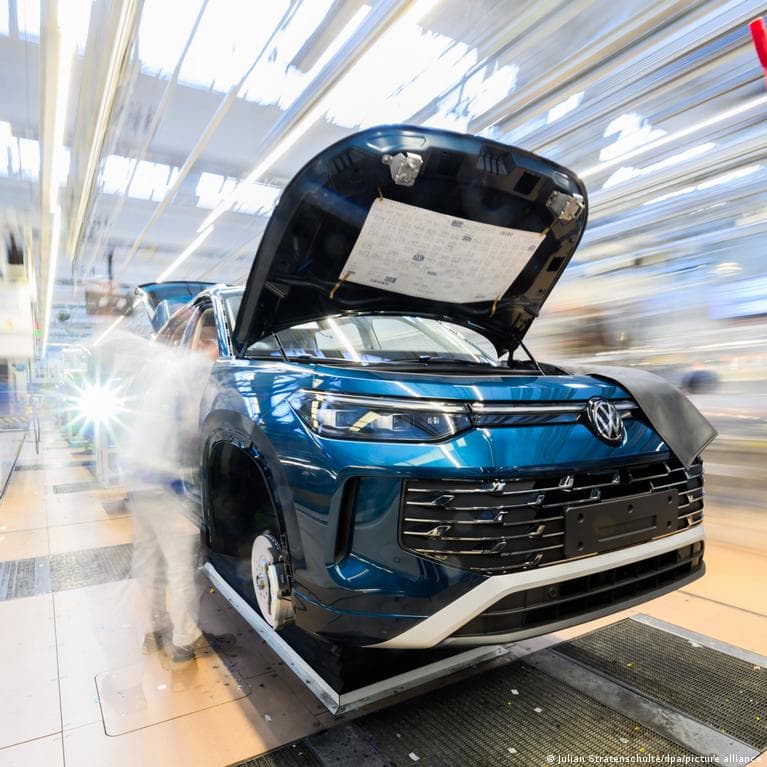
Volkswagen Group published its third-quarter results on Thursday, October 29: the operating loss amounted to €5.86 billion (about $6.53 billion), against a profit of €1.3 billion in the same period last year. According to Deutsche Welle, this is the company's worst quarterly result since the diesel emissions scandal in 2015. Quarterly revenue fell 6.3% year on year to €75.3 billion, while deliveries, sales and production dropped by roughly 15% — the company is deliberately cutting output volumes to adapt to falling demand.
Porsche write-down and 'special items'
The loss is primarily explained by one-off charges. Over nine months, 'special items' reached €8.7 billion, of which €6.4 billion were non-operating write-downs of the assets of Porsche, the group's struggling subsidiary. Excluding these items, operating profit for the nine months was just €0.1 billion, versus €5.4 billion a year earlier. Revenue for the same period — €233.4 billion — remained close to last year's €238.7 billion, but car sales fell from 6.6 million to 5.9 million units (down 11%): the group is selling fewer cars, but at higher prices. At the same time, orders for new cars rose by 4%, and for electric vehicles by 39%.
Restructuring and pressure on the auto industry
The company links its difficulties to growing competition and falling demand in the key Chinese market, high costs, the challenges of transitioning to electric vehicle production, and unpredictable tariffs, including US tariffs under President Donald Trump. CEO Oliver Blume plans to cut about 100,000 jobs across the group, which includes the Audi and Porsche brands, through layoffs and by not replacing departing employees; up to four plants in Germany could face closure. The plan is meeting union resistance and, according to DW, could lead to strikes starting next year. CFO Arno Antlitz called the nine-month results proof of the urgency of change: 'We cannot afford to waste time. We must act quickly and decisively.' Operating margin for the nine months was just 3.8% even before one-off write-downs — 'this is not enough in the long term,' he noted. The group aims to restore a margin of 8–10% by 2030; for the current year, with one-off charges of around €10 billion, it expects a margin of no more than 1%, versus a previous forecast of about 5%.
Market reaction
Volkswagen shares were already at their lowest levels in more than ten years before the results were published. After the news broke, they briefly dipped at the opening of trading but then recovered: by midday in Frankfurt, the stock was up 2% from its opening level on the DAX.