The key facts
- The 'shadow fleet' accounts for about 19% of the global tanker fleet according to an S&P Global estimate
- The US administration, per Reuters, is discussing lifting sanctions on some vessels; Chris Wright denies this
- Experts: without US support the EU will have to rely on insurance requirements and inspections in the Baltic Sea
What is happening with sanctions against the 'shadow fleet'
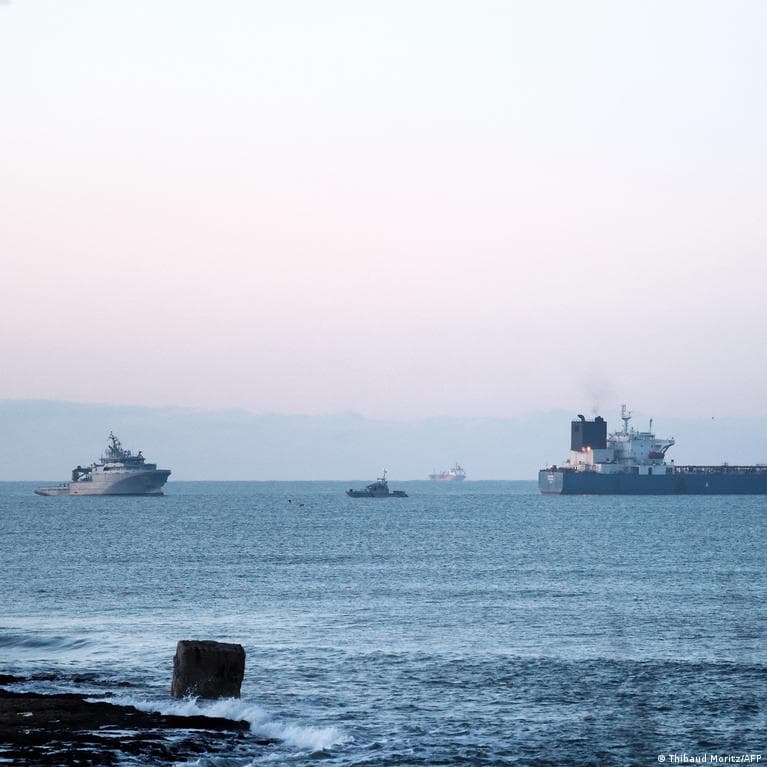
Since Russia's full-scale invasion of Ukraine, Moscow has increasingly relied on the so-called shadow fleet — old, often uninsured and poorly maintained tankers that switch off transponders to hide the origin and destination of their cargo. According to an S&P Global estimate cited by Deutsche Welle, such vessels already account for nearly 19% of global tanker capacity for oil. Similar schemes are also attributed to Iran and Venezuela.
A contradiction within the US administration
As DW reports, citing Reuters, the Donald Trump administration is considering lifting sanctions on part of the shadow fleet, allowing those vessels to carry oil not subject to restrictions. According to an unnamed US official, the goal is to bring down record-high global freight rates. Energy Secretary Chris Wright, however, denies this: in a comment to Bloomberg he said that 'sanctions are not being lifted', and that the US is working with investors who buy up idle tankers, refurbish them and switch them to carrying non-sanctioned oil — 'from a bad fleet to a good one'. A detailed government plan on the shadow fleet has not yet been presented.
Context: the diesel deal and the lifting of sanctions
The discussed easing follows Trump's agreement with Vladimir Putin this month on allowing Russian diesel onto world markets — it was seen as part of efforts to lower fuel prices in the US ahead of the November 3 midterm elections. Trump also scrapped sweeping new sanctions against Russia envisaged by recent legislation, which targeted Moscow's energy revenues and threatened tariffs on the largest buyers of Russian oil and gas. The decision provoked sharp criticism from Ukraine and its European allies over concerns that it would undermine trust in the sanctions regime.
What the EU can do without the US
Experts interviewed by DW agree that lifting the sanctions would weaken the entire regime: Michael Carpenter of the IISS called such a step 'the direct opposite' of what the US should be doing to end the war, while Ben Harris of Brookings noted that it would make it easier for Russia to trade oil at market prices and improve its budget revenues. In their view, responsibility would in that case shift to Europe, although its levers are weaker — the threat of cutting off access to the American financial system has no equivalent. At the same time, the EU has tools: requiring legitimate insurance for tankers in its waters, which would effectively deprive many shadow-fleet vessels of the ability to legally carry Russian oil; pressure on the countries under whose flags the tankers sail; and inspections in the Baltic Sea, through which, according to Carpenter, the 'overwhelming majority' of the shadow fleet exits via the Danish straits. Russia, DW notes, has threatened to seize European vessels in response to the detentions of suspected tankers, and without US support, in Carpenter's assessment, it will be harder for Europeans to take on the risks of sanctions enforcement.