The key facts
- The 'Student List' has stated it will not impose sanctions on Russia, will preserve military neutrality and its position on Kosovo
- EU Commissioner Marta Kos warned: without aligning foreign policy with Brussels, there will be no progress on the path to EU membership
- The movement faces the task of personalizing power: presidential elections are expected by the end of the year
Victory without a face: what is known about the new political landscape in Serbia
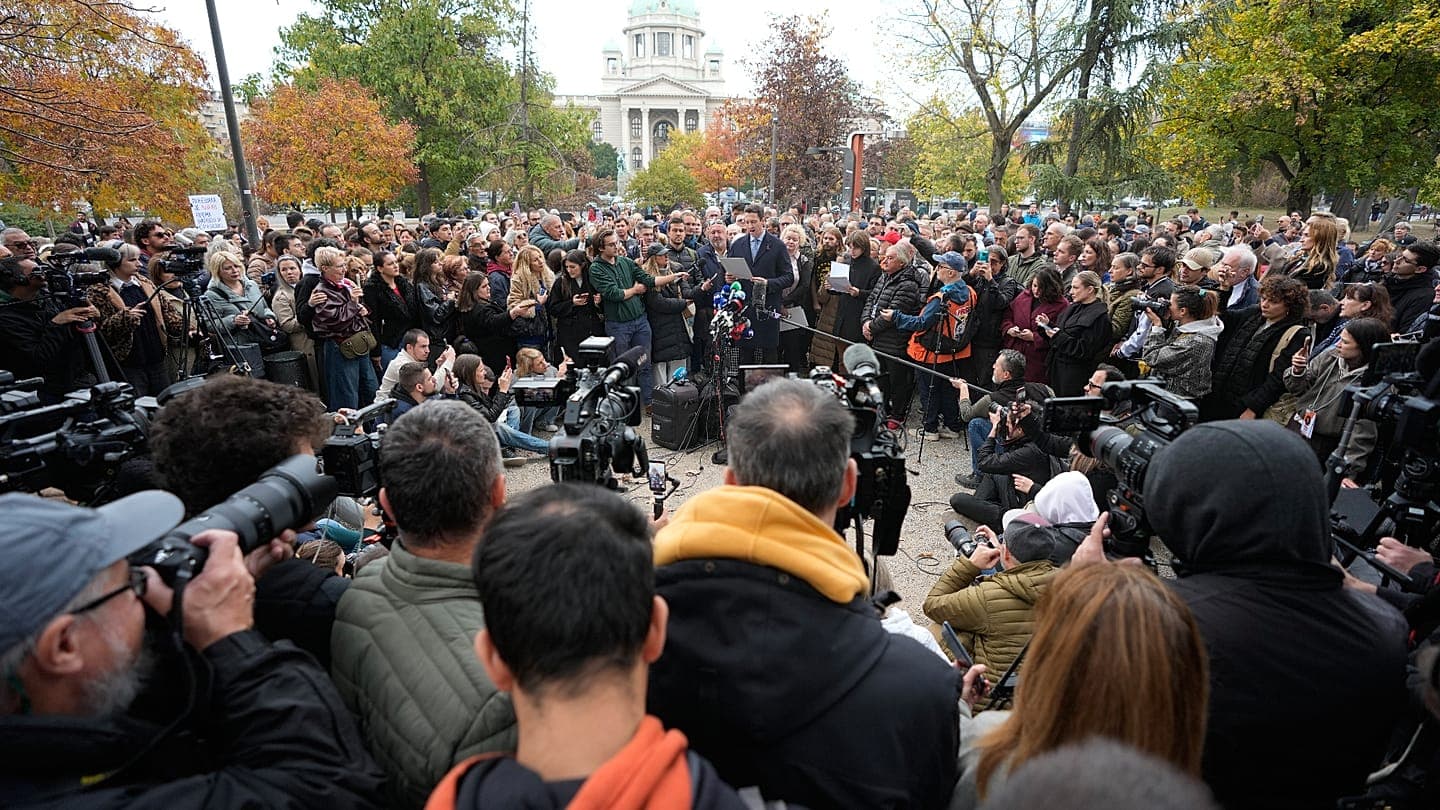
A movement that grew out of two years of student protests has won the election without a traditional party structure, without a recognizable leader, and, for most of the campaign, without revealing who exactly would govern the country. This anonymity was its main political advantage — and, as Euronewsnotes, it may now turn into a problem: a government needs a prime minister, ministers and accountable officials, and the state apparatus needs instructions.
Russia: sanctions ruled out, the EU warns
The new movement's clearest position concerns Moscow. Sociologist Jovo Bakić stated outright that the new government will not impose sanctions on Russia, calling it a historically important partner of Serbia. Academician and Belgrade University professor Radomir Sajčić, in an interview with RIA Novosti, confirmed that 'the Student List does not advocate imposing sanctions on Russia,' noting that Serbia itself has experienced sanctions and that problems should be resolved through dialogue rather than restrictions. This contradicts one of the central pre-election warnings of former president Aleksandar Vučić, who claimed that a student victory would mean a reversal of Belgrade's policy toward Moscow.
The EU and Kosovo: continuity, not a reversal
EU Enlargement Commissioner Marta Kos, in a conversation with the list's leading candidate Ilija Srdanović, immediately stressed that a change of power in Belgrade does not remove the obligation to align foreign and defense policy with Brussels: in her words, a country that does not share the EU's strategic positions, including sanctions against Russia, will find it 'very, very difficult' to advance toward membership. Prime ministerial candidate Đejan Šoškić, in an interview with Index.hr, announced an improvement in relations with Croatia and the EU, but did not answer a question about his position on Russia, and on Kosovo referred to Serbia's constitution and UN Security Council Resolution 1244. The movement's program preserves military neutrality, rejects NATO membership and does not recognize Kosovo's unilateral independence — according to Euronews, the difference in Kosovo policy between the old and new authorities cannot be found 'even with a magnifying glass.' At the same time, Srdanović promised to align domestic policy with Chapters 23 and 24 of the accession negotiations — rule of law, the fight against corruption, and media freedom.
The region and China: from Orbán to Magyar, from strategy to investment
A 'reset' is expected in regional policy: the movement intends to rely on the Dayton Agreement with regard to Bosnia and Herzegovina and the Erdut Agreement with regard to the Serb minority in Croatia, while a cooling toward Milorad Dodik, who supported the previous government for 14 years, looks likely. Relations with Hungary will be an early test: the close personal and political ties of the former government with Viktor Orbán will likely give way to greater closeness with the pro-European Péter Magyar — while economic interests are preserved. China remains the most uncertain direction: the presence of Chinese companies in infrastructure and mining is too significant for a rupture, but the movement's voters may demand greater transparency in procurement and environmental standards.
The test of power has already begun
The transformation is moving fast: on Wednesday, RTS public broadcaster director general Manja Grčić resigned eight months after her appointment — following demands from staff and the 'Student List.' At the same time, the incident at the private TV channel Informer, which protesters stormed on Monday evening, showed the risk of rapid change: the list distanced itself from the takeover and called for hatred... rather, for calm and non-violence. Ahead lie presidential elections by the end of the year, which will force the anonymous movement to name the face of the new Serbia: the candidacies of Radomir Sajčić for president and Đejan Šoškić for prime minister are being discussed (so far only as speculation). For Vučić, who can no longer run for president and whose party has failed to groom a 'number two' in 14 years, the transition into opposition will be a separate test.