The key facts
- All ministries must find 1% cuts in their capital budgets to cover the £4.7 billion shortfall in the Defence Investment Plan
- All ministries must find 1% cuts in capital budgets to cover the £4.7 billion shortfall in the Defence Investment Plan
- This is the second round of cuts in a year: the first 1% already went towards the initial £10.3 billion of the plan's total £15 billion cost
- Details of reaching 3% of GDP by 2030 and 3.5% by 2035 will be presented at next year's spending review
- Details of achieving 3% of GDP by 2030 and 3.5% by 2035 will be presented at the budget review next year
Second wave of cuts to fund the defence plan
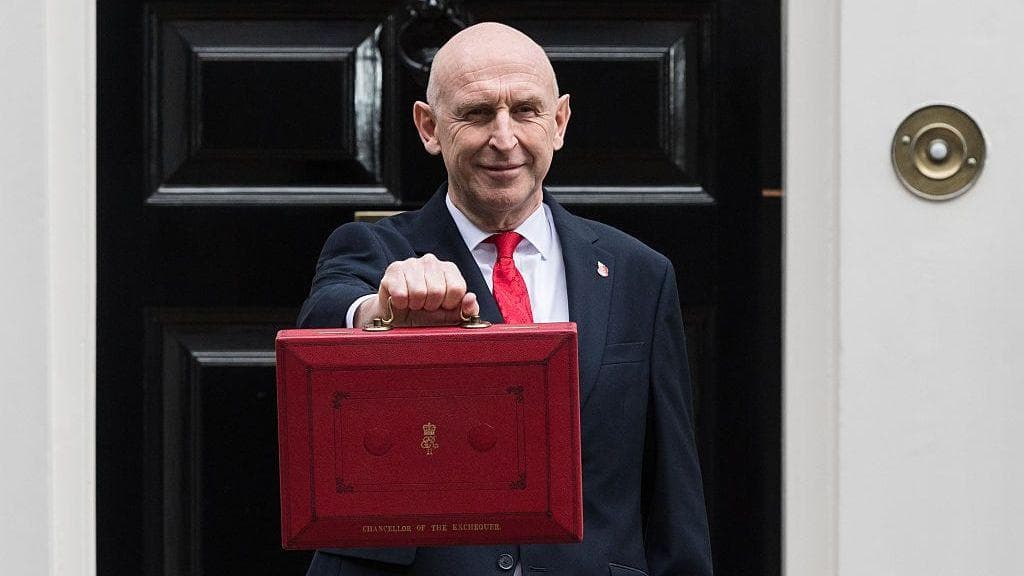
UK Chancellor of the Exchequer John Healey has instructed every government department to find 1% cuts in their capital budgets to close a £4.7 billion shortfall in funding for the Defence Investment Plan, BBC News reports. The cuts come on top of a similar 1% that departments already made earlier this year to pay for the initial £10.3 billion of the plan's total £15 billion cost. Capital budgets cover long-term investment rather than day-to-day spending: the first round of cuts, in particular, saw a number of major road improvement projects cancelled. Which specific budget lines will be trimmed now has not yet been decided by the departments.
The 3% of GDP target is postponed until next year
The plan increases defence spending, yet Healey remains under pressure over how he will meet the target of spending 3% of national income on defence by 2030. In his Budget speech he made clear that further cuts would be needed, and promised to set out details of how the 3% target by 2030 and 3.5% of GDP by 2035 will be achieved at next year's spending review. According to the Office for Budget Responsibility, reaching 3.5% of GDP by 2035 would cost £35 billion. Notably, earlier this year Healey himself resigned as defence secretary, accusing the then prime minister Keir Starmer of underfunding the country's security, and in his resignation letter he placed particular emphasis on the importance of the 3% target by 2030.
Criticism and support
Conservative leader Kemi Badenoch said the chancellor was offering merely a plan to make a plan, adding: I bet Putin is very frightened now. She also accused Healey of making our country less safe. Labour MP Tan Dhesi, chair of the Commons Defence Committee, called the deferral of key decisions to the next review dismal and warned that inaction has a price. Former NATO secretary general Lord Robertson told the BBC the Budget was broadly good news for defence, but cautioned about battles with spending departments on the way to the 3% target. NATO Secretary General Mark Rutte, by contrast, described the UK's course as a credible path to meeting the commitments made by allies in The Hague.
Additional funding mechanisms
Alongside the cuts, Healey announced more innovative financing involving the private sector and international allies: talks with Finland, Poland and the Netherlands on a multilateral defence mechanism for pooling resources, an expansion of public-private partnerships in defence, and the direction of £5 billion by the National Wealth Fund and the British Business Bank into defence, dual-use technology and sovereign capabilities. Helen Miller, director of the Institute for Fiscal Studies, noted that increased investment in defence companies could help meet the target, but it is unclear how much this would actually increase the UK's real defence capabilities, and it is hard to believe the government would want to reach 3% without additional spending increases.
£10 billion for Ukraine
In his Budget speech, Reeves also announced £10 billion in economic and military support for Ukraine in the form of loans and export guarantees: £5.5 billion in credits through World Bank guarantees and a grant contribution to the crisis mechanism of the International Development Association, as well as £3 billion through loans involving the state export credit agency UK Export Finance. The Chancellor said the week had begun with a 'brutal ballistic missile strike' by Russia, and that the additional money would send a 'clear signal to Moscow'. According to him, when he informed Volodymyr Zelensky of the support by phone, the latter replied: 'You made my day.' Zelensky later confirmed on social media that 'every step to strengthen Ukraine brings Russia closer to realising the need to end this war, which it started itself.' These funds come on top of the UK's commitment to provide Ukraine with £3 billion in military aid annually at least until 2030–31.
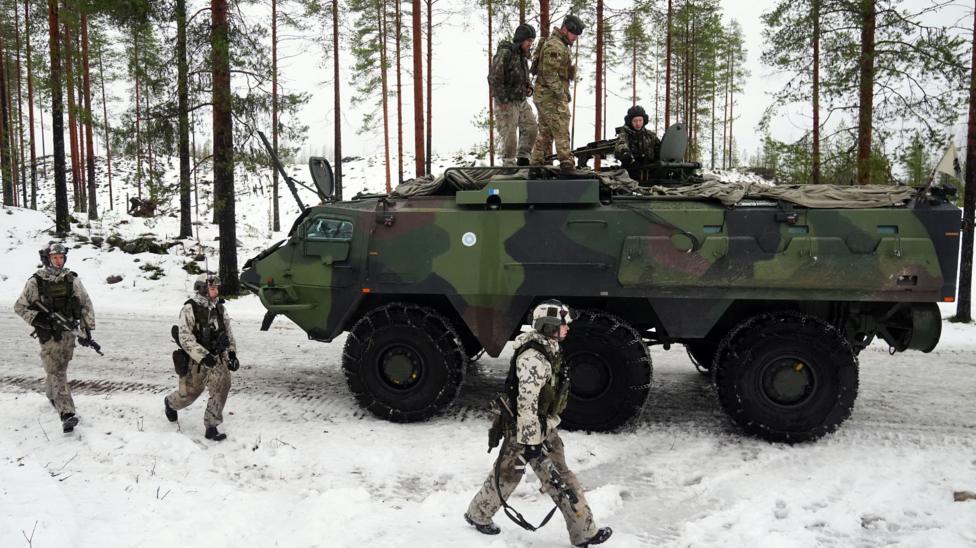 Image source, Press Association
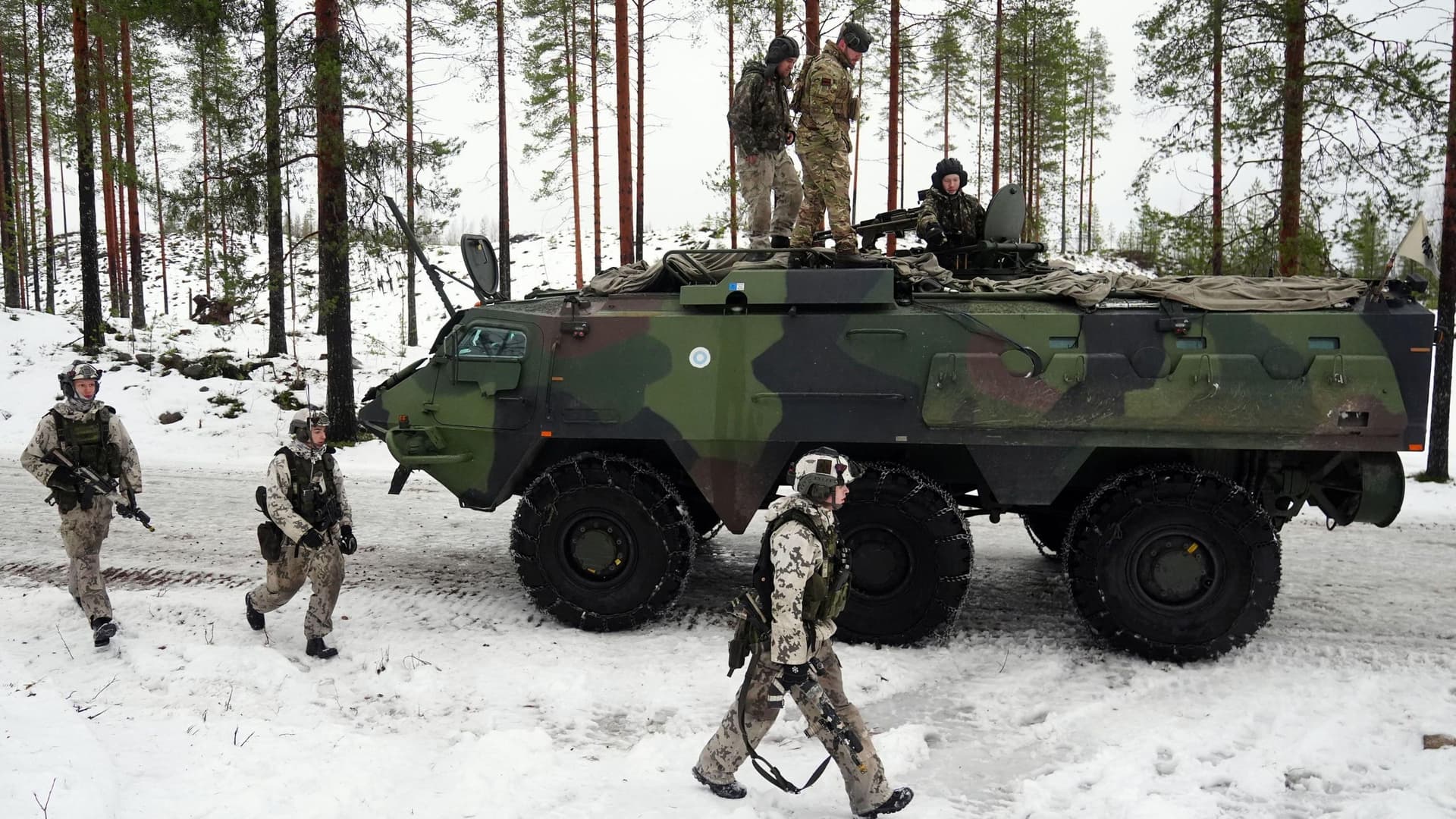
Members of the Finnish army and British army on a training exercise on Nato's border with Russia