The key facts
- AFP confirmed the removal of the Mona Lisa from a 7th-grade history textbook and of images of statues of ancient Syrian civilizations from a 3rd-grade textbook
- Syria's Education Ministry explains the edits as the removal of 'symbols of the defunct regime and its ideological content'
- According to IMPACT-se, the changes go beyond routine pedagogical adjustments and reshape national identity
What exactly changed in the textbooks
Changes in Syria's official school textbooks have drawn criticism of the country's new Islamist authorities, who are trying to move forward after 13 years of civil war and decades of authoritarian rule. The changes came to light last week, when Syrian journalist Mohammad Salloum highlighted them, drawing on a report by the Institute for Monitoring Peace and Cultural Tolerance in School Education (IMPACT-se). The AFP news agency confirmed several edits by checking electronic versions of the textbooks on official websites.
Specific examples of the edits
Among the changes confirmed by AFP are the removal of the image of the Mona Lisa from a 7th-grade history textbook and the removal of images of statues symbolizing ancient Syrian civilizations from a 3rd-grade social studies textbook. In a 4th-grade Islamic education textbook, illustrations of several people in Western clothing were replaced with two separate drawings: two men in traditional garments and two women in niqabs. In 6th-grade social studies textbooks, images of dancing people were removed. On social media and in local media, Syrians also posted images of a pharaonic bust 'dressed' in a modern shirt and of an illustration of girls at a computer, now wearing hijabs.
The position of the authorities and of critics
On Monday, Syria's Ministry of Education said the changes to the curriculum included 'the removal of symbols of the defunct regime and its ideological content, as well as the correction of images and materials associated with it.' The curriculum had already been revised last year — mainly in primary school subjects (social studies, Islamic education, history, geography), where symbols of the Baath Party, which ruled for decades, were removed. According to IMPACT-se, the new curriculum 'demonstrates a far-reaching ideological transformation that goes well beyond routine pedagogical adjustments': in the institute's view, the edits 'attempt to reshape national identity, historical memory, civic values and regional positioning through a consolidated Islamist and Sunni-centric framework.' Lawyer and human rights activist Michal Shamas called for the curriculum to be reviewed against 'educational and scientific standards,' strengthening critical thinking and respect for diversity. He also noted changes related to the Ottoman period: the Syrian nationalists executed in Damascus in 1916, long referred to as 'martyrs,' are now presented as 'agents and conspirators.' At the same time, Ahmed al-Sharaa's administration maintains close ties with Turkey.
Context: the dispute over the country's direction
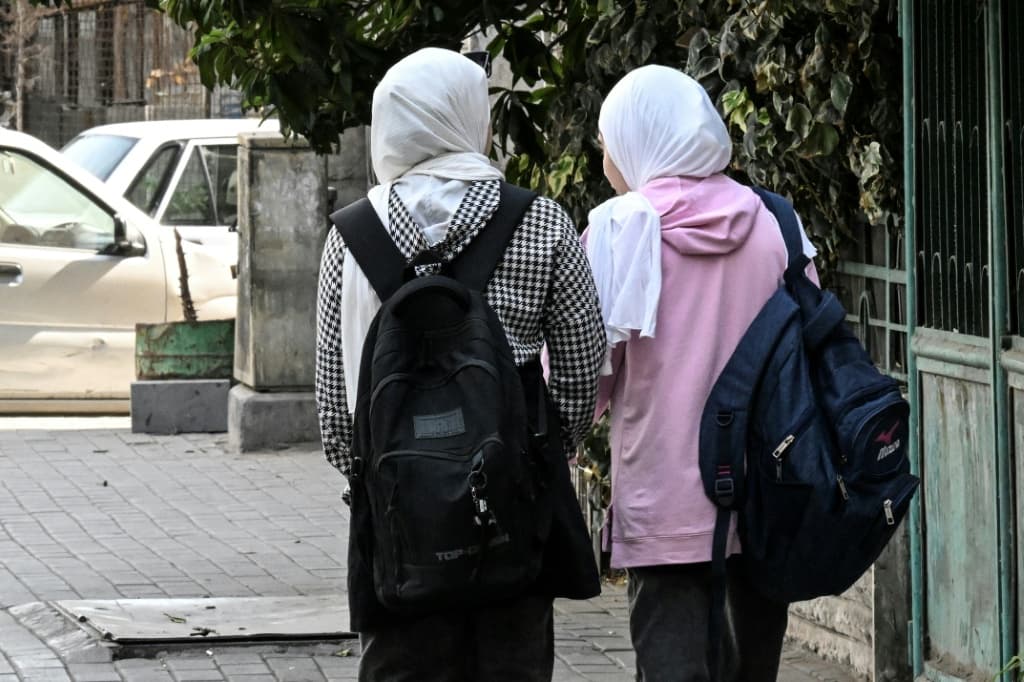
The dispute over the curriculum is unfolding against the backdrop of a struggle between supporters and critics over the direction of post-Assad Syria. After the overthrow of Bashar al-Assad in December 2024, the new authorities led by Ahmed al-Sharaa — the former head of al-Qaeda's Syrian branch, who now presents himself as a moderate head of state — have taken a number of conservative steps: introducing stricter dress codes for beaches and restricting alcohol sales. The dispute over textbooks followed recent decisions by some universities to restrict certain courses to men only, and by a well-known school in Damascus to teach boys and girls separately — citing bullying and harassment of girls. Opinions on the school's move were divided: some supported it, while others saw it as a sign of growing religious conservatism.