The key facts
- Economist Otabek Bakirov: no calculations of the volume of hidden turnover or the expected effect of oil labeling have been presented
- Tax consultant Murod Mukhammadjonov pointed to glitches in the current system: line stoppages and code duplication
- In his view, the additional costs will either limit business development or reduce the population’s purchasing power
Criticism of the proposal to label vegetable oil
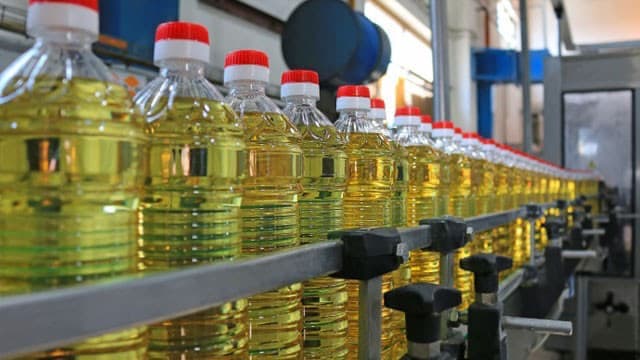
In Uzbekistan, a proposal is being discussed to introduce mandatory digital labeling of vegetable oil — it was announced earlier, in mid-October. Economist Otabek Bakirov and tax consultant Murod Mukhammadjonov in an interview with Kun.uz spoke out against expanding labeling in its current form, pointing to the lack of economic justification and unresolved problems in the existing system.
Lack of calculations
According to Bakirov, the initiators of the proposal have not presented calculations of its economic rationale — in particular, the volume of hidden turnover in the industry and the expected effect of labeling. “How much counterfeit is there, or how much of the vegetable oil turnover meets the criteria of the hidden economy? There is no data at all. And there is no expected economic effect from this either,” the outlet quotes him as saying. The economist believes that an independent assessment is needed before a product is added to the list of items subject to labeling. He also noted that oil is an everyday consumer good, so the impact of additional costs on low-income families should have been calculated in advance.
Problems with the existing system
Mukhammadjonov, in turn, believes that before expanding the coverage of labeling, the problems of the existing system in production and logistics need to be resolved. As he described it, in the production process a single laser error stops the entire line, which then has to be restarted, while in logistics there is duplication of codes: when a labeled product is scanned, the code turns out to have already been used elsewhere. “While the problems of the system itself have not been solved, new products are being added to it,” he noted. In his view, the fact that the technical glitches can be fixed does not justify the costs: businesses spend time, labor and money on this, and this must also be taken into account.
Who will bear the costs
The tax consultant emphasized that such requirements specifically for vegetable oil should be treated with particular caution. If the additional costs fall on businesses, this will limit the opportunities for enterprises to develop; if they are passed on to the price, the population’s purchasing power will decline. Thus, in the assessment of both experts, the question of oil labeling comes down not only to combating shadow turnover, but also to the performance of the system itself and the distribution of costs. The sources did not report any decision made on the proposal — for now, it remains an initiative under discussion.