The key facts
- The bill amending articles 75 and 483 of the Tax Code was approved in first reading: 104 of 118 deputies voted in favour
- The draft law with amendments to Articles 75 and 483 of the Tax Code was approved in first reading: 104 of 118 deputies voted in favor
- Some benefits were supposed to take effect on 1 January 2026 but have still not been incorporated into the code, although businesses are already using them
- Deputies questioned whether the new mechanism would undermine the code's authority and whether it contradicts the ban on individual benefits
- Deputies questioned whether the new mechanism would undermine the authority of the code and whether it contradicts the ban on individual benefits
Benefits take effect before they are enshrined in law
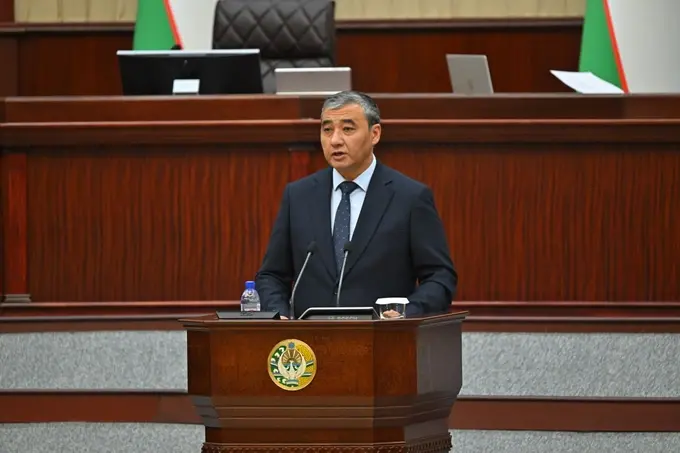
In Uzbekistan, it is proposed to legally allow entrepreneurs to use tax benefits established by presidential decisions even before the relevant provisions are incorporated into the Tax Code. The issue was discussed on 27 October at a session of the Legislative Chamber of the Oliy Majlis while considering a bill on support for entrepreneurship, presented by Deputy Minister of Economy and Finance Akhadbek Khaydarov. The amendments are proposed to articles 75 and 483 of the Tax Code; they concern the introduction and extension of benefits for a number of industries and tax administration. This is reported by Gazeta.uz and Spot.uz.
Deputies point to the delay and a contradiction
Zafar Khudoyberdiyev, a deputy from the Milliy Tiklanish faction, noted that most of the benefits now proposed for inclusion in article 483 were supposed to take effect on 1 January 2026, yet it is already October, and more time may pass before the law is adopted. Under the current procedure, benefits from presidential decisions can be used only after they are incorporated into the code, but in practice they are already being applied. The deputy asked whether the proposed provision would undermine the authority of the Tax Code and lead to even greater delays in incorporating benefits. Khaydarov acknowledged the validity of the question but explained that the benefits are granted under instructions from presidential decrees and resolutions in order to promptly address entrepreneurs' problems, and that completing the established procedures takes time; he attributed the delay this time to the large volume of changes and protracted discussions.
Dispute over individual benefits
Zukhriddin Mavlonov, a deputy from the Adolat faction, recalled that part four of article 75 of the code prohibits benefits of an individual nature, whereas the new wording of article 483 provides benefits for specifically named organizations — the waste landfill management directorate and the leather and footwear industrial zones directorates. He asked whether this would create norms contradicting each other within one code. Khaydarov replied that the concessions for the industrial zones directorates are linked to the specifics of their activities: until plots and facilities are transferred to entrepreneurs, they are managed by organizations with no production activity, and a similar procedure already applies to all directorates of free economic zones. «This is not a separate individual benefit,» the deputy minister said.
What is proposed and how the vote went
Under the draft, if sectoral tax benefits are established by presidential decisions, taxpayers are allowed to use them, and the relevant provisions must be incorporated into the code within the period the benefits are in effect. The press service of the lower chamber (the statement is quoted by Spot.uz) clarifies that sectoral support measures will take effect immediately after presidential decisions are adopted; the penalty for late tax payments will also be capped — it must not exceed the amount of the debt itself, and when explanations or amended reports are submitted during a desk audit, restrictions on a bank account will be lifted automatically. The code is proposed to enshrine benefits for pharmaceuticals, sericulture and the textile industry, private preschool education, large real estate projects, social services, environmental initiatives and charity, as well as reduced rates for enterprises in Karakalpakstan and districts of the 5th category by economic development, and benefits for those switching from the turnover tax to general taxation. Of the 118 deputies present, 104 voted for the draft, five abstained and nine did not vote. The presiding officer noted that the issues raised could be considered during preparation for the second reading.
Context and open questions
According to Gazeta.uz, current legislation already allows certain benefits to be granted by presidential decrees, but with restrictions: rate reductions of no more than 50% and for a period of up to three years, with special rules provided for VAT and profit tax; these provisions were clarified by the law on tax and budget policy for 2026 dated December 25, 2025, which entered into force on January 1. In early May, Aziz Umirzakov, head of a department at the Tax Committee, reported after a meeting at the presidential palace that benefits from subordinate acts would be incorporated into the code, and that until then entrepreneurs would be allowed to use them. At the same time, the speeches at the session left unclear exactly how many benefits are already being applied without amendments to the code, how many taxpayers have used them, and what the volume of lost budget revenues is.